The Salvation Army and the Paulist Fathers: two interesting cases of missional diversity in the church

I’m switching gears now with my dissertation and moving into writing about two historical case studies: The Salvation Army and the Paulist Fathers.   While these two particular movements might seem like an odd pair, there are a number of reasons why I’m looking at them.

First of all, there are a number of similarities between their two founders, William Booth and Isaac Hecker.   They were near-contemporaries in age (Booth lived 1829-1912 and Hecker 1819-1888).  Both have Methodist roots, with Booth originally ordained in a Methodist tradition  and Hecker raised at Forsyth Street Church in New York City.  Both are, in many respects, men of their time, typifying the optimistic, industrious, world-encompassing spirit of the nineteenth century.  Both were “home missionaries,” who brought a missionary approach to ministry in their native countries, and each could be classified as “revivalists” in their respective traditions.  Both Booth and Hecker began their ministries in other movements – Booth the Methodist New Connexion, Hecker the Redemptorists – and both ended up branching out to found their own missionary societies because of conflicts with established leadership of those movements.  Finally, both eventually developed comprehensive visions for the worldwide mission of the Church.

I’m also interested in these two movements because they both raise interesting questions about unity and diversity in the church – questions I think might be addressed using the theology of ecclesial charisms.

The Salvation Army is an interesting case because of its original insistence that it was a missionary movement, and not a church, even while it remained independent of any formal ties to a church. Its members were not members of any other churches, creating the strange situation where Salvationists could claim to be Christians but to not be part of any church.  A decisive historical moment in the movement’s history came in 1882, when a series of serious discussions with the Church of England caused William Booth to ask himself if The Salvation Army should remain an independent mission or be placed under the auspices of the Church (if you’re interested in this episode see Roger Green, The Life and Ministry of William Booth, 140-145). The fact that such discussions took place shows that Booth was not completely sure whether or not he wanted the Army to remain autonomous.  The fact that they decided to remain independent was the result, I believe, of a lack of clarity regarding ecclesiological questions (noted by Green, p. 144-145).  The Army’s independence was of decisive significance for its future course, including its non-sacramental stance and its slow progression towards claiming “churchly” status.

The Paulists, on the other hand, were never outside of the Church’s fold, but rather press the question of unity and diversity from the side of the Church’s authoritative discernment.  First of all, very early in their history they were forced to make a compromise regarding their specific mission.  The founding members wanted to be an exclusively missionary society, but they could not find a Bishop who would support them unless they took on a parish.  This meant that they had to divert some of their energy to traditional parish concerns.  It seems that the bishops they approached did not recognize the particular gift of the Paulists, and so, in order to remain a part of the Catholic church, they were forced to compromise.  Another Paulist “gift” that wasn’t recognized was Hecker’s progressive ecclesiology, in which he saw the Spirit at work, adapting the Church to particular cultures and places, in concert with the providential developments in each society.  In Americathis meant making Catholicism more “American,” by becoming more democratic and embracing the separation of Church and state. This was not received well by a Catholic hierarchy which was struggling to ensure uniformity around the world, and had been marginalized by democratic governments throughout the nineteenth century.    After Hecker’s death, his ideas were taken out of context and twisted into the “phantom heresy” of “Americanism,” which was censured by Pope Leo XIII in Testem Benevolentiae, issued in 1899.

If the theology of charisms is in fact useful in helping us to understand reform movements as a legitimate form of diversity in the Church, then it should be able to be applied to these two cases.  My hope is that a study of their history and self-understanding, along with a sustained critical engagement with the theology of charisms in the context of the question of the church’s visible unity, will clarify some of the questions surrounding the limits of legitimate diversity in the church.

Ecclesial homelessness

Some comments here from Stanley Hauerwas on “ecclesial homelessness,” an increasingly familiar situation for many people today.   What he means by describing himself as “ecclesially homeless” is that he isn’t clearly rooted in one particular Christian tradition.   As he says here, he considers himself to be a Methodist.  But, as he accounts in his memoir, he has attended a variety of churches over the years, including a Catholic church while he taught at Notre Dame, and the Anglican church where he worships today (and where his wife, a Methodist pastor, serves on the pastoral staff).   Here are his thoughts, from a Christianity Today interview last Fall:

I call myself an ecclesial whore. I don’t know why God made some of us ecclesially homeless. I would like to think it has some ecumenical promise. Let me be clear: I am a Methodist. By that, I mean I think John Wesley was a recovery of Catholic Christianity through disciplined congregational life. Therefore, now that I am a communicant in the Church of the Holy Family [Episcopal Church], I understand myself still to be Methodist because I think the Episcopal Church is the embodiment of much that Wesley cared about. I think that’s true in much of Roman Catholicism. I don’t think any of us should look to Christian unity by thinking we can heal divisions of the past by some kind of artificial agreement. But by going forward, trying to live faithful to the charisms [gifts] within our ecclesial identifications, God hopefully will bring us into unity.

Hauerwas seems to suggest here that being Methodist doesn’t necessarily mean worshiping in a Methodist Church.   He can, as he says, live faithful to the charisms of his Methodist identity while being a communicant at Holy Family.

There are many today who find themselves in similar situations.  I personally know of Methodists worshiping at Presbyterian churches, Mennonites at Anglican churches, and Lutherans at Reformed churches.   I myself continue to identify as a Salvationist, though I presently worship at a Free Methodist church.

The lines of denominational demarcation are getting blurrier, but what does it all mean?  Are we entering a post-denominational landscape?  Do people even care about traditional differences of doctrine, worship, and polity, which were so divisive in the past?

With Hauerwas, I think this new situation has some ecumenical promise, although I also worry that it is due, at least in part, to cynical apathy regarding any kind of formal institutions.    The promising thing is that walls are coming down, and people are willing to worship, fellowship, and serve with people from another denominational background without thinking much about it.  In this sense, people on the ground are actually way ahead of their denominational institutions, which often remain relatively isolated.

The danger, of course, is that there are some real historical disagreements which should be aired out and discussed, rather than ignored through an easy ecumenism which treats differences as unimportant.

There’s something more to Hauerwas’ comment here, though, as it relates to the whole idea of ecclesial charisms.  He presumes that a Christian person can live out the charisms of one historic tradition while being part of a community that is based in another tradition (hence his status as a Methodist communicant in an Anglican parish).   I’m not sure how much he has thought about this, but it seems he presumes (as I am arguing in my dissertation) that charisms are personal, even when they are identified with a community like Methodism.

That is, properly speaking, the Methodist charisms are not borne by the Methodist community as a whole, but by the persons who call themselves Methodist.  The communal aspects of Methodism might encourage and cultivate those charisms, but at the end of the day, persons are the bearers of the diverse vocational charismata.

In that sense, it should be quite possible for a person to exercise one ecclesial charism in a context which is not normally identified with that charism.  Actually, I would say that this would make more sense than isolating large numbers of people with a particular charism from other parts of the church!

This is also why Methodism was intended in Wesley’s day to exist as a leaven in the Church of England, not as an independent church.   Though the Methodists were to have their own gatherings, which came in various forms, they were to remain within the church, worshiping alongside others in the C of E on Sundays, where the gifts that they brought could excite a renewal among the established structures.

This all might seem pretty far removed from the contemporary issue of “ecclesial homelessness,” but I think there could be a connection, and the changing denominational landscape of the twenty-first century just might make such a vision of the church more plausible than it was in the previous century.

Methodism as religious society-become-church

Continuing on the theme I posted last week: In the quote below, Albert Outler reflects on the origins of Methodism as a religious society, with a view to the way this has evolved in Methodist history.  As with many such renewal movements, Methodism became a sort of hybrid of “movement” and “church,” and its peculiar structures, practices, and culture reflect this inherited tension.  While the tension can be fruitful, it sometimes produces a certain amount of confusion regarding the nature of the movement-church, both for the membership of the movement-church and for their fellow Christians.

It is interesting that this text comes from the same time as the Rupp essay on Wesley as prophet.  In the wake of Vatican II, there was great optimism regarding the possibilities of visible Christian union.  Both Rupp and Outler are keen to stress Wesley’s insistence on Methodism’s ecclesial location as a movement within the Church of England, raised up in “extraordinary” circumstances to meet a particular need.   From the perspective of “ecclesial charisms,” the vocation to “spread scriptural holiness throughout the land” through the “irregular” ministry of lay preachers could be seen as the particular Methodist charism.

What happens when the specialized movement takes on the character of a “church”?  The original charism and vocation cannot help but be hampered, because the Methodists are now focused on doing all the things that the church does, rather than the specific vocation around which they were formed.  The church at large also suffers the impoverishment of being cut off from the ministry of those with the particular Methodist charism.   Again, with Rupp, he wants to stress that Wesley only broke with the Church of England because it was necessary for the provision of the mission of the Church in America.

Here is the quote, from That the World May Believe: a study of Christian unity and what it means for Methodists (New York: Board of Missions of the Methodist Church, 1966), pp. 59-63.

Methodism is a religious society that became a church without the complete loss of its character as a religious society.  Methodists are not always mindful – and many non-Methodists are not even aware –  of this dual inheritance from both the Catholic and Protestant traditions in the Christian community, an experiment in the fusion of “justification by faith alone” with a disciplined ethic of “faith working by love.”  The history of this society-become-church is often confusing both to ourselves and to our neighbours.  We are usually reckoned among the pietists – but no typically pietist group ever had anything like our General Rules and Discipline.  We classify ourselves as Protestants, but none of the classical traditions of continental Protestantism had anything like the Wesleyan ideal of “Christian perfection” and the Wesleyan concept of evangelical morality.   And yet, if the quintessential formula for ecumenism is something like “consensus in faith, community in worship, unity in mission,” then it would be true to say that Methodism has been ecumenical from the beginning.  John Wesley was a rebel and a church reformer, a critic of the standing order, and a rude disturber of the false peace of Zion.  Because he was convinced that the regular ministries of the Church of England were failing in their mission to the nation, he felt authorized by the Holy Spirit to raise up an irregular ministry of gospel proclamation and to organize a network of religious societies in England, Wales, Ireland – and later, America.  To these he gave a distinctive set of “General Rules,” a peculiar pattern of organization (classes, bands, etc.), a novel principle of lay-leadership, and a communal ethos that marked off the Methodists from the Non-conformists as well as from the “High Churchmen.”

Despite all this, Wesley was no separatist. He never lifted a finger to overthrow the power structure of the Established Church nor even to invade it.  The Methodists were ill-treated, but Wesley held them in the church and kept them loyal to the sacraments.  The Anglican bishops reacted in varying degrees of distaste and bafflement, but they wisely refrained from any resort to formal excommunication in dealing with these Wesleyan irregulars.

This self-image of an evangelical order within an inclusive church was not effaced even when the Methodist societies developed into separate churches with sacramental ministries of their own.   Thus we learned – or might have learned – that wide diversity within an inclusive fellowship is not only tolerable but can actually be a vital service to the cause of authentic unity.  The early Methodists deliberately retained their distinct ties with the ancient and universal community but, quite as deliberately, they insisted on their freedom in Christian mission and nurture.  Wesley had no qualms in his use of laymen as preachers in the Revival and as leaders of the societies.  At the same time, he refused, on principle, to allow these laymen to administer the sacraments which were available in the Church of England.  He even forbade Methodist preaching services to be scheduled in competition with “church hours.”  Given the violent and divisive spirit of the age, this uneasy maintenance of the Methodist societies within the unity of “Mother Church” is one of the most remarkable incidents in Protestant church history.  When, however, the American Revolution had deprived the Methodists in the new republic of any ordained ministry for the sacraments, Wesley proceeded – by his ordinations of Richard Whatcoat, Thomas Vasey, and Thomas Coke – to remedy this defect himself rather than to approve the pattern of sectarian self-ordination by laymen begun by Philip Gatch and others at the Fluvanna Conference of 1779.

Where was Outler going with this?  His phrase at the start of the last paragraph is telling, where he speaks of Methodist “self-image” as that of “an evangelical order within an inclusive church.”   I believe Outler longed for this to be recaptured in some way, although he was clear that this would be costly: “We are, or ought to be, willing to risk our life as a separate church and to face death as a denomination in the sure and lively hope of our resurrection in the true community of the whole people of God” (p. 75).

Methodism as an Extraordinary Ministry

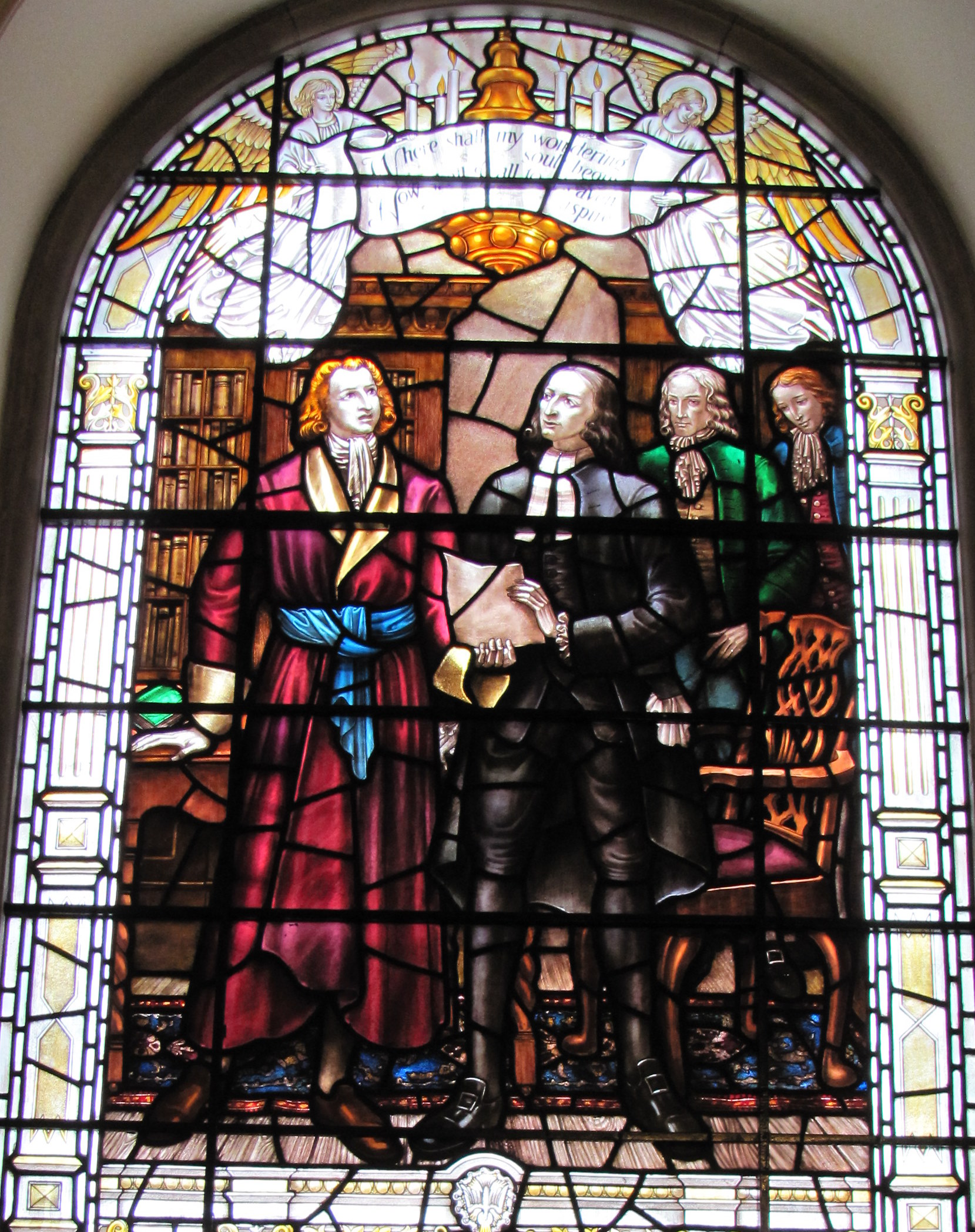
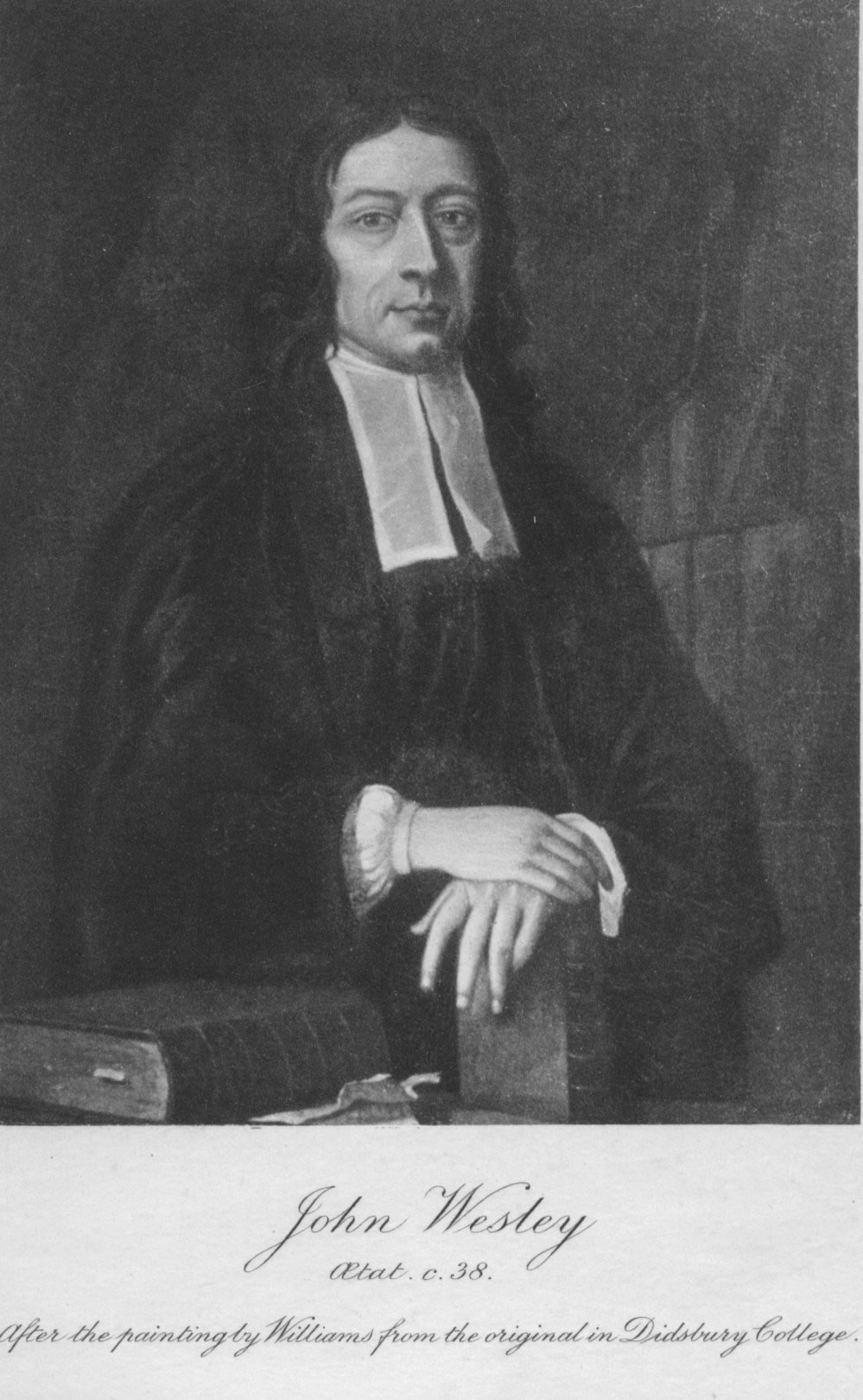
Some people have suggested that if John Wesley were born in another century, or another country – that is, in a Catholic time or place – he might have founded a religious order, rather than a movement which ended up becoming a new church.   Although he was not able to convince his followers to uphold his views on the matter, Wesley consistently argued that Methodism was a religious society within the Church of England, rather than a distinct Christian church.  The decisions he made which led toward separation (notably his ordinations of ministers for America) were done under necessity.  In other words, he did not want to compete with the Church of England, and only ordained ministers in places where the Church was not keeping up with the demands of the mission (and ignoring his pleas that it grant ordinations to his preachers to fill the gaps).

I came across this discussion of the issue by Gordon Rupp from 1968.  Rupp makes reference to Wesley’s remarkable 1789 sermon, “The Ministerial Office” (now identified in the scholarly literature as “Prophets and Priests”).  Here, as Rupp notes, Wesley does some creative exegesis in order to establish his claim of  a distinction between the priestly and prophetic ministries, while maintaining that Methodism must be understood as the latter.

The issue, particularly in the way that Rupp frames it here, raises classic issues that I hope my dissertation on “eccleisal charisms” might help to answer.  While I won’t be making my arguments in the same way as Wesley, my conclusions will end up supporting Wesley’s distinction between ordinary and extraordinary ministies.

Here then, is a claim to be called by God, to an extraordinary ministry of evangelism and of building up men and women to salvation (for John Wesley claimed that the doctrine of perfect love was the grand depositum of Methodism for which God appeared to have chiefly raised them up).

But the Methodists had a double pattern of spirituality. There were the ordinances of the Church of England, of Word and sacraments.  There was also the spiritual fabric of the Methodists, the intimate bands which were almost lay confessionals, the class meeting which was the essential cell, or koinonia, the love feasts and the occasional splendid eucharistic solemnities when thousands gathered at the Lord’s table and when Wesley and his ordained Anglican friends administered…

Wesley himself distinguished clearly between the commission to preach and authority to administer the sacraments: the first he thought a prophetic office, the second to depend on ecclesiastical authority.  He developed this in his sermon on “The Ministerial Office.”  He affirms that in ancient times the office of a priest and that of a preacher were distinct – from Noah to Moses “the eldest of the family was the priest, but any other might be the prophet”.  So in the New Israel, in the early Church, “I do not find that ever the office of Evangelist was the same with that of a pastor, frequently called a bishop.  He presided over the flock and administered the sacraments.”  In this light, Wesley goes on, are the lay preachers of Methodism to be regarded.  “We received them wholly and solely to preach, not to administer the sacraments…In 1744 all the Methodist Preachers had their first Conference.  But none of them dreamed that being called to preach gave them any right to administer sacraments.”

Whatever we think of Wesley’s strange view of sacred history in the matter of priests and prophets, and his sometimes eccentric exegesis, his distinction is important and deserve serious consideration, for it had important practical consequences.  While he lived, the Methodists who acknowledged his authority did not permit laymen to administer the sacraments…It was the failure of the bishop of London, despite repeated petitions, to provide sufficient clergy for North America, and the ecclesiastical chaos caused by the War of Independence, which led Wesley in 1784 to ordain four clergymen for America, and in later years a handful of clergy for Scotland and England.

At the end of his life, Wesley pondered the swift, deep extension of the revival to the very ends of the land.  Though he did not live to see it, the great work was to be repeated in the next generation in North America, the West Indies, Africa, Australia and the islands of the Pacific.  His own comment on it was: “What hath God wrought!”  and whether we take it affirmatively, or whether we turn it into a question mark, it is the question which John Wesley and his work ask of contemporary ecumenical theology.

From Gordon Rupp, “John Wesley: Christian Prophet,” in Prophets in the Church, Concilium 37, ed. Roger Aubert (New York: Paulist, 1968), 54-56.

Typology of Views on Charismatic Movements: Conclusion

To recap, I’ve been presenting a series of posts on charismatic movements, outlining a typology of views, as follows:

  • Charismatic more fundamental than institutional (Leonardo Boff).

While this survey shows that there is a significant body of literature on the theology of charisms and charismatic movements (and a wide divergence of viewpoints), I would argue that numerous questions remain which need to be addressed.

Significantly, for the most part, the literature on charisms has not been significantly incorporated into discussions of unity and diversity.   Of course, Cullman’s argument attempts to do this, but I would argue that he has disassociated the biblical idea of charisms from its original vocational context and applied it too liberally to all confessions, thereby inappropriately justifying continued separation across the board.  Also, it is apparent throughout his argument that his major concerns are with the Roman Catholic, Orthodox, and magisterial protestant traditions, but he offers no criteria by which we should distinguish these separations as “legitimate” as compared with more recent protestant schisms.  Would he support, for example, the continual splintering of pentecostal and independent charismatic churches on the grounds of protecting their particular charism?

Further, his model suggests that there is a charismatic gift at the root of all church divisions.  While I believe there are many confessions or denominations in the Church today that began with such a misapprehension of charisms, this is certainly not the case in every situation.  It seems nonsensical to speak of the English reformation, for example, being rooted an unrecognized charism.  We might speak of Anglican charisms that developed in the subsequent history of Anglicanism, but if the separation of the Church of England from Rome was not rooted in a charism, we must question the validity of using such post-division gifts as a reason for continued structural separation.

Other uses of the idea of “gifts” as a way of discussing diversity in ecumenical documents have not delved into the biblical theology of charisms, nor asked questions about the appropriateness of applying the term to traditions / denominations / confessions.  Though the idea of “complementary gifts” has been a helpful way to build ecumenical bridges, it should not be used to construct a positive vision for ecclesial unity which justifies continued “separation.”

Where the idea of charisms has been incorporated in a more sustained way into a vision of the unity of the Church is in Catholic literature on the religious life, but little work has been done in attempting to apply the insights of this perspective to protestant reform movements. The comparison has sometimes been made, but not explored in much theological depth (See, for example, Outler’s remarks on Methodism as an “order,” in That the World may Believe, 54).

The weakness of some Catholic approaches, especially those which stress the complementarity of charism and institution, is that they are not helpful in interpreting the divisive history of renewal and reform movements in the life of the Church.  The question is of paramount importance, particularly for the many evangelical protestant denominations which began as reform, renewal, or missionary movements, with no intention of starting new “churches.”  In evangelical circles, partly because of the prevalence of free church ecclesiology, the tendency has been to emphasize the significance of the movements and downplay the importance of historical continuity.

All this is to say that I think significant work needs to be done on the topic of  “group” charisms, and how this concept  fits into the larger discussion about the limits of legitimate diversity in the Church.

Hymns that didn’t last: “Ah, Lovely Appearance of Death”

It’s interesting to speculate as to which hymns and songs we sing today will still be in use in the decades and centuries to come.   This is the kind of question that can’t really be answered until the hymns and songs in question have stood the test of time.  One way to think about it is to look back on hymns from the past that are no longer in use today.

Here’s an interesting one from Charles Wesley, called “Ah, lovely appearance of death.”  We don’t sing about death too much these days.  We don’t even like to talk about it, actually – we avoid the topic of death at all costs.   But it was not always so.  In much of human history, death was a much less “avoidable” topic – it was simply a part of every day life.

The early Methodists believed in “holy dying” as well as “holy living.”  That is, they thought a holy life needed to be crowned by a holy death, and therefore they spent significant time reflecting on what it meant to die well.  Methodist publications would frequently include death-bed stories, as examples to other believers about how death was to be faced.

Reading this hymn today seems almost comical – there’s just no way you’d get away with singing about the delight of  surveying a corpse in today’s Church.   Still, though we might not sing it, there could be a lesson here for us:  this hymn reminds us that as Christians, we ought to be able to talk freely about our mortality.   We don’t need to fear death – but we shouldn’t avoid talking about it either.

Any suggestions as to good hymn tunes for this gem?


Ah, lovely appearance of death!

What sight upon earth is so fair?

Not all the gay pageants that breathe

Can with a dead body compare.

With solemn delight I survey

The corpse when the spirit is fled,

In love with the beautiful clay,

And longing to lie in its stead.


How blest is our brother, bereft

Of all that could burden his mind;

How easy the soul that has left

This wearisome body behind!

Of evil incapable thou,

Whose relics with envy I see,

No longer in misery now,

No longer a sinner like me.


This earth is afflicted no more

With sickness, or shaken with pain;

The war in the members is o’er,

And never shall vex him again;

No anger henceforward, or shame,

Shall redden this innocent clay;

Extinct is the animal flame,

And passion is vanished away.


This languishing head is at rest,

Its thinking and aching are o’er;

This quiet immovable breast

Is heaved by affliction no more;

This heart is no longer the seat

Of trouble and torturing pain;

It ceases to flutter and beat,

It never shall flutter again.


The lids he seldom could close,

By sorrow forbidden to sleep,

Sealed up in eternal repose,

Have strangely forgotten to weep;

The fountains can yield no supplies,

These hollows from water are free,

The tears are all wiped from these eyes,

And evil they never shall see.


To mourn and to suffer is mine,

While bound in a prison I breathe,

And still for deliverance pine,

And press to the issues of death.

What now with my tears I bedew

O might I this moment become,

My spirit created anew,

My flesh be consigned to the tomb!

#47 in A Collection of Hymns for the Use of the People Called Methodists (1780).

Typology of Views on Charismatic Movements, Part 3: Charismatic in Legitimate Tension with Institutional

Karl Rahner provides a perspective on the place of charismatic movements which recognizes the tension that exists between the charismatic and institutional aspects of the church, without prioritizing the charismatic as more fundamental. In The Dynamic Element in the Church Rahner attempts to overcome the opposition between “charism” and “office” by reframing the question in terms of “the charisma of office” and “non-institutional charismata” (42-58).  The charisma of office must be affirmed, Rahner argues, if the Church is to be conceived as the one abiding historical entity which was has its foundation in the apostles, and continues to be “always the locus and visible manifestation of grace” by virtue of God’s promise (43). The church must be conceived of as charismatic, otherwise the Catholic affirmation of the Church’s visible continuity would be based on the juridical power of the institutions themselves.

“…because the grace of God is not only offered to mankind as a possibility, but is promised to the Church as a victorious grace more powerful than sin, it is certain from the outset from God’s side and from him alone, that ecclesiastical office in what most properly belongs to it, in its essence, will not, though it could, be used as a weapon against God.  To that extent, therefore, ecclesiastical office and ministry is charismatic in character, if we understand by charismatic, what is in contradistinction to what is purely institutional, administered by men, subject to calculation, expressible in laws and rules” (43-44).

For example, Papal infallibility must imply that, “in order to be what it is,” the papacy “passes into the charismatic sphere” (45).

However, in order to distinguish itself from totalitarianism, the Catholic church must affirm that the hierarchy is not the only vehicle through which the Spirit works, but that “there are charismata, that is, the impulsion and guidance of God’s Spirit for the Church, in addition to and outside her official ministry” (49).  Rahner posits that “a legitimate opposition of forces” arises as an unavoidable result of the “multiplicity of impulsions in the Church” (73). That is, these forces are felt and experienced by human beings on earth as disparate and opposed to one another, “precisely because they are unified by God alone.” (74)  This means that there will be conflict and tension in the Church, with both sides needing to be “protected” from the other:

“Now it is no doubt a rule, a normative principle and a law for the spiritual gifts themselves, that they should operate in an “orderly” way, that they are not permitted to depart from the order prescribed by authority…Yet this formal rule alone would not of itself guarantee the actual existence of harmony.  For although official authority might be sufficiently protected by the rule from merely apparent spiritual gifts, the charismata also need to be protected from the authorities” (52)

What is required for visible unity in the present Church is “the love which allows another to be different, even when it does not understand him” (74).

Rahner connects his perspective to the question of reform movements by speaking of “the possibility of institutional regulation of a gift of the Spirit” (58). Movements such as the Franciscans are examples of the “institutionally organized transmission and canalization” of the gift of their founder.

“Not only Francis but the Franciscans too are charismatics if they really live in a spirit of joyous poverty.  What would Francis mean to the Church if he not found disciples throughout the centuries?  He would not be the man of charismatic gifts in the sense we have in mind here, but a religious individual, an unfortunate crank, and the world, the Church and history would have dropped him and proceeded with their business” (59).

In this way the charismatic element in the church is passed on through institutional means, which are courageously received and approved by the Church, as the charismatic movement in question submits to her authority and law. This aspect of “regulation” of the Spirit is, for Rahner, an essential part of the reform movement’s vocation, in which the charismatic element of the Church shows that it truly belongs to the Church and its ministry. Speaking of submission to the Church’s regulation, Rahner writes, “It is precisely here that it is clear that the charismatic element belongs to the Church and to her very ministry as such” (59).
Rahner’s subtle argument has much to commend it from the perspective of the Church’s history, providing a way of affirming the essential place of both established structures and unpredictable movements of the Spirit that arise from outside the usual official ministries.   In particular, it is interesting to see how a Catholic thinker reflects on the role of a founder, and how the charismatic gift given to a founder can be institutionally preserved by the Church.  It is precisely this idea that I think needs to be looked at ecumenically, with particular reference to protestant charismatic movements.   How should such institutional regulation take place?  Could some protestant divisions have been avoided, if the establised church(es) had found a way to incorporate the movements in question (i.e., Methodism, The Salvation Army, the Christian and Missionary Alliance, Classical Pentecostalism), affirming their place and giving them a measure of autonomy while also maintaining structural ties?

I’ll come back to this in discussing the fifth perspective in my typology, “Charismatic enlivens institutional” – a view which is very similar to Rahner’s perspective, but goes further in specifically discussing the role of charismatic movements in bringing life and renewal to the Church as a whole.

Second Canadian Wesley Studies Symposium

Howard Snyder, chair of Wesley Studies at Tyndale Seminary, has been trying to encourage networking among Wesleyan theologians and pastors in Canada.  A few of us got together last spring for an informal Wesley Studies symposium, and we’re trying to make it an annual event.   So if you’re interested in Wesley and you can be at Tyndale on March 23, please let me know, because we’d love to have you there.

Second Annual Wesley Studies Symposium

Tyndale Seminary, Tuesday, March 23, 2010

9:00 a.m. – 7:30 p.m

Schedule / Agenda

8:45 a.m. Coffee – Information

9:00 a.m. Welcome – Introductions – Announcements – H. Snyder

9:15-10:15 Amy Caswell: “The Story of Christian Perfection: the Perfection Narrative of George Clark and Other Friends of John Wesley”

10:15-10:30 Break

10:30-11:20 Chad Short: “John Wesley and N. T. Wright in Dialogue”

11:20-12:15 Bob Munshaw: “‘Be Thorough, But Be in Haste’: Impetus and Self-Understanding of Mission in the Early Free Methodist Church”

12:15-1:00 Lunch (Courtesy of Tyndale Seminary)

1:00-1:50 Howard Olver: “A Theology for Reaching the City”

1:50-2:30 Updates on Wesley Research (Current & Proposed)

2:30-2:45 Break

2:45-3:30 James Watson: “Social Science Methodology for Multiethnic Church Planting”

3:30-4:15 Matt McEwen: “Wesley and the Environment: A Sacramental View” (provisional title)

4:15-5:00 Resources, Programs, New Publications, Etc. – Discussion

5:00-6:00 Free Time

6:00-7:30 Dinner, Denominational Presentations