The Catholicity of the Heart: Pathologies and Prospects

It was my honour and privilege to serve as President of the Wesleyan Theological Society for the past year. The President of the society chooses the theme for annual meeting and delivers the Presidential Address. I chose the theme “evangelical catholicity,” a term that has been used to describe John Wesley’s theological outlook, but has also been used to describe other thinkers and movements within the church.

The Annual Meeting was held March 1-2 at Trevecca Nazarene University, and I was delighted to see the way the theme was taken up by the many presenters who gave papers. My biggest frustration was that I was unable to be in multiple places at the same time, and I couldn’t hear all the papers that caught my interest.

Samuel Chadwick

The Presidential Address took up the theme, “The Catholicity of the Heart: Pathologies and Prospects.” It began by considering the two key figures from the closing chapter of my recently-published book, Samuel Chadwick and Arthur Samuel Peake. Chadwick was a theological conservative, and Peake a liberal, but they shared a kind evangelical catholicity that was more characteristic of eighteenth and nineteenth century evangelicalism. That is, their evangelicalism was, broadly speaking, about fostering the “religion of the heart” and struggling to eliminate nominal Christianity. I employed a threefold typology proposed by Donald Dayton to distinguish this type of evangelicalism from twentieth century evangelicalism. Then I noted some of the evident weaknesses of framing evangelical catholicity as the “catholicity of the heart,” and attempted to respond to some of those weaknesses with reference to John Wesley’s own evangelical catholicity. I concluded with my reasons for holding out hope for the catholicity of the heart.

I have an audio recording posted below; it is not very good quality, but I hope it is audible throughout. The written version of the address still needs some polish, but it will be published in next spring’s issue of the Wesleyan Theological Journal.
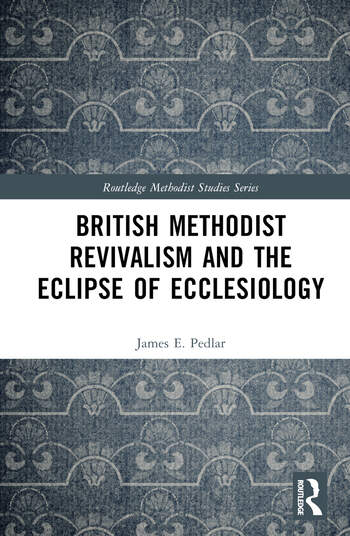
Coming Soon: British Methodist Revivalism and the Eclipse of Ecclesiology

I am pleased to announce that my second book will soon be published by Routledge in their Methodist Studies Series.

The book analyzes the theology of the Spirit and the church in British Methodist revivalism and argues that seemingly subtle theological differences between the revivalists and other Methodists contributed significantly to the division and eventual reunion of British Methodism.

The book should be available late this year or early next. I’ve pasted the “blurb” and table of contents below, and I’ll post excerpts / highlights in the coming weeks.

Revivalism was one of the main causes of division in nineteenth century British Methodism, but the role of revivalist theology in these splits has received scant scholarly attention. In this book, James E. Pedlar demonstrates how the revivalist variant of Methodist spirituality and theology empowered its adherents and helped foster new movements, even as it undermined the Spirit’s work through the structures of the church. Beginning with an examination of unresolved issues in John Wesley’s ecclesiology, Pedlar identifies a trend of increasing marginalization of the church among revivalists, via an examination of three key figures: Hugh Bourne (1772-1852), James Caughey (1810-1891), and William Booth (1860-1932). He concludes by examining the more catholic and irenic theology of Samuel Chadwick (1860-1932), the leading Methodist revivalist of the early twentieth century who became a strong advocate of Methodist Union. Pedlar shows that these theological differences must be considered, alongside social and political factors, in any well-rounded assessment of the division and eventual reunification of British Methodism.

TABLE OF CONTENTS

1. Introduction

2. ‘A Division of Heart’: Separation and the Spirit in the Later Wesley

3. ‘We shall have no mastery’: Hugh Bourne and the Emergence of Primitive Methodism

4. Revival and the Reformers: James Caughey and the Schism of 1849

5. Separate but Non-Sectarian: The Salvation Army’s Ecclesiological Ambiguities

6. Catholicity of the Heart: Samuel Chadwick and Methodist Union

7. Conclusion: Revivalism’s Mixed Legacy

The 2022 Samuel Chadwick Lecture

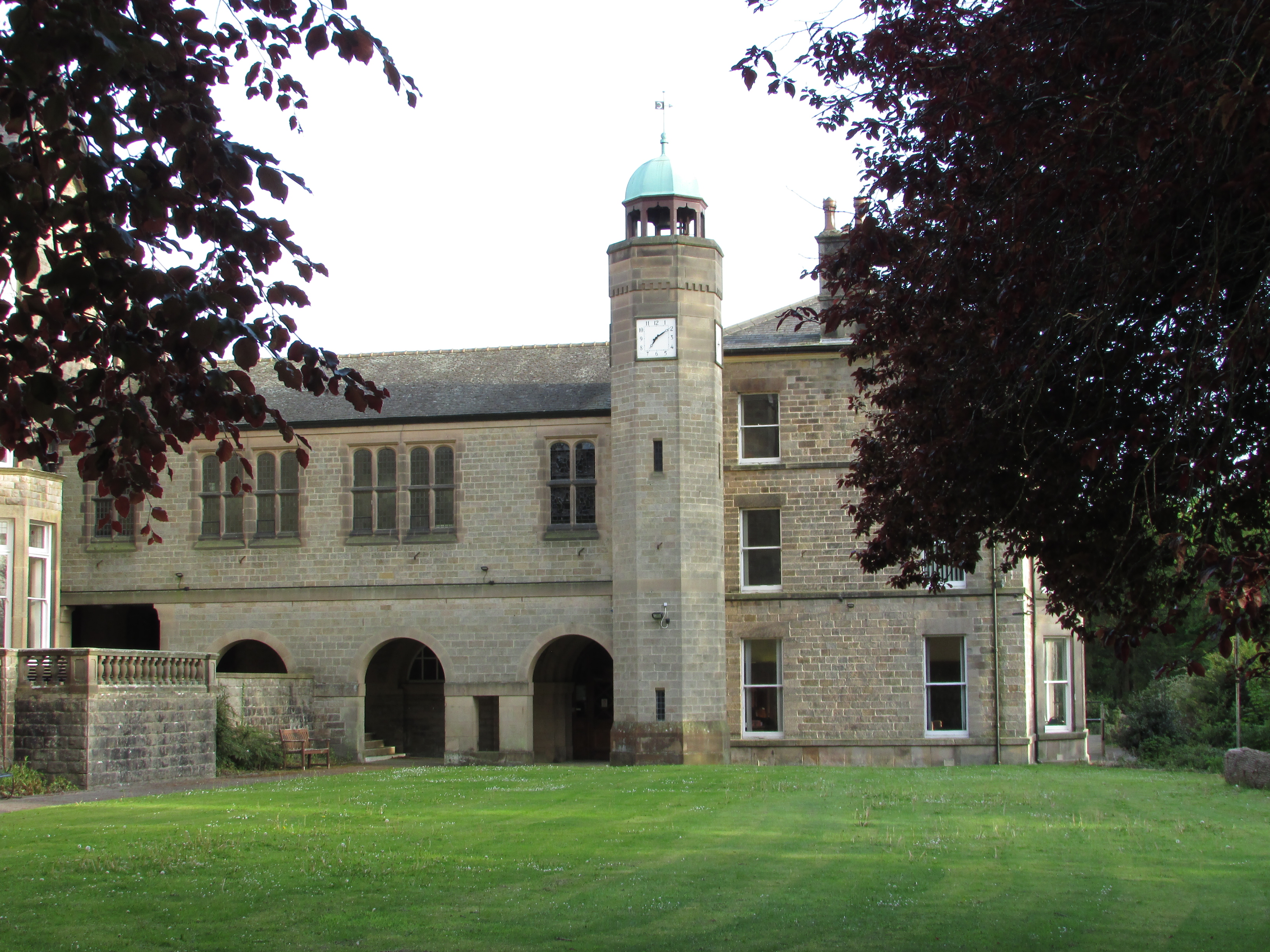
On October 17, I was pleased to deliver the annual Samuel Chadwick Lecture for the Samuel Chadwick Centre at Cliff College. I visited the beautiful Cliff College campus in May, where I spent several days (and evenings!) going through the Chadwick material housed in their archives. I am so thankful for the warm and generous welcome I received from the Cliff community, and for the invitation from Dr Ben Pugh to give the Chadwick lecture.  Revd Dr George Bailey also offered an insightful response to my lecture.

Chadwick is featured in my forthcoming book, British Methodist Revivalism and the Eclipse of Ecclesiology.  He is a contrasting figure in the arc of the book, which focuses on how British Methodist Revivalists marginalized the church in their theology, emphasizing the personal work of the Spirit at the expense of the Spirit’s corporate work. Chadwick, on the other hand, had a very robust ecclesiology and a balanced pneumatology, which, I argue, helped to blunt the sometimes-divisive impulses of his revivalism.

I went to Cliff not knowing quite how much relevant material I would find; when I got there I was overwhelmed by how much Chadwick wrote about the church and questions of Christian unity.  In fact I ended up with much more material than I needed, and I hope I’ll be able to continue writing about Chadwick in the future.

Cliff College campus, Calver, UK