Preached at Wesley Chapel Free Methodist Church, Toronto, Christmas Eve, 2023.
Apologies for the croaky voice – I was quite sick at this time last year!
Preached at Wesley Chapel Free Methodist Church, Toronto, Christmas Eve, 2023.
Apologies for the croaky voice – I was quite sick at this time last year!
Preached at Wesley Chapel Free Methodist Church, Toronto.
November 24, 2024. Christ the King Sunday. Text: Daniel 7:9-14.

Preached at Wesley Chapel Free Methodist Church, May 26, 2024.

Preached at Wesley Chapel Free Methodist Church, March 29, 2024. Text: Isaiah 53
Watch the video of the service on Wesley Chapel’s Youtube Channel

While I preach 10-12 times a year, it is rare that I can do anything like a preaching series, since my opportunities are typically occasional Sunday morning services. This summer and fall I was able to plan a three-part series on 1 Peter. I have always been drawn to this epistle, no doubt because of its emphasis on holiness and the rich ecclesiological content in chapter 2. Since I only had three sermons to work with, I could only go as far as chapter 2 verse 12, but I hope I will be able to continue the series in the future.
The ultimate occasion for this series was an invitation to preach at a Salvation Army Men’s Camp in September, but the versions of the sermons below are the versions I preached at my home church, Wesley Chapel.
Preached at Wesley Chapel Free Methodist Church, Toronto.
July 17, 2022
Luke 10:38-42
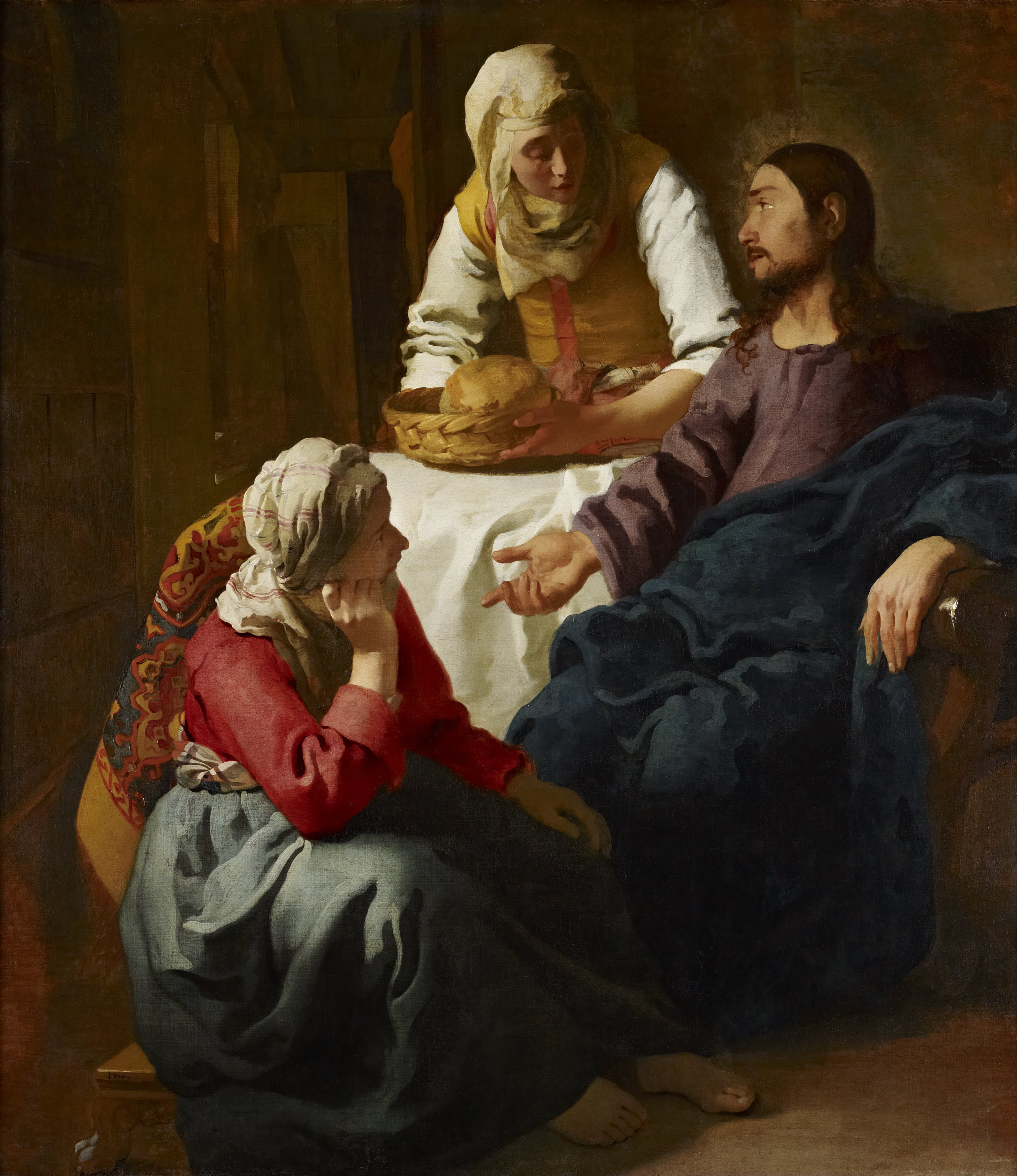
Preached at Wesley Chapel Free Methodist Church
April 17, 2022
1 Corinthians 15:12-26
It’s been a while since I added sermon audio to this site. It’s not that I stopped preaching, but our congregation used prerecorded services for the first fifteen months of the pandemic, and I never got used to preaching to a camera. It was necessary for a season, and moving to prerecorded services was the least worst option we had…but preaching in an empty room at home on a Thursday morning just wasn’t the same.
I am sure there are lots of reasons why I struggled with video preaching, but the lack of connection to the congregation was a major inhibition. Preaching is a living proclamation of God’s Word to God’s people; it is compromised, to a certain extent, when the preacher and congregation are not together in the same place and time. Preaching to a camera in my basement never felt quite right, and I think that is a good thing.
Not that I am saying God can’t use prerecorded sermons; if God works through the foolishness of preaching to a live congregation, surely he can work through a video sermon. And I know that many people are better at connecting with a camera than I am. But I still think something important is lost when preacher and congregation are not together in the same room. I was trying to get at the same issue when I addressed the question of online communion in the early days of the pandemic. At that time I wrote that “the lack of embodied gathering is a fundamental impediment to the life of the church.” Not that I want to discount the opportunities the pandemic has presented for new and creative ministries, and not that I want to deny that God can work through online communion or online preaching, but I think that these means of grace are significantly inhibited by our inability to gather together, as is the life of the church as a whole. After fifteen months of fully-online worship and now about six months of hybrid of in-person / livestream, I haven’t changed my perspective on these questions.
The first two sermons below were based on challenging texts, but I am so thankful I was able to preach them from the pulpit, the midst of the physically-gathered community.
Preached at Wesley Chapel Free Methodist Church, July 11, 2021. Mark 6:14-29.
Preached at Wesley Chapel Free Methodist Church, November 14, 2021. Mark 13:1-8.
Preached at Wesley Chapel Free Methodist Church, January 23, 2022. Luke 4:14-21.
I preached this sermon yesterday at my home church, Wesley Chapel. We have been focusing on the farewell discourse from the Gospel of John through the season of Lent, and yesterday’s text was John 16:16-33.
One of the things I’ve learned in pastoral ministry is most people, if you scratch beneath the surface, have passed through profound trials. You think people live very cookie-cutter lives, but it’s not true. Many people’s lives have been marked by deep tragedy and brokenness. But in our very private, individualistic Canadian context, these burdens are often carried in secrecy or near-secrecy. I know some of the suffering of the people in our church family, but I am sure there is much more that I don’t know about. It is important that we acknowledge the inevitability of suffering in this life, especially in a culture of convenience and ease, where suffering seems to have become so unthinkable that many people would rather cut their lives short than live with suffering. But the point is not to simply state that suffering is inevitable, but to proclaim how, through Christ, our suffering can be taken up and transformed into a path towards peace and joy.
Themes of grief, lament, and peace in the face of suffering were woven throughout the service. We had a powerful testimony from a mother who lost her 21-year-old son last year, and we introduced this song from Bifrost Arts.
I hope Christ’s words gave some peace and courage to those gathered yesterday: “I have told you these things, so that in me you may have peace. In this world you will have trouble. But take heart! I have overcome the world.”
I’ve recently been engaging the controversial question of baptism in Wesleyan theology and practice. The Methodist position has always been somewhat unusual, and it continues to be of interest despite centuries of discussion and debate. In the past several months, through student papers, conversations with other pastors, and situations in my own church, I’ve been pressed into renewed consideration of the question.
The occasion for the sermon below was two back-to-back baptism services at Wesley Chapel: four adult baptisms on June 3, and an infant baptism on June 10. While we’ve had both types of baptism regularly, I don’t believe we’ve ever had them so close together. I realized that, in the ten years I’ve been at Wesley Chapel, we’ve never clearly addressed the question of baptism.
So in the sermon below I’ve attempted to give a brief orientation to the position of our denomination, the Free Methodist church. Given the context of this sermon, my goal was not so much to defend the Free Methodist view (though I do try to answer some common objections) as to articulate it. I also tried not to assume much prior knowledge, given the diverse set of people and church backgrounds we have with us on a given Sunday morning. So the sermon has limitations, and necessarily paints with a broad brush, but I hope it is helpful as a general overview.
*A note to my Salvation Army readers: in the first half of the sermon I set out the major positions on baptism from across the ecumenical spectrum; however, due to time constraints and the heavy amount of content that was already included in the sermon, I decided not to try to explain the non-observant stance of the Salvation Army and the Society of Friends. No disrespect was intended…this was entirely a practical decision. I didn’t think I’d have time to address it adequately. When I teach this topic in the seminary classroom, I always include an explanation of the Salvationist viewpoint.

 James Pedlar