The faith of the centurion

The story of the healing of the centurion’s servant in Luke 7 ends with a remarkable statement by Jesus: “I tell you, I have not found such great faith even in Israel.”

What was so great about the centurion’s faith?   I think the answer lies in the contrast between the statement of the Jewish elders (vv. 4-5) and that of the centurion himself (vv. 6-8).

This centurion, evidently a generous man and a good citizen, was able to convince some Jewish elders to speak to Jesus on his behalf.  So, as Luke records it.

When they came to Jesus, they pleaded earnestly with him, “This man deserves to have you do this, because he loves our nation and has built our synagogue.”

The Jewish elders were impressed by him.  “Jesus, he is worthy of your attention.  He deserves to have you help him.  He is a good man. He loves God’s people. He gives back to the community. He helped build the synagogue!”  Even in those days I guess making a contribution to a building fund was a good way to win friends and influence people.

Notice that Jesus doesn’t say anything, but he does go with them.

And now the story takes a twist.  Jesus never makes it to the centurion’s house; he is stopped in the street.  And there a new set of messengers approach him – friends of the man.  They deliver a message from the centurion, and it is quite different from the message the centurion himself sent.

“Lord, don’t trouble yourself, for I do not deserve to have you come under my roof. That is why I did not even consider myself worthy to come to you.”

There’s quite a difference between  “Lord, this man deserves to have you do this…”  and “Lord…I do not deserve to have you come under my roof.”  The elders were praising his worth, and he is denying it.  He continues,

“But say the word, and my servant will be healed. For I myself am a man under authority, with soldiers under me.  I tell this one, ‘Go’, and he goes; and that one, ‘Come,’ and he comes.  I say to my servant, ‘Do this,’ and he does it.”

The centurion, by implication, has just made a very strong confession of faith in Christ. When he says, “But say the word, and my servant will be healed,”  He recognizes that Jesus’ word is as good as his deed; more than that, he knows that Jesus can accomplish whatever he pleases, just by saying the word. The centurion is saying that whatever Jesus says, will come to pass.  Who has that kind of power?  There is only One.

Whenever I read this story and hear the confession of the centurion, I think of Isaiah 55:10-11 –

As the rain and the snow
   come down from heaven,
and do not return to it
   without watering the earth
and making it bud and flourish,
   so that it yields seed for the sower and bread for the eater,
so is my word that goes out from my mouth:
   It will not return to me empty,
but will accomplish what I desire
   and achieve the purpose for which I sent it. 

“But say the word, and my servant will be healed.”  This is a confession of the divinity of Jesus Christ.  Only God could provide what the centurion was asking for.

What’s interesting about this story is that the centurion says this at a time when the disciples still don’t understand who Jesus is.  They weren’t quite sure what to make of him at this point.  They knew he was special – obviously, they were following him around – but they didn’t realize he was divine.  It is not until two chapters later that Peter declares Jesus to be the Messiah of God.

It is truly amazing that this Roman officer – a pagan – has a better sense of who Jesus is than the religious people.  The Jewish elders haven’t figured it out.  The Pharisees and teachers of the law haven’t figured it out.   It’s this foreigner who has to teach them a lesson in faith.

And so it is very fitting then that Jesus says at this point, “I tell you, I have not found such great faith even in Israel.”  He has been spending all his time with the people of God, and yet none of them have recognized him as the Son of God.  They question him, they argue with him, they reject him…but this non-religious soldier recognizes him and shows great faith in him.

And the greatness of his faith is found precisely in the fact that he trusts not in his own worth, but in the power of God’s Word.

The elders say, “he deserves it”; the man says, “I don’t deserve it, but say the word”;  And Jesus says, “now that’s faith!”

The Limits of Legitimate Diversity in the Church

When people ask me about my thesis topic, I usually just say I’m working on the question of unity and diversity in the church.   I think a non-specialist can make some sense of that, whereas “the theology of ecclesial charisms” is a bit obscure.

But even the question of “diversity” in the church is more complicated than it first appears.   In the past few decades it has become standard practice in ecumenical circles to state that diversity is essential for true unity.  This is certainly true.   But it begs the question, “What kind of diversity are we talking about?”  Does all diversity contribute to unity?  Of course not.  There must be some limits to the kind of diversity that is acceptable, as well as the degree of diversity that will be tolerated.    While there is general agreement that unity requires diversity, there is little agreement among the churches as to what constitutes legitimate diversity.

Part of the issue is simply naming the different kinds of diversity that already exist in the church.  I’ve come up with a list of six categories.  These are not mutually exclusive, but interrelated, with many of the categories impacting on one another:

1. Doctrinal diversity.  For many people, this is the first kind of diversity that comes to mind.  How much diversity of doctrinal formulation is acceptable? Can we distinguish “essential” doctrine from “secondary doctrine?  On what basis?   This involves  important questions about the nature of human knowledge and language.  To borrow the categories from George Lindbeck’s The Nature of Doctrine: if you have a “propositionalist” understanding of doctrine, you will approach questions of doctrinal disagreement from a very different perspective from those who operate from “experiential-expressivist” presuppositions.

2. Ethical/moral diversity.  This is becoming a hot-button issue between the churches, as debates continue regarding human sexuality.  Are there ethical issues on which diversity in the church is unacceptable? Are diverse views regarding moral and social issues a secondary consideration in comparison to doctrinal diversity, or are they of equal significance? To put the question more directly, are moral issues church-dividing?

3. Cultural / historical diversity. Some differences between churches are based on context.   People in different cultural or historical contexts will, to a greater or lesser degree, proclaim the Christian faith in different ways.  How much cultural variation in doctrine, worship, polity, and morality is acceptable?  A related question: is it acceptable for churches to be formed on the basis of ethnic, cultural, or socioeconomic status? (Here we might consider H. Richard Niebuhr’s demonstration of how denominations simply mirror social divisions in The Social Sources of Denominationalism, and compare his argument with the “homogenous units” approach of the church growth movement).

4. Denominational/confessional diversity.  Are denominations an acceptable form of diversity? I think most protestants simply assume they are, but theologically this is a very debatable issue.  Under this category we must consider a) the “institutional” separation of Christians in different organizational structures and the challenges this creates for recognizing one another’s ministries, sacraments, etc., and b) the various “identities” that emerge from the distinct denominational histories.  Are these a threat to unity or do they contribute to it? In short, what is the proper place of denominational distinctives?

5. Liturgical diversity. Do we need standards / rubrics for worship?  The major Christian traditions have very different perspectives on this question.  Again, some simply assume that diverse worship practices are normal, while others feel that common worship ought to be something which unites all Christians.  Historically, this has been a very significant question, and has led to some schisms (i.e., the Puritan objection to Anglican forms of worship).

6. Missional diversity. Can different Christian groups have “distinctive missions” or distinctive vocations, or are we all supposed to have the same mission? On what basis and in what situations can such diversity be justified? As examples, we might think of Salvation Army ministry to the marginalized, or Mennonite peace advocacy, etc.   At first glance, it seems fine to simply affirm that Mennonites are a “peace church,” and therefore they should pursue their mission as peacemakers.  But Mennonites don’t believe in peacemaking because it’s a Mennonite distinctive: they believe in it because they believe it is part of the Christian gospel, and so they think all Christians are called to be peacemakers.  Still, might there be other vocations which are specific to a certain part of the church?

In relation to all of the above, there are multiple questions which need to be asked, such as:  Are our differences mutually exclusive, or potentially complementary?  Are the historical reasons for separation between churches still significant, or should we try to forget about them in an attempt to appreciate one another’s distinctive contributions? Do diverse groups need to apologize to one another and repent for past divisions?  Once they have apologized, does the apology turn church-dividing issues into healthy diversities?  To what extent can the diversity of the New Testament canon provide insight into these issues?

I’m throwing all these questions out there as a way of suggesting that it’s not enough to simply say, “Diversity is essential for unity.” If we stop with the simple affirmation of “diversity” in general, we will end up giving legitimacy to all of our differences – as if all diversity was good in and of itself.   While it’s true that unity requires diversity, that truth should lead us to a much bigger set of conversations, involving all the issues above, and probably many more.  If we want unity as well as diversity, we’ve got to tackle the tough question of the limits of legitimate diversity.

What is evangelical catholicism?

The term evangelical catholic suggests a certain approach to Christian faith that attempts to be both gospel-centred and rooted in the historic tradition of the church.  On the one hand, it may refer to Catholics who are keen to maintain a focus on the task of the proclamation of the gospel.  On the other hand, it may refer to protestants who want to recover a stress on the importance of tradition in shaping the claims of Christian faith.

One way to find out what contemporary evangelical catholicism is about would be to look at the work of the Center for Catholic and Evangelical Theology, and its journal, Pro Ecclesia.  This centre was founded by Robert Jenson and Carl Braaten, two Lutheran scholars who have attempted to emphasize “the catholicity of the Reformation.”   Among their basic convictions is the claim that “The Reformers did not set out to create a new church.  They aimed to reform a church that lived in continuity with the church the Creed calls “one, holy, catholic and apostolic”” (The Catholicity of the Reformation, vii).

They would be keen to argue that, although many protestant groups have shun the term “catholic,” there have always been evangelical catholic movements within the protestant churches.  As they state on the CCET website, their goal is “theology that is catholic and evangelical, obedient to Holy Scripture and committed to the dogmatic, liturgical, ethical and institutional continuity of the Church.”

The idea of “evangelical catholicity,” however, is not limited to a small group of scholars associated with this particular centre and its journal.  The late Donald Bloesch, who leaned slightly more towards the evangelical side of the spectrum than many who would identify themselves with evangelical catholicism today, nevertheless shared similar convictions.   His two volume Essentials of Evangelical Theology concludes with a section entitled “Toward a Catholic Evangelicalism,” which argues:

In constructing a fresh theology for our day, we need to regain continuity with the historical roots of the faith as well as renew our fidelity to the biblical and evangelical witness.  This means an opening to Roman Catholicism and Eastern Orthodoxy as well as new appreciation for the Reformation and the post-Reformation movements of spiritual purification, Pietism and Puritanism…The theological options today are liberalism or modernism (whether in the guise of neo-Protestantism or neo-Catholicism), a reactionary evangelicalism or fundamentalism, and a catholic evangelicalism, which alone is truly evangelical and biblical (Essentials of Evangelical Theology, vol. 2: 283).

Bloesch was writing in 1979.  But fifteen years before that, Albert Outler was using these two adjectives together as a way of describing John Wesley’s distinctive theological voice, and recommending it for our consideration as a viable option for today.

Outler describes Wesley as

…one who had glimpsed the underlying unity of Christian truth in both the Catholic and Protestant traditions and who had turned this recognition to the services of a great popular religious reform and renewal.  In the name of a Christianity both Biblical and patristic, he managed to transcend the stark doctrinal disjunctions which had spilled so much ink and blood since Augsburg and Trent.  In their stead, he proceeded to develop a theological fusion of faith and good works, Scripture and tradition, revelation and reason, God’s sovereignty and human freedom, universal redemption and conditional election, Christian liberty and an ordered polity, the assurance of pardon and the risks of “falling from grace,” original sin and Chrisitian perfection.  In each of these conjunctions, as he insisted almost tediously, the initiative is with God, the response with man.

One might apply a faintly fuzzy label to this distinctive doctrinal perspective: evangelical catholicism.  Its most important immediate source in Wesley’s thought was the Anglican theological literature in which he had steeped himself at Oxford and in Georgia.  Its deeper wellspring was the Bible and its interpretation by the ancient Fathers of the Church.  From his great mentors in piety (Jeremy Taylor, Thomas a Kempis, William Law, Henry Scougal) he learned that faith is either in dead earnest or just dead.   From the great scholars of the seventeenth-century revival of patristic studies (William Beveridge, Robert Nelson) he learned the intimate correlation of Christian doctrine and Christian spirituality.  From the “latitudinarians” (Edward Stillingfleet, Gilbert Burnet) he learned that the church’s polity is more validly measured by its efficacy that its rigid, dogmatic “purity.”  To all these shaping forces he added the decisive influence of his own sustained immersion in the piety and wisdom of the early Christian fathers: Ignatius, Clement, Macarius, Ephraem Syrus, and others.  His theological reading and reflection scarcely slowed over the span of six decades – but it was constantly controlled and guided by his practical concerns.  He was always striving to clarify his message and to communicate it to the people of his day and age.  The result is a distinctive theological perspective, that merits serious consideration, even in another age and atmosphere (in the Preface to John Wesley (Library of Protestant Thought), New York: Oxford University Press, 1964: iv-v).

(My friend and colleague Andy Edwards told me that he thinks this is the first time the term “evangelical catholicism” was used.)

I consider myself to be an evangelical catholic, or at least that’s what I aspire to be.  Evangelical theology, if it is not nourished by the deep roots of historic orthodoxy, can end up going off in all sorts of strange directions.  At the same time, there are important insights from the Reformers, the Pietists, the Purtians, the Great Awakenings, and later evangelicals, which need to be preserved and upheld.   A catholicity which is not evangelical risks becoming triumphalistic; an evangelicalism which is not catholic risks repeating the errors of history.

The irony for me personally is that I did not come to these theological convictions through being raised in a Wesleyan church (which I was), but though the influence of my own teachers in theology at Wycliffe College (one of whom is the current editor of Pro Ecclesia).   It is only now, looking back as someone who has come to see the value of the historic faith and practices of the church through the centuries, that I can appreciate John Wesley as a fellow evangelical catholic, from whom I still have much to learn.

Book Review: The Liturgical Year by Joan Chittister

Joan Chittister’s The Liturgical Year: The Spiraling Adventure of the Spiritual Life is part of the Ancient Christian Practices series, published by Thomas Nelson.  Chittister, who has an excellent reputation as an author and speaker, is well qualified to write on this subject: as a Benedictine sister, she lives as part of a community whose life is profoundly shaped by the seasons of the traditional liturgical year.

The book is accessibly written, with 33 short chapters.  The first eight chapters cover introductory topics, while the rest of the book is shaped around the liturgical year itself, beginning with Advent and continuing through Orindary time, with a few other topics interspersed as she goes.

Chittister sets the liturgical year in the context of the life of discipleship.  Observing the Christian seasons is not simply a way to mark time, but it is a way to “attune the life of the Christian to the life of Jesus, the Christ” (6).  By allowing the liturgical year to bring the life, teaching, death, and resurrection of Christ before us again and again, we learn what it means to follow Christ:

From the liturgy we learn both the faith and Scripture, both our ideals and our spiritual tradition.  The cycle of Christian mysteries is a wise teacher, clear model, and recurring and constant reminder of the Christ-life in our midst.  Simply by being itself over and over again, simply by putting before our eyes and filtering into our midst the living presence of Jesus who walked from Galilee to Jerusalem doing good, it teaches us to do the same (10).

This is possible because the liturgical year “immerses the Chrisitan in the life and death of Jesus from multiple perspectives” (27).  Worship, then, is not simply about us expressing our feelings to God, or about celebrating what God has done. Worship is also formative; it shapes us in our faith and our life with Christ.  I fully agree with Chittister on this point, that the liturgical year can and should be “a catechesis as well as a celebration, a spiritual adventure as well as a liturgical exercise.”

I do have some concerns with Chittister’s approach to the liturgical year, but before idenitfying some of them, I’ll say a bit more about the content of the book and its strengths.

Chittister notes that the liturgical year is not simply about the seasons of Advent, Christmas, Epiphany, and so on, but also includes Sunday observance, Ordinary Time, and (in the Roman Catholic, Orthodox, and some protestant traditions) the cycle of saints’ days.  She offers some good insights about the message of the different seasons – far too many to note in this short review.  But I since Advent is fast approaching I can give some examples from those chapters.

First of all, Chittister reminds us that, historically speaking, Advent was not the most important season of the liturgical year, and Christmas was not even celebrated until the 3rd century in Egypt, and even later in other regions (28).  While Christians today seem to place the greatest emphasis on Advent and Christmas, it was Easter which historically formed the centre of Christian liturgical observations.   She speaks of Advent as being about “three comings”: the birth of Jesus, the coming of Christ in our midst today, and the final return of Christ, and asks us to consider our own spiritual growth by asking ourselves which of the three we are waiting for (64-66).   She also covers the traditional themes of the four weeks of advent, before spending a chapter reflecting on the basic character of Advent as a season of joy.

There is a lot of wisdom to be gained from this book, particularly for those of us who are evangelicals and are not steeped in liturgical tradition.  I personally hope that many evangelical churches will embrace the liturgical calendar, at least to a greater extent than they do at present.  While the observance of the various saints’ days is not likely to fly outside of Catholic, Orthodox and Anglican circles, following the major seasons in the church year can provide a way to root the focus of our preaching and teaching more consistently in the narrative of God’s saving action in history through Jesus Christ.

My concern with Chittister’s approach relates to the theological presuppositions that she brings to the table.

First, as a matter of emphasis, she seems to lean very heavily on Christ’s role as an exemplar for us, without a strong enough emphasis on the cross and resurrection as Christ’s work on our behalf.   It’s not so much that she denies the latter, but I was sometimes bothered by what she was not saying.

For example, she says that  “Jesus embodied what the role of the cross was to be in the life of us all”  (15).  While I certainly believe that all Christians are called to take up their cross and participate in the cruciform life of Christ, I wouldn’t say that Jesus’ death was simply the embodiment of what we are all called to be.  Surely his death was more unique than that – the one, full and sufficient sacrifice for the sins of the world!

She continues in this vein,

It was, if anything, a sign to us of our own place in the scheme of things, in the order of the universe, in the economy of salvation. Now, it was clear, every capacity for good, every effort  of anyone, every breath of every human being had significance…Now it became obvious: if the life of Christ was to continue here on earth, it must continue in us.  Such an astonishingly piercing assessment of who Jesus really was and what that implies for those who call themselves Christian constituted a momentous breakthrough in the human awareness of the panoptic significance of the individual spiritual life (16).

It seems to me that Chittester is identifying Jesus as the greatest example of human spirituality – a person who inspires us to exercise our capacity for good.  Perhaps I’m being unfair, but as I read the book I was thinking that, for Chittister, it is not the particularity and uniqueness of Jesus, but the realization of a more fundamental category of human potential that she thinks is the most important thing.  In other words, it is not the saving work of Jesus Christ which is most fundamental, but the significance of the individual spiritual life, which is revealed in Jesus and enabled through our participation in him.

Another quote emphasizes this last point:

Finally, it is in coming to know the Jesus whose life was fine-tuned to the voice of God within him and whose death came out of unremitting commitment to the will of God, whatever the cost, that our own life is shaped and reshaped (41).

Here she frames the death of Christ as “unremitting commitment to the will of God” – a true statement, but one which is de-particularized in such a way that it becomes an example of that to which all human beings are called.  Rather than the once for all sacrifice in our place, Christ’s death becomes the greatest example of doing God’s will.
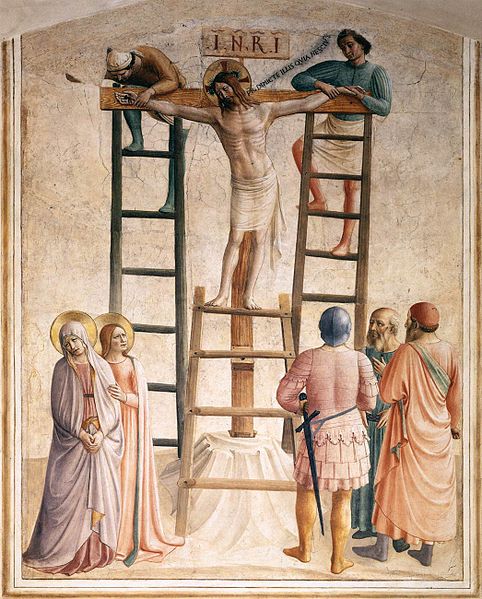
To be clear, I’m not suggesting that it is wrong to say that Christ’s death is, in one sense, an example of what it means to do the will of God no matter the cost.  But I think that this emphasis can go astray if insufficient attention is given to the radical uniqueness of Jesus Christ and the sufficiency of his work on our behalf.  We are called to follow after Christ, but that is about us being conformed to Christ’s likeness, not Christ illustrating a general standard of what it means to follow God.  Rather than God incarnate, condescending to rescue humanity, Jesus becomes framed as the one who shows us “what it means to be a human on the way to God” (58).    In her own words, this perspective turns the story of the death and Resurrection of Jesus into “the call to recognize the resplendency of humanity” (47).   I see this as a skewing of the gospel narrative, turning it into the story of humanity’s ascent to God, rather than the story of God’s rescue of humanity.

Secondly, I felt that Chittister’s perspective was underwritten by a kind of mysticism.   By this I mean that she seemed to presuppose that God is already always within us, and that our ultimate destiny is absorption into God and even into creation.  She writes, near the beginning of the book:

The seasons and feasts, if we are open and alert to them, lead us deeper and deeper into the self, beyond the pull of the present, higher and higher into the One who beckons us on through time to that moment when we will dissolve into God, set free from time to become one with the universe (6-7).

I want to retain Luther’s insight that salvation is something that comes from without, not from within.  We do not have the resources within ourselves to find salvation.  We need the external Word to speak to us, and the Spirit to indwell us.  But even this indwelling does not mean that we are called to go “deeper and deeper into the self.”   Finally, becoming “one with the universe” does not seem to me to be a particularly Christian aspiration.

I hope I have not misinterpreted Chittister’s message, but I found these aspects of the book to be at odds with my own convictions.

This review is already getting too long, so I’ll stop there.  If you want to learn about the liturgical year, this book provides a short, readable introduction, and contains some interesting perspectives.  But I would urge the reader to be aware of some of the theological presuppositions that Chittister brings to the table.

Disclosure : I received this book free from the publisher through the BookSneeze®.com book review bloggers program. I was not required to write a positive review, and the opinions I have expressed are my own.

Leaving the graveclothes behind

A while back I was preaching on the raising of Lazarus, and I got thinking about the narrative shape of this passage of scripture (John 11:1-43).

From a dramatic perspective, the climax of the story of the raising of Lazarus comes at the end, when the dead man walks out of his tomb after four days.  But from a revelatory perspective the real climax of this story comes in verse 25, unexpectedly, as Jesus is talking with Martha.

When Martha, anxious to see Jesus and no doubt exasperated by his two day delay, runs up to Jesus on the road outside of town, she says “Lord, if you had been here, my brother would not have died.”  Jesus’ first answer is “Your brother will rise again.”  Martha replies, “I know he will rise again in the resurrection at the last day.”

Martha has a completely orthodox (if somewhat distant) hope that one day she will see her brother again – that he will rise on the great Day of the Lord which is to come.  But Jesus’ next statement reveals to her the deeper truth about resurrection:

I am the resurrection and the life.  He who believes in me will live, even though he dies, and whoever lives and believes in me will never die.

Life comes from God, we all know that.  And it is a mistake to think that we can know and enjoy apart from God, who gave us life.   Later, in John chapter 17 Jesus says, “Now this is eternal life: that they may know you, the only true God, and Jesus Christ, whom you have sent.”  To know God is to participate in his life; and to know Jesus is to know God – he is God incarnate.

Therefore, resurrection is not some remote benefit that we get because we believe in God; Jesus is not a ticket to heaven; he’s not giving out resurrection gift certificates, so that we can cash them in when our number is up.  No, resurrection is a personal communication of Jesus himself, who is the divine life; if we are raised, it is not because we have obtained resurrection as a benefit, but because we are joined to him who is the resurrection.

Paul says, “If we have been united with him like this in his death, we will certainly also be united with him in his resurrection” (Rom 6:5).    Even more poignantly Jesus says, “Remain in me, and I will remain in you. No branch can bear fruit by itself; it must remain in the vine. Neither can you bear fruit unless you remain in me. I am the vine; you are the branches. If a man remains in me and I in him, he will bear much fruit; apart from me you can do nothing.”

Jesus’ gift to Martha, though I’m not sure she understood it at the time, was to show her that his plan was not simply to raise Lazarus from the dead, but to unite him, and her, and all of us, with himself, so that we might truly share in the love that he shares with the Father and the Spirit.  By being united with him who is resurrection and eternal life, we can know that death will not have the last word.

Why do I think Jesus statement to Martha is more of a climax than the actual raising of Lazarus?  The proof is in the grave clothes.

This is a seemingly strange detail to the story.  If Jesus could raise Lazarus from the dead, why couldn’t he remove his grave clothes?  Why did have to ask others to do that for him?

The grave clothes remind us that there is a difference between the raising of Lazarus and the resurrection of Jesus.  When Jesus was raised, the grave clothes were left behind.  The disciples found them in the tomb.  It was a once and for all resurrection.  He now and forever lives and reigns with the Father and the Spirit, one God.  When Lazarus was raised, on the other hand, it was only to die again.  Tradition has it that Lazarus lived for thirty years after Jesus death.  But he did eventually die.   What Jesus did for Lazarus was a truly great miracle, but it was only a pale reflection of the resurrection of Jesus.

That’s what Jesus is saying to Martha.  Lazarus will rise again.  But I am the resurrection.  And one day you will understand that by uniting yourself to me, you have a far greater hope; right now you are just wishing that you brother would have survived his illness;  but that is only a temporary hope, a deferral of death until a later date.  My resurrection, on the other hand, will bring complete and permanent healing.  We will leave those grave clothes behind, once and for all.

Signs that make me laugh: UK edition

This is long overdue – it’s been way too long since I posted some funny signs.  Samantha and I were recently in the UK for a holiday, and I spotted these gems.

First, a Scottish pun:

You’d think the Scots would be an unwelcoming bunch, since they’ve embrace the thistle as a national symbol.  But we found them to be quite friendly. This is from the Royal Mile, in Edinburgh.

Here’s a winner from town of Windermere in the Lake District.  No, “booze” does not mean something else in Britain.

This sign makes me laugh now that I’m at home and no longer have to drive on roads that are 6’6″ wide.   At the time, I was terrified.

I’m not sure who thought this would be a good name for a park.  Of course, the “Christ” here is Christ’s College, Cambridge, not Jesus Christ.  Still makes me laugh.

Hmm…that font and colour scheme looks familiar.  Guess they haven’t caught up with KFC’s new branding.  Somewhere in London, spotted from a double decker bus.

I guess there are finally enough Canadian ex-pats in London to keep this place going!

John Wesley and the Mission of God, part 6: the new creation

In the later years of John Wesley’s life, the new creation became a dominant theme in his thinking and writing.  To a large extent, he embraced an integrated view of God’s creation, avoiding the typical spirit vs. matter dualism that so often lies beneath the surface of Western Christian thought.

This meant that Wesley did not treat issues relating to the physical world as unimportant, because all of creation was created good in its very physical reality, and because God’s plan of salvation includes the deliverance of creation (not its destruction, as some believe).

These convictions are reflected in a number of ways, including Wesley’s interesting reflections on the suffering of animals (see Sermon 60) and on the original state of creation before the fall (see Sermon 56, §I.1-14).

But it becomes especially clear as Wesley thinks through issues of eschatology, where it becomes clear what he thinks “the new creation” means – not disembodied souls floating in the clouds, but a new heavens and a new earth.

His sermon bearing the title “The New Creation” makes this clear, as he tries to think cautiously but imaginatively about what the new heavens and the new earth will be like.  For example, he suggests that there will be no more comets (§8), no more hurricanes or destructive storms (§9), no polluted water (§12), no volcanoes (§15), and no animal suffering (§17).

But the climax of his vision of the new creation comes in the closing paragraph, where Wesley discusses the deliverance of human beings to “an unmixed state of holiness and happiness far superior to that which Adam enjoyed in paradise.”  He concludes that,

…to crown all, there will be a deep, an intimate, an uninterrupted union with God; a constant communion with the Father and his Son Jesus Christ through the Spirit; a continual enjoyment of the Three-One God, and of all the creatures in him! (Sermon 64, “The New Creation,” §18)

This category of “new creation,” of course, was not just about the future restoration of all things, but was very important to Wesley’s understanding of salvation itself.  Of course, 1 Cor. 5:17 uses this same big-picture concept of new creation in relation to the salvation of the person – “So if anyone is in Christ, there is a new creation.”   The problem is that many Christians never see the big picture implied in this verse – that is, that their participation in the new creation is part of the bigger picture of God’s restoration of all creation.  The goal of God’s work of redemption is not to take disembodied souls out of creation, but to bring about a new heavens and a new earth, which includes resurrected and transformed human beings.  Therefore, for human beings, salvation means not only “continual enjoyment of the Three-One God” but also “of all creatures in him!”

This has two obvious implications for mission.

First of all, if our vision of salvation is a physically resurrected humanity, where all physical ailments and infirmities are healed, then meeting physical needs in the present is not irrelevant to the church’s mission.  God obviously values the physical well being of his creatures.  Therefore, our own work of physical healing, and meeting the basic needs of human beings can be an anticipation of God’s own final restoration.  Meeting physical needs can be a witness to the future new creation.  It is not surprising, then, that John Wesley was very interested in physical health and healing, as well as preaching the gospel.

The second implication is that our mission should include care for the created world.  God’s plan of salvation includes the restoration of the earth, as well as the resurrection of human beings.  Humanity was originally created in the context of creation as a whole.  It is not surprising then, that God’s new creation will also put humanity in the context of a transfigured creation, which will include not only a physical earth, but – we have every reason to expect – a new and transformed ecosystem, including and plant and animal life.  Because of this, proper stewardship of the present creation can be a witness to and participation in the new creation which has begun in the resurrection of Jesus.

[If you are interested in looking into this second implication at greater depth, I recommend the new book by Howard Snyder and Joel Scandrett, Salvation Means Creation Healed.]

John Wesley and the Mission of God, part 5: Social Holiness

In the preface to Hymns and Sacred Poems, published in 1739, John Wesley wrote,

“Holy Solitaries” is a phrase no more consistent with the gospel than holy adulterers.  The gospel of Christ knows of no religion, but social; no holiness but social holiness.

Wesley was particularly concerned about any spirituality influenced by the Mystics, who elevated individual contemplation to the highest ideal – a move that, Wesley suggested, undermined the importance of loving neighbour in both both word and deed.

But we must be careful to note that, for Wesley, “social holiness” did not simply mean “social justice.”  Social holiness begins in Christian community, and therefore has everything to do with the internal life of the church.  The fellowship of believers is the place where social holiness is cultivated and exercised, but it also spills over the boundaries of the church and reaches out to those who are outside of the fellowship.

In 1749, in answer to the objection that the Methodist Societies were divisive and disrupted Christian fellowship in the established parishes, Wesley wrote:

But the fellowship you speak of never existed. Therefore it cannot be destroyed.  Which of those true Christians ever had any such fellowship with these?  Who watched over them in love? Who marked their growth in grace? Who advised and exhorted them from time to time?  Who prayed with them and for them as they had need? This, and this alone is Christian fellowship.  But alas! Where is it to be found?…The real truth is just the reverse of this: we introduce Christian fellowship where it was utterly destroyed.  And the fruits of it have been peace, joy, love, and zeal for every good word and work. (A Plain Account of the People Called Methodists, §I.11)

Because salvation for Wesley was not simply about “souls” going to heaven, but about loving God and neighbour, he realized that the holiness was a reality which needed to be lived out in community.  And not only is Christian fellowship the necessary consequence of a holy life, but true Christian koinonia is also the means whereby the Spirit forms the mind of Christ in us.

Wesley was fully aware the the life of the church is messy, and sometimes painful.  But even through the difficulties of church conflict, the Christian community remains the place where Christians are formed after the mind of Christ, and learn to walk as he walked.  This, of course, includes Christian discipline, as a necessary part of Christian fellowship, and a necessary part of the church’s life as a covenant community.

Therefore the mission of God requires the church as the people of God, as a living, embodied reality.  The church is not an afterthought to mission, and Christian community is not an obstacle to mission, but the vehicle through which mission takes place.   Though Wesley felt he needed to create new structures and new forms of community to produce true Christian fellowship, he did not suggest (as many, who are understandably disillusioned with the church do today) that we can live out our faith in the world without being a part of the fellowship of believers.  This fellowship is the foundation of social holiness, and “zeal for every good word and work” is one of the fruits that grows from this root.

John Wesley and the Mission of God, part 4: Christian Perfection

John Wesley’s most distinctive theological theme was his emphasis on Christian perfection.  His ideas were controversial, and volumes upon volumes of books have been published to try to explain, defend, or dismiss Wesley’s position.

In a brief post like this I can’t really get into the details of the debates, but I can put forward my own interpretation of what I think Wesley was trying to say about holiness, and how it ought to shape a theology of the mission of God.

First, we need to make some clarifications about the word “perfection.”  In our culture we assume that perfection implies the complete absence of flaws of any kind.  Since we know that nobody is perfect (in this sense), it seems ridiculous to say speak of Christian perfection.

Wesley did not use the term “perfection” in a way that implied “flawlessness.”  In other words, he did not believe anyone could reach a state of sinless perfection in this life.  He did not teach that we should strive for absolute perfection, but for Christian perfection, a perfection which is fitting for a redeemed but flawed and frail human creature.  This kind of perfection is not static, but dynamic, personal, relational, and made possible by divine grace alone.  It is  a relative perfection, a perfecting perfection which always admits greater degrees.

Wesley was at his best when he defined Christian perfection as “perfect love”:

But what is perfection?  The word has various senses: here it means perfect love. It is love excluding sin; love filling the heart, taking up the whole capacity of the soul.  It is love ‘rejoicing evermore, praying without ceasing, in everything giving thanks’ (Sermon 43, “The Scripture Way of Salvation,” §I.9).

In other words, Wesley believed it was really possible for Christians to love God with heart, soul, strength, and mind, and love our neighbours as ourselves.   What this meant in a practical sense was that he believed we could be so filled with the love of God that we would not knowingly sin.  Even someone whose life was characterized by Christian perfection would continue to sin, and would continue to need the atoning blood of Christ at every moment.  But, Wesley believed, a Christian could be so overwhelmed by God’s love that their intentions would always be for the good.

These ideas are still controversial, and much more could be said.   I’ve said a bit more about this in a previous post, which you can find here.

An idea which was so central for Wesley and which continues to be a central aspect of Wesleyan theology today must have missional implications.  I would like to highlight three.

The first connects with my last post about the therapeutic nature of salvation.  Salvation is not simply about gaining a ticket to heaven, but about the healing of the sickness which has corrupted us.  Part of the church’s role in God’s mission is to be a community which cultivates the healing grace of God – that is, a community which moves its members towards Christian perfection.  Even if we disagree with Wesley on the degree to which this is possible in this life, we can still affirm that the Christian life ought to head in the direction of perfection.  Or perhaps it would be less of a stumbling block to say that the Christian life should head in the direction of maturity, or a kind of completeness that is fitting for sinners saved by grace.

Secondly, the church ought therefore, to demonstrate the salvation of God, not only in word, but in the manner of its life together.  The church is called to grow up into the fullness of Christ, personally and corporately.  Wesley was particularly fond of the Gospel of John and the epistles of John, and took quite seriously Jesus words in John 13:35 – “By this shall all men know that ye are my disciples, if ye have love one to another.”  The character of the church’s life together is part of our witness to the world.  Again, we think of Jesus’ great high priestly prayer in John 17 – “That they all may be one; as thou, Father, art in me, and I in thee, that they also may be one in us: that the world may believe that thou hast sent me.”  Our unity, our love for one another, is intricately connected to God’s mission.  He established the church to be a living demonstration – a sign, instrument, and foretaste of the kingdom of God – so that the world might know him.  Sadly, Christians often do a very poor job of this.

Again, this theme highlights the fact that the Church’s community life, including its various edifying and sanctifying practices, are themselves part of God’s mission.  Community life and mission should not be played off against one another.

John Wesley and the Mission of God, part 3: A Therapeutic Understanding of Salvation

John Wesley’s theology of salvation is sometimes said to combine the best of both the Western and Eastern traditions, meaning he combines a forensic understanding of salvation with a therapeutic understanding of salvation.    Western Christianity has tended to focus on sin as a guilt problem, and therefore preached salvation primarily in terms of forgiveness (forensic/legal language).    The Eastern tradition has tended to focus on sin as a sickness problem, and therefore preached salvation primarily in terms of healing (therapeutic language).

Wesley was able to draw on both of these traditions by integrating the Western concern with guilt into an Eastern-influenced therapeutic understanding of salvation.   This meant that, overall, Wesley saw salvation as a dynamic, relational process of healing from all the sickness of sin, but included the classic protestant understanding of justification as an important aspect of this process.

Consider the following two quotes, illustrating these two aspects of salvation.

Forensic: Sermon 43, “The Scripture Way of Salvation,” §I.3

Justification is another word for pardon. It is the forgiveness of all our sins; and , what is necessarily implied therein, our acceptance with God. The price whereby this hath been procured for us (commonly termed “the meritorious cause of our justification”), is the blood and righteousness of Christ; or, to express it a little more clearly, all that Christ hath done and suffered for us, till He “poured out His soul for the transgressors.” The immediate effects of justification are, the peace of God, a “peace that passeth all understanding,” and a “rejoicing in hope of the glory of God” “with joy unspeakable and full of glory.”

Therapeutic: Sermon 57, “On the Fall of Man,” §II.8

Hath he not then, seeing he alone is able, provided a remedy for all these evils? Yea, verily he hath! And a sufficient remedy; every way adequate to the disease… Here is a remedy provided for all our guilt: He “bore all our sins in his body on the tree.” And “if any one have sinned, we have an Advocate with the Father, Jesus Christ the righteous.” And here is a remedy for all our disease, all the corruption of our nature. For God hath also, through the intercession of his Son, given us his Holy Spirit, to renew us both “in knowledge,” in his natural image; — opening the eyes of our understanding, and enlightening us with all such knowledge as is requisite to our pleasing God; — and also in his moral image, namely, “righteousness and true holiness.”

The point of what I’m trying to say is that salvation, for Wesley, is  not found simply in being “declared” righteous (justification), but in being healed of all the corruption of sin, and conformed to the likeness of Christ.   Therefore, the salvation that God has prepared for us is something which begins now, but extends to the resurrection.  People sometimes speak of receiving forgiveness of sin as “being saved,” but this is not the whole story. Justification is one aspect of salvation, but properly speaking, salvation includes regeneration, justification, sanctification, and glorification.  These terms are ways of describing the initial, ongoing, and final deliverance from sin.

This has important implications for our understanding of the mission of God.  Mission is not simply about gaining “converts,” but also about cooperating with the Spirit’s healing work in people’s lives.   This also means that God’s mission is not only for those outside the church but for believers as well, who are currently experiencing the ongoing healing work of God in their lives.

In other words, mission is not only “outreach” but also includes the corporate life of the church.  Cultivating holiness, spurring one another on in our response to God’s ongoing work in our lives, teaching, catechizing, discipling – all these things which help to form people as disciples are part of the church’s mission

Wesley’s therapeutic understanding of salvation could be extended to other areas of “healing” (social, psychological, environmental), but I will leave that for another post.