Wesley Ministry Conference with Leonard Sweet: Rediscovering Transformational Discipleship, April 29

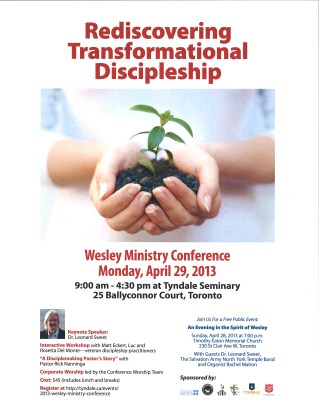
Ministry Conference posterLast week I posted about Tyndale’s upcoming Wesley Studies Symposium.   The Wesley Studies Committee has also been hard at work planning an event aimed at a broader audience of church leaders.  This will be the second time they have hosted a “Wesley Ministry Conference,” the first one featuring  Timothy Tennent in 2009.

This year’s ministry conference will take place on Monday April 29 here at Tyndale, and features prominent author Leonard Sweet.  Sweet is currently the E. Stanley Jones Professor of Evangelism at Drew University, in Madison, NJ, and is known as a creative thinker and exceptional communicator.  The theme for the day is “Rediscovering Transformational Discipleship,” and it will also feature workshop style presentations from some experienced practitioners: Matt Eckert, and Luc and Rosetta Del Monte.

The cost is $45, and registration is available here.

Please spread the word about this important event – we are blessed to have secured Leonard Sweet as our speaker, and I’m sure it will be a fruitful day of engagement with the challenges of discipleship in today’s context.

The night before the conference, a public worship service dubbed “An Evening in the Spirit of Wesley” will be taking place at Timothy Eaton Memorial Church in Toronto (7PM).   This service will also feature Leonard Sweet, along with The Salvation Army North York Temple Band and organist Rachel Mahon.

Hopefully many of you will be able to make one or both of these events!


Conflict with the Conference: Parallels between William Booth and Ralph Horner

I’m currently reading the recently-released book, Lift Up a Standard: The Life and Legacy of Ralph C. Horner, by Laurence and Mark Croswell.    Although Horner is not exactly a household name, he is definitely one of the most significant figures in Canadian church history, and perhaps the most significant in the 19th century Canadian holiness movement.

That is not to say that he was universally admired – on the contrary, he was a controversial person, and the dramatic and emotional nature of his services raised concerns from some of his colleagues.   Nevertheless, he was a very effective evangelist, and his ministry generated a lot of excitement in late nineteenth century Eastern Ontario.

Horner began his career in the Methodist Church, and as I’ve been reading of his conflict with the Methodist Conference (the governing body) I have been struck by the similarities between Horner’s story and that of William Booth, about 30 years earlier.  Both men desired to be itinerant evangelists, but came up against a Conference that was unwilling to allow them the freedom they were looking for in ministry.

Booth had joined the Methodist New Connexion in 1854 and was initially appointed as an evangelist in London.  He would have been happy to stay in this type of ministry, but after two years, the Conference began giving him circuit appointments – first to Brighouse, and then upon his ordination in 1858, to Gateshead.   Booth continued to communicate his desire to be free from pastoral responsibilities so he could focus on evangelism, but Conference continued to deny his requests.

Finally, in 1861, Conference attempted to appease Booth by appointing him to an important circuit in Newcastle-upon-Tyne, and suggesting that he could engage in evangelistic work so long as he had properly arranged for the pastoral responsibilities of the circuit to be taken care of.   The Booths were not satisfied with this, however, so William resigned from the Connexion and went to work an independent evangelist.

Horner Revival Sermons via Internet Archive

Horner’s story is a bit different, but it centres around the same basic conflict between evangelistic and pastoral responsibilities.  Beginning in 1886, Conference appointed Horner to a series of circuits, however, every time, he refused to accept the appointment, arguing that he was called to a special ministry of itinerant evangelism.   Horner’s Conference, however, seems to have been much more forbearing, for in several instances they gave in to his requests and appointed him as Conference evangelist.

Conflict continued, however, and Conference used various methods in attempting to curtail Horner’s activities, including leaving him without an appointment at one time, and at another juncture instructing him to conduct services only under the direction of Conference.   Horner, for his part, was never willing to submit to restrictions on his “special” evangelistic activities.  As Croswell and Croswell summarize it:

It appears that the Methodist Church had no place for Ralph Horner’s ministry, and Horner had no place for the constraints of the Methodist Church (Lift Up A Standard, 62).

Unlike Booth, however, Horner was unwilling to resign, even when formally asked by the Conference.   Both sides seem to have genuinely desired to avoid a rupture of the relationship, but eventually it became clear that no resolution was possible.

It does seem Horner genuinely did not want to leave the Methodist Church, and to their credit the Methodists were doing all they could to keep Horner.   But Horner saw the church as drifting from the preaching and practice of early Methodism and consequently was trying to bring the church back to her roots…The Methodist Church was heading in a different direction and did not have a place for Horner’s interpretation of old-style Methodism.   Horner meant for his holiness revivals to be a renewal movement in the church, but the Conference saw Horner’s actions as insubordination and they could not treat him differently than any other minister (75).

So, after many years of conflict, the 1894 Conference again appointed Horner to a circuit, and decided that he would be removed from their Conference if he refused.   Of course Horner did refuse, and was suspended, before being formally deposed in 1895.  Horner would go on to found two denominations – the Holiness Movement Church and the Standard Church of America.

In part, of course, the stories of both Booth and Horner are part of the age-old conflict between established leadership structures and what are often called “charismatic” leaders.  Both men wanted to work outside the box of the established Methodist polity, and denominational leaders were unwilling to abide their apparent insubordination.
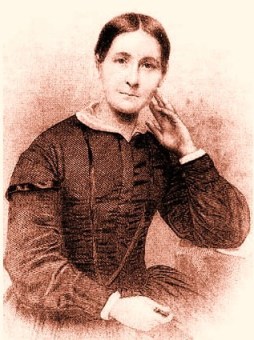
Croswell and Croswell also point to another issue, however (pp. 33-34), which I hadn’t thought of: the difference between the role of a “mass evangelist” (what Booth and Horner wanted), and the more traditional Methodist structures of ministry.   On the one hand, the early Methodist preachers were certainly evangelists rather than pastors.   Pastoral care and visitation in early Methodism was carried out mostly by class and band leaders, not preachers.   However, the early Methodist preachers were not free-ranging evangelists, like the “superstar” preachers of nineteenth century – Charles Finney, Phoebe Palmer, James Caughey, and later, Dwight L. Moody.   Methodist evangelists worked under the direction of Conference, and were appointed to specific circuits.   By the time of Booth and Horner, Methodism had clericalized to the point that the small-group structures were no longer in operation, and the circuit preachers had come to take on more traditional pastoral roles.

Influenced by revivalism, Booth and Horner wanted to exercise a truly itinerant and independent evangelistic ministry – something like the ministry of Finney.  Although these revivalistic evangelists had a significant influence in Methodist circles, their free-ranging evangelistic ministries were actually foreign to Methodist polity.   This helps to explain, in part, the conflict that both Horner and Booth faced with their respective Methodist Conferences.
Some Wisdom from Wesley on Zeal

Christians today don’t normally use the word “zeal.”  It is maybe a bit old-fashioned, and I has associations with a kind of fanaticism that most people want to avoid.  I don’t think there are too many today who want be seen as “zealots”, although I suppose there might still be some who are ready to be labelled “zealous” for a certain cause.

We are more likely to talk about “passion.”  Many evangelicals want to be “passionate worshippers,” or will talk about their passion for a certain kind of mission or for evangelism.

Religious passion, or zeal, however, can be a dangerous thing, if it is misdirected.  Many people, following a disordered religious zeal of one kind or another, have done horrible things and inflicted great pain and suffering on others.  Maybe that is part of the reason many would shy away from an overly zealous religion.

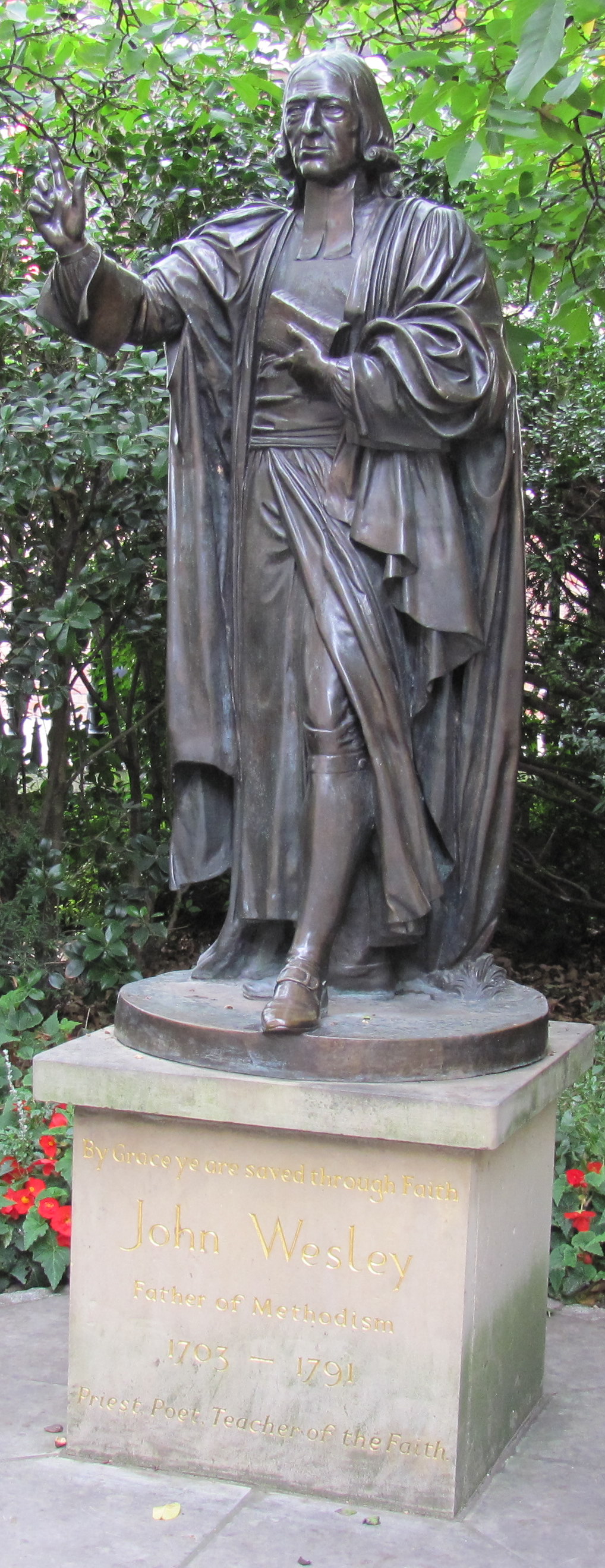
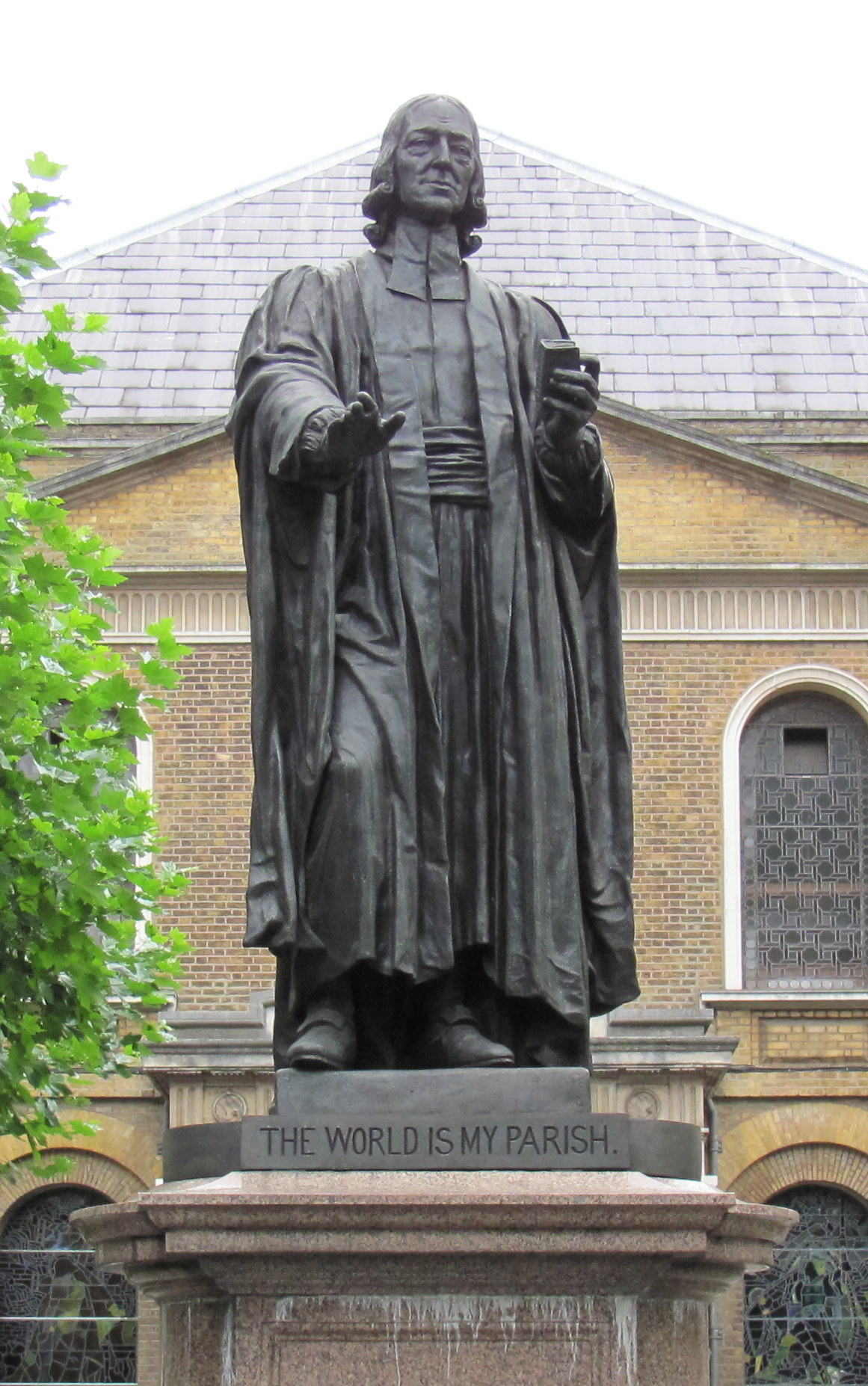
John Wesley recognized the potential danger of religious zeal, noting that “nothing has done more disservice to religion, or more mischief  to mankind, than a sort of zeal which has for several ages prevailed, both in pagan, Mahometan (Muslim) and Christian nations.”  And yet he also maintained that “without zeal it is impossible either to make any considerable progress in religion ourselves, or to do any considerable service to our neighbour, whether in temporal or spiritual things” (Sermon 92, “On Zeal,” §1).

How then, can we distinguish the necessary and good type of zeal from the destructive type?   Wesley’s answer was to focus on true zeal as an expression of love.

In an interesting passage of his 1781 sermon “On Zeal” (§§ II.7-11) he outlines how this “zeal for love” ought to rule and direct all other types of religious zeal.

7. Every Christian ought, undoubtedly, to be zealous for the church, bearing a strong affection to it, and earnestly desiring its prosperity and increase. He ought to be thus zealous, as for the church universal, praying for it continually, so especially for that particular church or Christian society whereof he himself is a member. For this he ought to wrestle with God in prayer; meantime using every means in his power to enlarge its borders, and to strengthen his brethren, that they may adorn the doctrine of God our Saviour.

8. But he should be more zealous for the ordinances of Christ than for the church itself; for prayer in public and private; for the Lord’s supper, for reading, hearing, and meditating on his word; and for the much-neglected duty of fasting. These he should earnestly recommend; first, by his example; and then by advice, by argument, persuasion, and exhortation, as often as occasion offers.

9. Thus should he show his zeal for works of piety; but much more for works of mercy; seeing “God will have mercy and not sacrifice,” that is, rather than sacrifice. Whenever, therefore, one interferes with the other, works of mercy are to be preferred. Even reading, hearing, prayer are to be omitted, or to be postponed, “at charity’s almighty call;” when we are called to relieve the distress of our neighbour, whether in body or soul.

10. But as zealous as we are for all good works, we should still be more zealous for holy tempers; for planting and promoting, both in our own souls, and in all we have any intercourse with, lowliness of mind, meekness. gentleness, longsuffering, contentedness, resignation unto the will of God, deadness to the world and the things of the world, as the only means of being truly alive to God. For these proofs and fruits of living faith we cannot be too zealous. We should “talk of them as we sit in our house,” and “when we walk by the way,” and “when we lie down,” and “when we rise up.” We should make them continual matter of prayer; as being far more excellent than any outward works whatever: seeing those will fail when the body drops off; but these will accompany us into eternity.

11. But our choicest zeal should be reserved for love itself, – the end of the commandment, the fulfilling of the law. The church, the ordinances, outward works of every kind, yea, all other holy tempers, are inferior to this, and rise in value only as they approach nearer and nearer to it. Here then is the great object of Christian zeal. Let every true believer in Christ apply, with all fervency of spirit, to the God and Father of our Lord Jesus Christ, that his heart may be more and more enlarged in love to God and to all mankind. This one thing let him do: let him “press on to this prize of our high calling of God in Christ Jesus.”

It sounds simple, but how often have people failed to focus their zeal on love of God and neighbour, with the result being various forms of bigotry, oppression, and persecution?  The whole sermon is still worth a read today.

The Wesleys and the “New Evangelization” – from First Things

An interesting article came out on First Things this week, entitled “New Evangelization and the Wesley Brothers,” by Colleen Reiss Vermeulen (HT Dan Sheffield).

If you aren’t familiar with the idea, “new evangelization” is a term used in Catholic circles to talk about re-proposing the gospel to those who have fallen away from the faith, or are apathetic about their faith.   In particular, the new evangelization is about re-evangelizing cultures that have a strong Christian heritage, but have embraced secularization and marginalized the faith.    European cultures are the most obvious target for new evangelization, but  North America is also considered ripe for re-evangelization.    New evangelization, or re-evangelization, is seen as a necessary antidote to the de-Christianization of previously Christian cultures.

Pope Benedict XVI has shown some initiative in this regard, establishing the Pontifical Council for Promoting the New Evangelization in 2010.  In October, a synod of Bishops will be held on the new evangelization, and, as Vermeulen notes, the US Council of Catholic Bishops has just produced a resource on the new evangelization.

In this context, Vermeulen suggests that Catholics pondering new evangelization have something to learn from the Wesleys, noting that the 18th century evangelical revival began at a time when Christian religion and observance in England was at a very low point, with many either hoping to get by with a bare minimum of religious commitment, and others showing seeming indifference.

So what did the Wesley brothers do in their setting of indifference and perceived divisions? Did they tone down their sacramental devotion to appeal to the “rational” sensibilities of the age? Or scrap the Book of Common Prayer’s disciplines of daily liturgical prayer as obsolete? Did they insist that a particular “right” way of worship would solve all problems? Did they ignore suffering and injustice in England and focus only on an otherworldly, eternal salvation? None of the above. Instead, Charles and John Wesley set out for the mines, meadows, prisons, and town squares of England with an urgent Gospel message, a messagemeant to be lived.

So she encourages Catholics, facing immense indifference among their own constituency in the United States today, to adopt a full-fledged and in-depth approach to evangelization, calling people to a real, robust, “lived Christianity,” but one that includes a rich sacramental and ecclesial life:

Charles and John Wesley demonstrated a confidence in the Gospel—that by bringing Jesus Christ into all aspects of the lives of those they ministered to, lukewarm members of the Church of England and the “unchurched” masses alike would be inspired by the Holy Spirit to draw close to Christ in the sacraments, especially Holy Communion. In Disciples Called to Witness, the bishops of the United States call on each person today to have a similar confidence that by “proposing anew” the unchanging message of encounter with the person of Jesus Christ, we too can trust and participate in the work of the Holy Spirit, drawing people out of indifference and into authentic Christian living.

It’s an interesting comparison, and an appropriate one,  I think, given Methodism’s original location as a movement of reform and renewal within the Church (noted previously here).

Catherine Booth at Chatsworth

I was surprised to discover during some reading yesterday that William and Catherine Booth had a bit of a holiday in Chatsworth Park when they were young marrieds.   Maybe I shouldn’t find it surprising, but it’s not the kind of place that I normally imagine the “Army mother” spending time.

Chatsworth has been home to the Duke and Duchess of Devonshire since Tudor times, and Chatsworth House is one of the most well known and oft-visited English country houses.  The main part of the current house was built in the late seventeenth century, and has been used as a set for many films, including the 2005 adaptation of Pride and Prejudice.  Apparently, Jane Austen’s fictional Pemberley was inspired by the real-life Chatsworth.

We visited Chatsworth  in September 2010, and it was well worth the trip.  I didn’t care too much for the inside of the house,  but the grounds, and the physical setting of the house itself  are truly amazing.   These pictures give  you a bit of a sense of what it is like, but of course they cannot do it justice.

Catherine seems to have been quite taken by it all when she and William stayed in Chatsworth Park in late October and early November of 1855.  Frederick Booth-Tucker’s biography, The Life of Catherine Booth, Mother of The Salvation Army (2 volumes, 1892), includes extracts from some letters she wrote  to her mother during their stay in the Park, in which she praises the scenery and the magnificence of the house itself.

This afternoon we walked through the park right up to the Duke of Devonshire’s residence. It is one of the most splendid spots I was ever in. It is all hill and dale, beautifully wooded and bestudded with deer in all directions. The residence itself is superior to many of the royal palaces, and the scenery around is most picturesque and sublime. This splendid spot is ours for a week in every sense necessary to its full enjoyment, without any of the anxiety of being its real owner (p. 150).

I suppose I am so used to thinking of Catherine Booth as an austere, self-denying warrior and advocate for the poor, that I find it refreshing to see another side of her – one that is taken aback by the physical beauty and magnificence of a fine English estate.   In another letter she again offers high praise for the beauty of Chatsworth.

This morning we were just preparing to visit Chatsworth House and to explore a part of the park we had not seen, when to our surprise Mr. and Mrs. Fenton and Mr. Mark Firth, brother to the gentleman named in my former letter, came to the door…So we set off to climb some tremendous hills, in order to reach a tower built in the highest part of the Park grounds. I got about half-way up and then my strength failed me, and I begged to be allowed to sit down and wait, while the rest of the party completed the ascent. After much persuasion I carried my point and was left alone, sitting on a stone, my eyes resting on one of the loveliest scenes I ever expect to witness in this world. I enjoyed my meditations exceedingly. I was on an elevation about as high as St. Paul’s, with a waterfall on one side of me and the most romantic scenery you can imagine all round, above and below (p. 152).

Even in the midst of her revelry, however, she did not lose herself completely.  So she continues:

The old Duke ought to be a happy man, if worldly possessions can give felicity. But alas! we know they cannot. And, according to all accounts, he is one of those whom they have failed to impart it (p. 152).

Book Review – Longing for Spring: A New Vision for Wesleyan Community

Elaine Heath and Scott Kisker, both professors of evangelism as United Methodist seminaries, wrote Longing for Spring: A New Vision for Wesleyan Community (Eugene, OR: Cascade Books, 2010) as a contribution to the “New Monastic Library” series, from Wipf and Stock.   The book is an engagement with the “new monasticism” movement from a specifically United Methodist perspective.  The authors are both advocates for new monasticism as a renewal movement, and both are involved in new monastic communities.   Heath and Kisker see the new monasticism as a way forward in the quest to renew the Methodist tradition in America.

New monasticism is a relatively recent movement of Christians who are banding together and forming intentional communities of radical discipleship, often (but not always) including communal living in what New Monastics call “the abondoned places of empire.”  Shane Claiborne and The Simple Way community in Philadelphia are probably the most well-known examples of new monasticism, but there are many others.  If you’re trying to get a sense of what the movement is about, look up the 12 Marks of New Monasticism.  For a book-length introduction, see Johnathan Wilson-Hartgrove’s book New Monasticism: What It Has to Say to Today’s Church (Grand Rapids: Brazos, 2008).

Heath and Kisker have written a book which is aimed at a United Methodist audience.   That means they document new monastic communities within the UMC, locating them within the broader new monastic movement, and they also lay out a proposal for further development of new monastic communities in the UMC.   In doing this, they argue that the new monasticism resonates with the heart of the Wesleyan vision for Christian community.  That is, they argue that Methodists can embrace the new monasticism as an authentic re-envisioned embodiment of the original Methodist communities.

After an opening chapter in which the authors recount their personal stories, the book spends two chapters looking at the history of intentional communities in the church: an initial chapter focused mainly on the history of monasticism in the early church and the middle ages, followed by a chapter discussing “Protestant Models of Intentional Community.”  The book does not present detailed scholarship (that is not its purpose), but provides an interesting narrative of church history from the perspective of intentional communities and their role in renewing the church.  So, the Anabaptist, Pietist, Moravian, and Methodist movements are laid out as part of a history of intentional communities of radical discipleship – a history that extends back to the ancient monks of the Egyptian desert.  The point is not to say that Methodism (which is the main focus of the book) was “monastic,” but that it shared many of the aims and features of monastic communities, in its own way, even as its forms of life were more directly borrowed from the Anglican religious societies and the Moravians.

Next, in chapter four, Heath and Kisker briefly describe the new monasticism, focusing particularly on how United Methodists have become involved.  The fifth chapter was the one I found most interesting, because it makes some concrete suggestions about how the UMC could embrace new monasticism.  For example, a rule of life is offered, based on United Methodist membership vows.  Phoebe Palmer is presented as a potential “patron saint” of new monasticism, someone who “embodied just about everything that the new monasticism holds dear” (53).  And the chapter deals with such concrete issues as appointments and the possibilities of bi-vocational ministry.   The book closes with reports from three United Methodist new monastic communities.
This is a very short book, and as I said above, it is not an attempt at rigorous scholarship, though it is well written.  It’s very accessible, and it offers an interesting window on the new monastic movement from a Methodist perspective.  Because it is aimed specifically at a United Methodist audience, I did feel at times like I was listening in to someone else’s conversation.   But I think this was a necessary consequence of the authors’ choice to write specifically for United Methodists.

As a Wesleyan who is interested in the history and theology of renewal movements I find the prospect of a “Methodist new monasticism” to be very intriguing.  As I’ve noted in previous posts, the origin of Methodism as a religious society in the Church of England means that Methodists have inherited a somewhat ambiguous ecclesial status.  It is not surprising, therefore, that Methodists longing for renewal would attempt to return to radical forms of intentional community as a way of re-connecting with the Methodist ethos in a new context.

Excellent video on Bramwell Booth’s removal from office

A couple of years ago, John Larsson published his book 1929: A Crisis That Shaped the Salvation Army’s Future.  The book offers a very well written account of a fascinating period of Salvation Army history, when the Army’s second General, Bramwell Booth, was removed from office against his will.

Even people who aren’t particularly interested in Salvation Army history will find the story interesting, I think, because the the way things unfolded is actually quite unbelievable.  I recall thinking, as I was reading the book, that it would make a great movie!   It shows the very human side of many heroic figures from the second generation of Salvation Army leadership, as they get caught up in a struggle over how the office of General ought to be reformed.

The video tells the story better than I could – so have a look.

1929 The Salvation Army High Council from The Salvation Army UK on Vimeo.

Unity requires conversion

NOTE: This post is my contribution the Rally to Restore Unity, hosted by Rachel Held Evans.  Head on over to her site, check out the wealth of great posts and hilarious signs about unity, and while you’re at it, consider donating to Charity:Water.

Anyone who is interested in the topic of Christian unity has got to read John Paul II’s encyclical Ut Unum Sint, published in 1995.  And with JPII being beatified last weekend, there’s no better time than the present to acquaint yourself with one of the former Pope’s most remarkable pieces of writing.

If you haven’t read it, and you’re a protestant, you’ll be moved by his humility, his wisdom, and his deep spiritual insight.   If you haven’t read it, and you’re a Catholic, you might be surprised that he doesn’t see Christian unity as merely being about a “return to Rome” (my Catholic friends tell me that many Catholics make that assumption).

Particularly towards the end, when discussing the role of the Pope in the quest for Christian unity, he says some very interesting things.  There’s his remarkable request for forgiveness from those who have “certain painful recollections” caused by actions of the Papacy in the past (§88).  Then, his reflections on Peter’s human weakness and helplessness as a grounding for his own “Petrine” ministry are an attempt to show that he by no means considers himself “qualified” for the job (§§90-93).  This is followed up by a request for help from Christian leaders of other traditions in envisioning a re-shaped Papacy that they might receive as a ministry of unity:

I insistently pray the Holy Spirit to shine his light upon us, enlightening all the Pastors and theologians of our Churches, that we may seek—together, of course—the forms in which this ministry may accomplish a service of love recognized by all concerned…This is an immense task, which we cannot refuse and which I cannot carry out by myself. Could not the real but imperfect communion existing between us persuade Church leaders and their theologians to engage with me in a patient and fraternal dialogue on this subject, a dialogue in which, leaving useless controversies behind, we could listen to one another, keeping before us only the will of Christ for his Church and allowing ourselves to be deeply moved by his plea “that they may all be one … so that the world may believe that you have sent me” (Jn 17:21)? (§§95-96)

Adding to this spirit of humility is the way John Paul speaks of the quest for Christian unity as involving a conversion.  To be clear, he’s NOT saying that non-Catholics have to convert to Catholicism!  He’s saying that Christian unity requires conversion on the part of all Christians.  Of course he isn’t being original in saying, so but hearkening back to the teaching of Vatican II:

There can be no ecumenism worthy of the name without a change of heart (Unitatis Redintegratio, §4).

The conversion that the Pope (and the Council) are calling for is both personal and communal.   It is not simply a call to be nice and civilized to one another, but a call to “be more radically converted to the Gospel,” (Ut Unum Sint, §15) by which each of us is irrevocably bound to one another.   Today, we have become so accustomed to divisions between Christians that many of us seldom think about it, but our disunity is a scandal, and an open contradiction of the one faith, one Lord, and one baptism which we all share.

Rooting the call to Christian unity in the gospel itself means that JPII is calling us to recognize that unity is not an afterthought for Christian life and mission.

Jesus himself, at the hour of his Passion, prayed “that they may all be one” (Jn 17:21). This unity, which the Lord has bestowed on his Church and in which he wishes to embrace all people, is not something added on, but stands at the very heart of Christ’s mission. Nor is it some secondary attribute of the community of his disciples. Rather, it belongs to the very essence of this community. God wills the Church, because he wills unity, and unity is an expression of the whole depth of his agape (Ut Unum Sint, §9).

Connecting unity, the gospel, and mission in this way is unsettling, because anyone can see that we fall far short of expressing the depth of God’s love in the way we alienate one another.  The only response possible is repentance and renewal – a conversion of our divided thinking, our divided practices, and our divided identities.

If anyone is thinking that this all sounds very Catholic, and that it therefore doesn’t apply to you (well, first of all, that way of thinking in itself is something to repent of), go and read the sections of the Cape Town Commitment that deal with unity and mission.  For example: “A divided Church has no message for a divided world. Our failure to live in reconciled unity is a major obstacle to authenticity and effectiveness in mission” (§IIF).

Protestants like myself tend to think of “conversion” as a one-time thing, but in Catholic thinking, conversion is seen as a lifelong process – a continual, Spirit-driven turning of the person away from sin and towards God and the truly human life which God desires for us and has pioneered for us in Jesus Christ.   Ecumenism (which I use broadly to refer to any efforts to restore unity among Christians) can be used by God to initiate this kind of continual turning.   As we encounter brothers and sisters of other traditions, we are drawn toward their examples of Christian life and their spiritual traditions – which often contain insights that are new to us.  At the same time, we are made more aware of the many ways in which our divisions impoverish and hinder the life and mission of the church as a whole.  JPII says it this way:

Thanks to ecumenism, our contemplation of “the mighty works of God” (mirabilia Dei) has been enriched by new horizons, for which the Triune God calls us to give thanks: the knowledge that the Spirit is at work in other Christian Communities, the discovery of examples of holiness, the experience of the immense riches present in the communion of saints, and contact with unexpected dimensions of Christian commitment. In a corresponding way, there is an increased sense of the need for repentance: an awareness of certain exclusions which seriously harm fraternal charity, of certain refusals to forgive, of a certain pride, of an unevangelical insistence on condemning the “other side”, of a disdain born of an unhealthy presumption. Thus, the entire life of Christians is marked by a concern for ecumenism; and they are called to let themselves be shaped, as it were, by that concern (§15).

I hope the Rally to Restore Unity has been a time of conversion for at least some of Christ’s disciples – a time for celebrating the enriching differences among us, but also a time for repenting of the sinful divisions which keep us apart and obscure our witness to the gospel.

Notes on Being “Missional” and the Church’s Particularity

Lately I’ve been thinking about the meaning of being “missional” as it relates to the church’s peculiarity as a community.  Often I hear people portraying the church’s communal life as the enemy of missional living, as if these were polar opposites.   On the other hand, the older evangelical “seeker-sensitive” paradigm was premised on the idea of removing any barriers to “belonging” by avoiding any kind of in-house Christian language.   Both of these trajectories are problematic.

The church is a particular, visible, historically continuous people, and so its mission must include the incorporation of persons into the visible, historical fellowship. It is not simply about “adapting” the gospel (as an idea or principle) in new contexts, though there must be some cultural adaptation as the church moves through time and space. The primary direction is not that of adapting an idea to the culture, but about adopting people into the community of faith, which is the bearer of the apostolic gospel.

Mission therefore is not simply about proclamation, but also about catechesis. Becoming a Christian is about learning a new language and a new way of life. The particularities of Christian practice and the inherited language of the faith cannot be stripped away in the name of cultural relevance.  If, in the effort to be seeker-sensitive, we always seek  to use language and practices that a non-believer would understand,  what kind of formation are the Christians in our own communities receiving?  However, we can assume that speaking in ways that are culturally relevant will be more important in the early days of a person’s “incorporation” into the church.

The church’s corporate life (worship, teaching, fellowship, mutual service) cannot be separated and played off against its missionary character. Sometimes discussions about being “missional” tend to devalue the “internal” life of the church, and emphasize the sending out of the church almost exclusively. The result is that the particularity of the church’s corporate life is watered down.

The church is missional precisely as a distinct people. The church exists for the world precisely as a distinct people. The two are not opposed. A Christian life is an ecclesial life, and this is a distinct, peculiar way of life, embodied in the historical people of God. In other words, the church is a community in mission (see Phil Needham’s book).

The church is both a means and an end (Newbigin, The Household of God). It is not merely a pragmatic instrument, as if the real goal is evangelization (or social transformation or some other goal) and the church is simply the tool for achieving this. Because it is also a foretaste of the coming kingdom, it is an end in its own right.

In short, the gospel is not simply an idea, but a story which must be embodied by a people. This requires that the people of God have a strong community life, complete with a unique language, and unique practices which are not easily disentangled from the gospel itself.  In other words, to take up Barth’s categories, the Spirit’s work includes not only the sending of the Christian community, but also its gathering and upbuilding.

What is God’s Plan for Ecumenism?

That was the title of the episode of Perspectives: The Weekly Edition, which aired Firday night on Salt + Light TV.  Host Pedro Guevera Mann invited some representatives of the Canadian Council of Churches’ Commission on Faith & Witness to discuss the topic, and I was privileged to be interviewed along with my colleagues Dr. Mary Marrocco, and the Rev. Dr. Gilles Mongeau, SJ.

It is a huge topic, and we didn’t have nearly enough time, but it is wonderful that Salt + Light TV is showing an interest in ecumenism and trying to generate some discussion among their largely Catholic audience.

There isn’t an overwhelming interest in ecumenism on the grassroots level these days.  It was interesting to hear about why this is the case in Catholic circles.   In spite of clear teaching from Vatican II and subsequent magisterial documents like John Paul II’s Ut Unum Sint, many Catholics are still under the impression that ecumenism means bringing protestants “back to Rome.”    On the protestant side it would seem as if Christians are becoming more “ecumenical” in that denominational differences are no longer as signficant as they used to be.  Many people don’t really care at all about what denomination they belong to, as long as they feel at home in their local congregation.  But I think that it is precisely this dismissal of the significance of denominational differences that can undermine serious discussion about Christian unity.  If our differences don’t matter at all, then there is no reason to try to overcome them!

Still, the current situation is preferable to the hostilities of past generations.  And even if there is not an overwhelming interest in “official ecumenism” via bodies like the Canadian Council of Churches, there is, it seems to me, a lot of interest in “informal ecumenism,” as seen in some current trends in worship and spirituality (such as the growing interest in spiritual direction among evangelicals).

Salt + Light decided to do a show on ecumenism because this is the Week of Prayer for Christian Unity, which runs from January 18 to 25 each year.   This year, the week of prayer is focused on the church in Jerusalem, and the resources for the week (which can be found here) were prepared by Chrisitans from Jerusalem.   The theme is “One in the Apostles’ Teaching,” taken from Acts 2:42.

I’ll leave you with my favourite prayer from this year’s Week of Prayer service:

Merciful God,
may your life-giving Spirit
move in every human heart,
that the barriers that divide us may crumble,
suspicions disappear,
and hatreds cease,
and that, with divisions healed,
your people might live in justice and peace.
We pray to the Lord.