Great Series on The Salvation Army and the Sacraments

Adam Couchman has posted a great five part series on The Salvation Army and the Sacraments.

Part One reviews the historical context for the decision to discontinue the use of the baptism and the Lord’s Supper

Part Two discusses the actual decision itself

Part Three summarizes the various explanation given by Salvationists for their non-observance – helpfully categorized into eight types of arguments

Part Four discusses the rites that The Salvation Army does use, and notes that they are actually sacramental – which demonstrates a contradiction in the Army’s position

Part Five concludes with some notes of caution for Salvationists, and with a suggestion for a more gospel-oriented stance, which allows for the use of the traditional rites without requiring them.

While some people are tired of this discussion, I think it continues to be an important one.  I don’t expect to see any official change in The Salvation Army’s position in the near future, but there are still some serious issues that need to be worked out in the Army’s position.   If Salvationists are to continue to embrace their own symbols and rituals as sacred means of grace (i.e., soldier enrollment, the mercy seat), they cannot reasonably make the traditional rites a taboo for their own members.  If all of life is potentially sacramental, how can the two specific rites used by almost all Christians be banned?

Adam has done some great thinking on this topic, and I hope his ideas are widely read and well received.  I think his proposal is actually more faithful to the Booths’ original intent than the current “ban” on baptism and the Lord’s Supper.  I remember reading with great interest about how Captain Abby Thompson, pioneering officer in my hometown of Kingston, Ontario, used to take her entire group of soldiers to the local Anglican Cathedral for communion (much to the chagrin of the parishioners, who chased the curate out of town because of his support for the Salvationists).   Yet if a local corps officer did this today, they would spark great controversy, and might even be rebuked by their leaders!

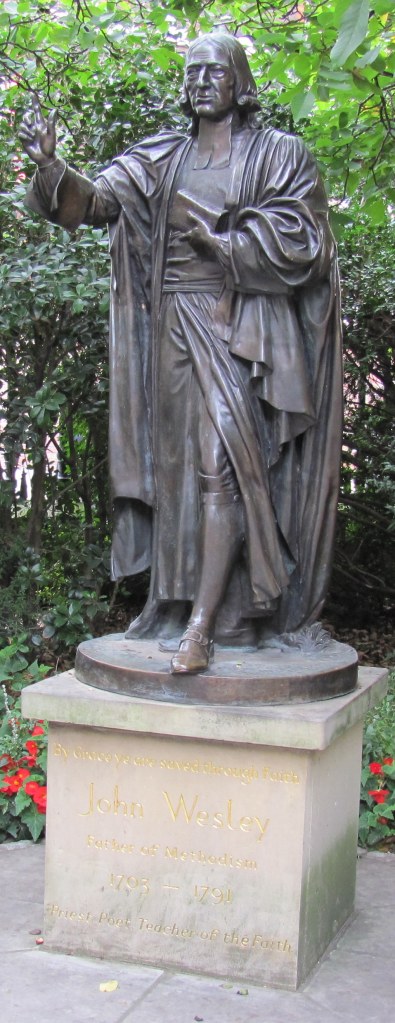
John Wesley’s Theological Interpretation of Scripture

Last week I was assisting Howard Snyder as he taught the class “John Wesley and the Mission of God” at Tyndale Seminary.  Towards the end of the class I asked the students about their general impressions of Wesley’s sermons.  One of the first comments was that Wesley doesn’t really do “exegesis” of a text.   Rather, he usually takes a single verse as his starting point and then expounds upon a theme.  His sermons are, in a sense, more “topical” than “exegetical.”

Personally, I’m quite wary of topical preaching.  Typically it means that the preacher begins with a topic, knowing what they want to say, and then goes to the Bible to find a verse or passage that supports their preconceived idea.   Scripture then becomes (in the worst case scenario) a prop to support the preacher’s ideas.  The better way, then, is to begin with a passage of scripture and a blank sheet of paper – no preconceived agenda, other than allowing the text to speak to the particular context in which you are preaching.

Having said that, it would be wrong to dismiss Wesley’s sermons as examples of “topical” preaching.   Although his preaching is not exegetical in the contemporary sense of the term, I would argue that his sermons are thoroughly biblical, in that they arise out of Wesley’s consistent theological interpretation of scripture.

This point is underscored by an excellent essay, “Wesley as Biblical Interpreter,”  by Robert Wall, which is included in the recent Cambridge Companion to John Wesley.   Though, as Wall indicates, Wesley is sometimes misread by some as an uncritical biblicist, a closer reading reveals that he can be seen as “an exemplar of theological interpretation of the Bible.”

Wesley had a keen sense of the overall shape of the Biblical narrative, centred on the saving message of salvation by faith, and read through the Epistle of 1 John as the simplest and most sublime statement of the gospel.  While it might seem arbitrary for Wesley to give 1 John primacy of place, his logic was that the Apostle John lived the longest, and his writings were the last, and therefore, the most advanced witnesses to Christ.

Consider this quote from Wesley’s Journal, July 18, 1765:

In the evening I began expounding the deepest part of the holy Scripture, namely, the first Epistle of St. John, by which, above all other, even inspired writings, I advise every young Preacher to form his style.   Here are sublimity and simplicity together, the strongest sense and the plainest language!  How can any one that would “speak as the oracles of God,” use harder words than are found here?

The reality is that every interpreter makes these kinds of choices, but most protestants read the Biblical canon through Pauline eyes, rather than Johannine (which is generally seen as the Eastern preference).  Not that Wesley spent all his time in 1 John.  His sermons are peppered with scriptural quotations and allusions which range throughout the biblical canon.   But 1 John served as a kind of hermeneutical key for Wesley.  As Wall summarizes:

Whereas Wesley’s extensive use of biblical citations and allusions in his sermons instantiate an interest in letting each part of Scripture engage the whole – obscure texts illuminated by more lucid ones – his final court of appeal is 1 John.  (“Wesley as Bibilcal Interpreter,” p. 117-118).

Wall also goes on to list ten “interpretive practices” in which Wesley engaged as a biblical interpreter (his headings, my summaries in brackets):

  1. The intuited text (role of the HS)
  2. The naked text (use of critical tools to understand the literal sense)
  3. The canonical text (sense of the way the whole of scripture fits together)
  4. The community’s text (reading scripture in the church, alongside other interpreters)
  5. The salvific text (reading scripture “for salvation”)
  6. The ruled text (use of the “analogy of faith” – the non-negotiable core of Christian faith – as a rule for interpreting each part)
  7. The preached text (translating the text to the immediate context)
  8. The responsive text (interpreting scripture so as to be changed by it)
  9. The performed text (relating scripture to Christian experience)
  10. The sacramental text (using scripture as means of grace for the community)

These practices, so helpfully illuminated by Wall, give us a rich picture of Wesley as a nuanced interpreter, who was well attuned to important theological and pastoral issues as he read scripture – a far cry from an uncritical biblicist!

The essay is well worth reading if you are a student of Wesley.

Four John Wesley quotes everyone should know

One of the great things about John Wesley was his ability to distill theological wisdom and Christian experience into short, memorable phrases.  Here are some gems that everyone ought to be familiar with:

“I went to America, to convert the Indians; but oh! who shall convert me? who, what is He that will deliver me from this evil heart of mischief?  I have a fair summer religion.” –Journal, January 24, 1738.

Wesley’s time in as a missionary in Georgia was a total disaster.  He came home, basically running away – running from a failed ministry, a failed mission to the native Americans, and a failed romance with Sophie Hopkey, who had now married another man who was pursuing legal action against Wesley.  He was in crisis, and he could see that his faith had been tested and found wanting.

“I felt my heart strangely warmed.  I felt I did trust in Christ, Christ alone, for salvation; and an assurance was given me that He had taken away my sins, even mine, and saved me from the law of sin and death.” –Journal, May 24, 1738.

Four months later, Wesley had his “conversion” experience in a Moravian meeting at Aldersgate Street in London.   People debate whether or not this should truly be called a “conversion,” but it was definitely a turning point in his life and ministry.  As someone read from Luther’s preface to the Epistle to the Romans, the truth of the the transforming power of Christ’s death and resurrection became real for Wesley in a very personal way, and he found the assurance of faith for which he had been searching. Assurance came not from within himself, but from without – from the external word of the gospel, applied to his heart by the witness of the Spirit.

“At four in the afternoon, I submitted to be more vile, and proclaimed in the highways the glad tidings of salvation, speaking from a little eminence in a ground adjoining to the city, to about three thousand people.” – Journal, April 2, 1739.

This third quote is about Wesley’s first experience with “field preaching.”  By nature, Wesley was a conservative high churchman, and therefore the idea of preaching outside was abhorrent to him.   Yet his friend George Whitefield had invited him to Bristol to see the great throngs of people who were eager to hear the gospel, and he was convinced that he needed to set propriety aside, becoming “more vile” in order to reach people.  Field preaching became a key part of Wesley’s ministry.

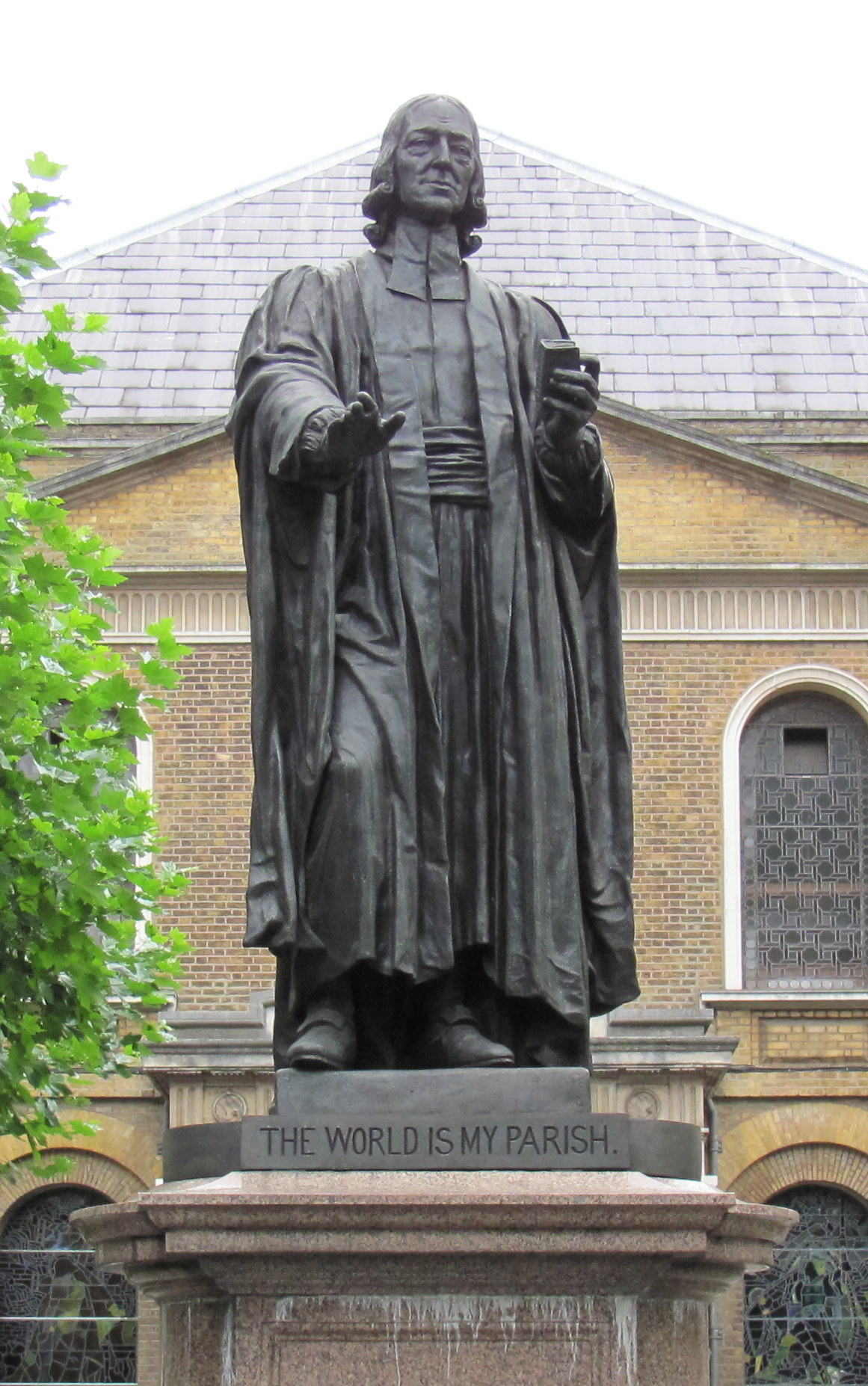
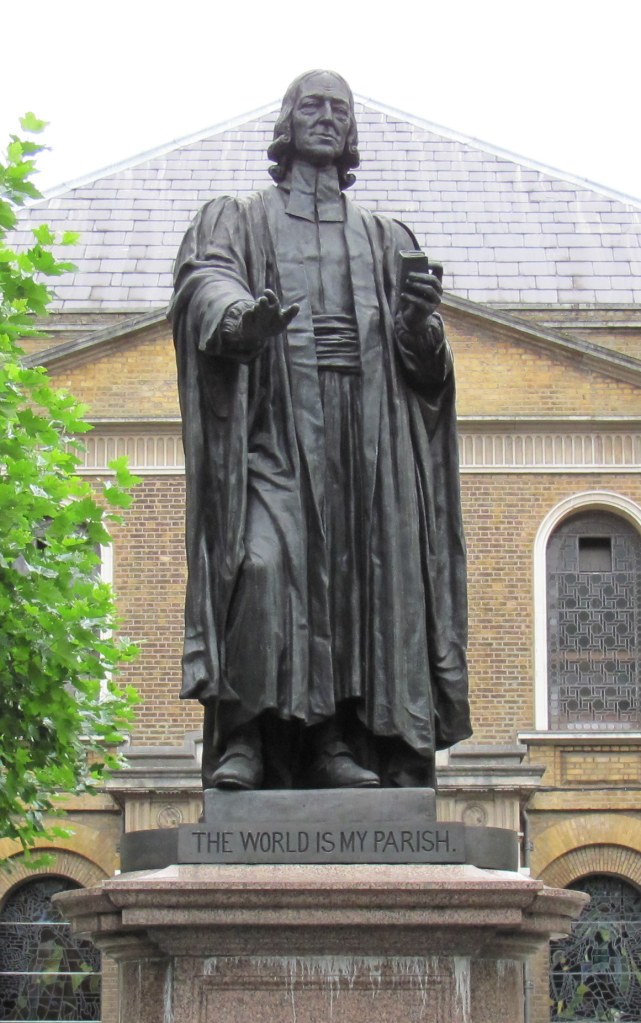
“I look upon all the world as my parish; thus far I mean, that in whatever part of it I am, I judge it meet, right, and my bounden duty to declare unto all that are willing to hear, the glad tidings of salvation.” –Journal, June 11, 1739.


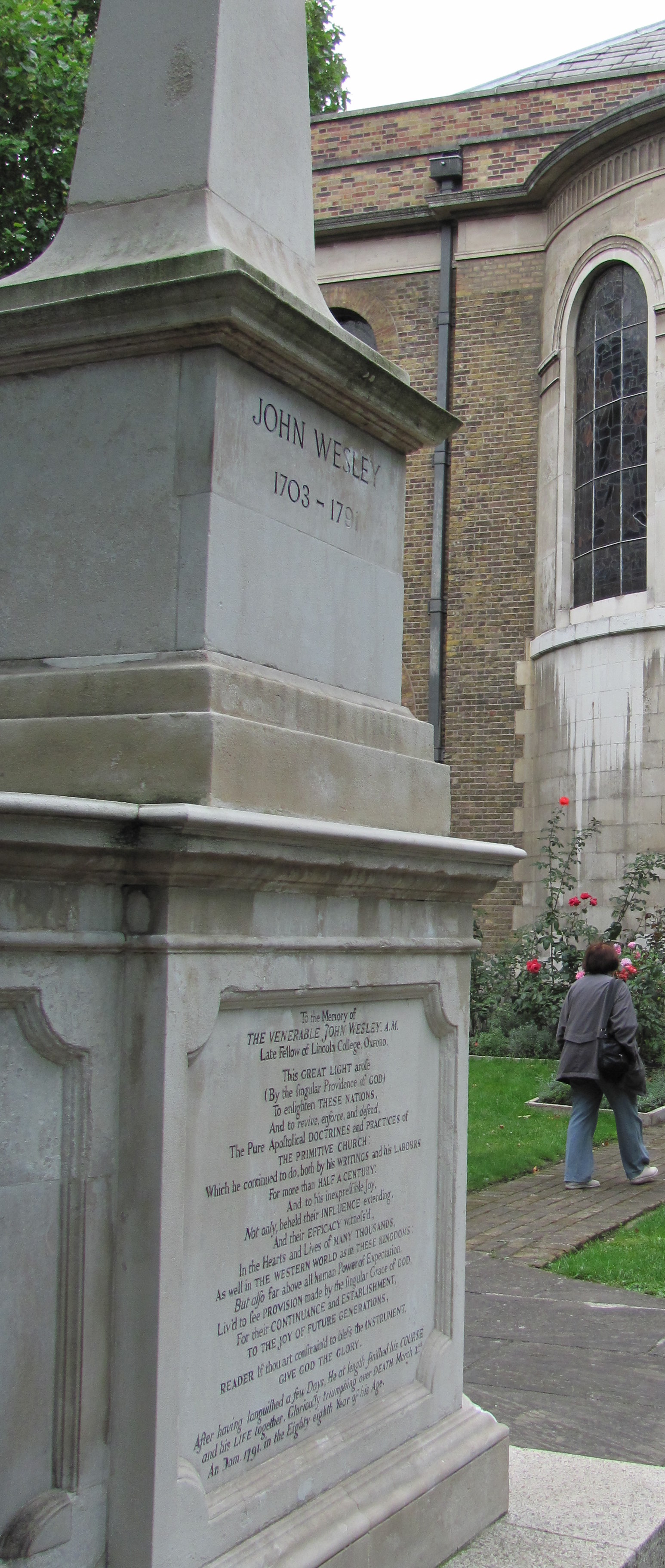
Wesley’s itinerant ministry was challenged by some, because it meant that he crossed into the parishes of other priests of the Church of England, sometimes preaching in their territory without their permission.  Wesley’s quote about the world being his parish is usually seen as his missional justification for preaching the gospel wherever he was.  But he also knew that he was exempt from the parish boundary rules as a fellow of Lincoln College, Oxford.  He had no parish of his own, and was free to preach where he liked.  He used this to his advantage.

Salvationists should read this

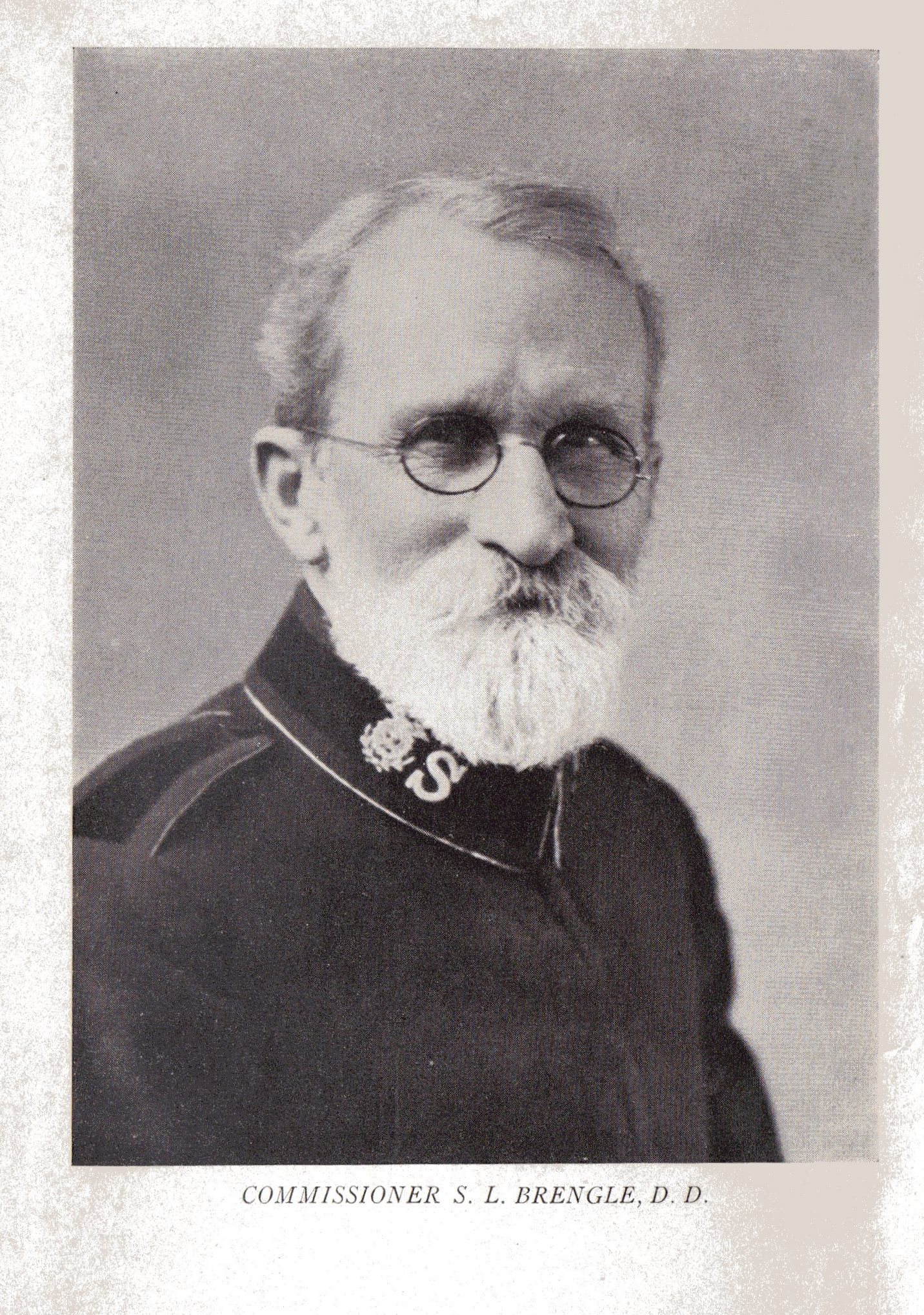
Australian Adam Couchman has just posted a review of one of Samuel Logan Brengle’s classic books, Helps to Holiness.   I think there is a real need for online reviews of old classics, so I’m glad to see Adam taking a look at this one by Brengle.

It’s a great review, acknowledging Brengle’s significant contribution, but also noting some of the shortfalls of his holiness theology – notably his approach to sin as a substance, his underestimation of the gracious and active pursuit of humanity by God, and the elevated role that experience plays in his theological method.

In spite of these shortcomings, Adam’s conclusion is that

Christians should read this book. Salvationists should read this book. But we should read it how Brengle intended it to be read; as a pastoral and devotional aid. Whilst Brengle had some training in academic theology he didn’t write academic theology. He wrote practical theology. It’s not perfect, but it is helpful.

This kind of critical appreciation for Brengle is sorely needed.  I find people either dismiss him, or put him on a pedastal.   I hope others will follow Adam’s lead on this.

Go here to read the review.

Doctrine in The Salvation Army Tradition

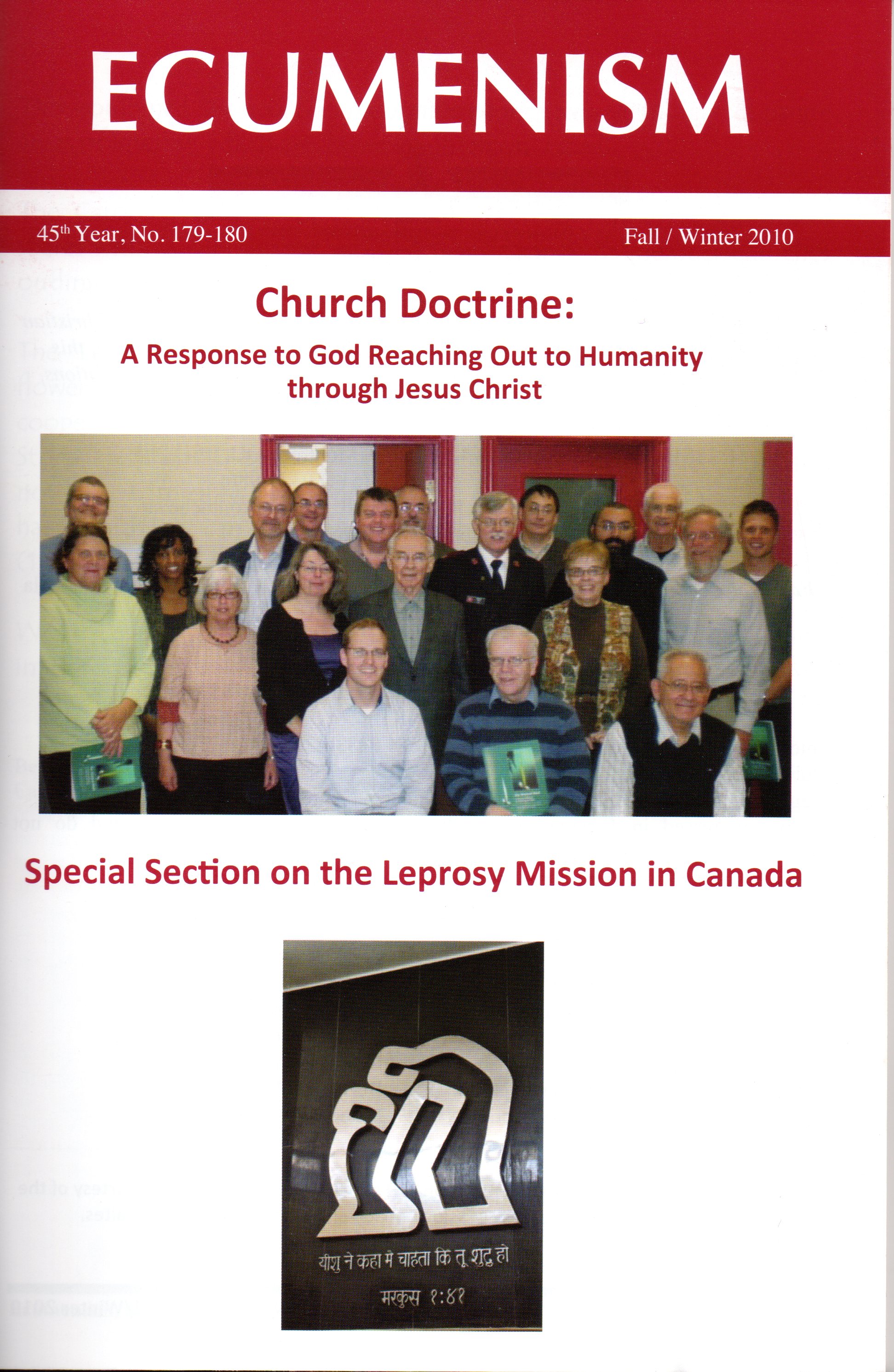
From 2007 to 2010, the Commission on Faith and Witness (Canadian Council of Churches) engaged its members in a dialogue regarding the role of doctrine in the life of the church.   The fruits of this dialogue are reported in the current issue of Ecumenism, published by the Canadian Centre for Ecumenism in Montreal.  Each commission member was asked to articulate their tradition’s answer to the following questions:

  1. What is dogma or doctrine in your tradition?
  2. What are considered to be doctrinal statements?
  3. Who can make doctrinal statements?
  4. What is the relation between doctrine and revelation?
  5. How does your tradition view the first seven ecumenical councils?
  6. How does your tradition understand the reliability of Scripture?
  7. What are those shared convictions without which the Church’s mission would be seriously impaired, or even become.

While ecumenical dialogues often aim at producing some sort of consensus statement, members reported that during this particular dialogue, it became clear at the outset that no consensus would be achieved.  The membership of the commission is very broad, including Catholics, Orthodox, historic Protestants, radical reformation, and evangelical traditions.  Some of these traditions are committed to holding fast to formal statements of  belief (creeds and confessions), while others have historically been opposed to creeds of any kind.

In an introductory article, Gilles Mongeau, Paul Ladouceur, and Arnold Neufeldt-Fast note the general commonalities that they identified in the process:

Every member Church holds to the necessity of some doctrine, explicit or implicit, as a reference point.   In all cases, one or more documents exist which lay out this doctrine, though the authority and form of these documents varies greatly. In all cases, Scripture, tradition, reason, and religious experience interact in some way in the emergence of doctrine.  Similarly, the role of some form of reception by the community of the faithful is a strong component of all of the traditions represented.  Finally, the presenters of the papers agree that the fullness of truth resides in God alone, and that the truth of doctrines is eschatological, that is, oriented to a future complete fulfillment or plenitude.
“Introduction to the Working Papers on Doctrine,” Ecumenism 179-180 (Fall/Winter 2010): 5-6.

While I wasn’t part of the actual discussion, I was able to participate by revising and expanding the Salvation Army contribution to this publication, originally written by Kester Trim, and entitled “Doctrine in the Salvation Army Tradition.”   It is interesting to consider doctrine in the SA’s life via a comparison with the role it plays in the life of other traditions.   Some of our observations that are relevant to the above:

The Salvation Army is not known for placing a particular emphasis on doctrine.  This is not because doctrine is unimportant for Salvationists, but because The Salvation Army has customarily emphasized evangelism and service, rather than theological scholarship.  Nevertheless, The Salvation Army’s official doctrines are viewed as essential to its corporate life and witness.
“Doctrine in the Salvation Army Tradition,” Ecumenism 179-180 (Fall/Winter 2010): 36.

The Army is an interesting ecumenical partner in this dialogue, as it is on many issues, because it treats doctrine as essential, but tries to avoid doctrinal controversy.  It wants its doctrine to be clear, but Salvationists haven’t wanted to spend much time developing their doctrinal tradition.  It envisioned its brief 11 articles as a minimalist list of essentials, which would allow the SA to be “an evangelisitic force free from the entanglements of doctrinal controversy” (Ibid., 37).

Of course, it is not easy to remain aloof from doctrinal controversy!  First of all, the Army’s doctrines are clearly Wesleyan, and therefore anti-Calvinist:

In these brief 11 articles of faith, one can see the seminal Wesleyan themes of total depravity (Article 5), universal atonement (Article 6), justification by faith (Article 8), assurance through the witness of the Spirit (Article 8), and a strong emphasis on sanctification (Articles 9 and 10) (Ibid., 37).

Secondly, from the perspective of “implicit doctrine,” the obvious point of controversy would be the sacraments.  Even here, a large part of Booth’s motivation was to avoid controversy.

The Army’s non-observant stance on the sacraments had its historical precedent in the tradition of the Society of Friends, but was also justified in part by the above-mentioned desire to avoid theological controversy (since the sacraments have often been a matter of theological dispute in Christian history).  It was not Booth’s intent to disrespect the practice of other traditions, nor to make it a matter of dispute. Moreover, Salvationists have never been prohibited from from partaking of the Lord’s Supper in other traditions where they are welcome, and are free to be baptized if they feel it to be of importance (Ibid., 37-38).

Avoiding controversy is a noble aim, but very difficult to achieve in practice.  I would suggest that recent sacramental statements of the Army have lost this early irenic tone and approach, and have become much more controversial than Booth would have liked.  Also, I think one needs to be careful that a desire to be non-controversial does not become a justification for avoiding deep theological discussion, and meaningful engagement with ecumenical partners.

Top posts of 2010

As the year draws to a close I thought I’d take stock of what people have been reading on my blog.   Here are the most read posts for 2010.

The fact that the top two posts are about The Salvation Army and the sacraments tells me that Salvationists are still interested in discussing that issue (though some people want to consider it a closed case).

  1. A Comparison of Salvation Story and the 2010 Handbook of Doctrine
  2. Three Quotes from William Booth on the Sacraments
  3. Unsafe God
  4. Christ as the Good Samaritan
  5. The longest church name in the history of the world
  6. Signs that make me laugh: “Cats, Eye Fashion”
  7. The Salvation Army as an Order? An Early Catholic Comment
  8. The Good Samaritan, by John Newton
  9. Wrestling Jacob
  10. Signs that make me laugh: Creepy Doll is “Not For Sale”

Thanks for all who stopped by this past year.  For 2011 I’m planning to continue blogging through my work on my dissertation, as well as hunting for funny signs.  I was saddened to see that “Steak Queen” at the corner of Lawrence and Victoria Park has changed its name before I got a chance to snap a pic and feature it here.  But don’t worry, there’s lots of other material out there!

Holiness is not a state

Many of the problems with Wesleyan/Holiness understandings of sanctification come from the drive to define a “low water mark” of holiness, by which I mean, a line in the sand – a threshold which we can identify as the indication that someone has experienced holiness or been made holy.  This whole idea is built upon the presupposition that “holiness” is a state, a status, or a place where one can somehow arrive.   Some of the “second blessing” holiness teachers (such as Samuel Logan Brengle) explicitly define holiness as a “state,” and then go about the process of trying to identify the ways that one can arrive at this state, by God’s help.

If we look back further, John Wesley’s famous “redefinition” of “sin properly so-called” as “a voluntary transgression of a known law of God” was part of his attempt to define the “low water mark” of Christian perfection.  Wesley would never say that anyone could reach a point in their Christian life where they did not constantly need the atoning blood of Christ.  While, in certain contexts, he used the above “redefinition”, he also believed in total depravity, which means that he believed that, as one journeys deeper into holiness of heart and life, one continues to find that sin “cleaves to all our words, and actions.” (The Repentance of Believers, §I.11)  Indeed, Wesley says of the children of God,

They are daily sensible of sin remaining in their heart, — pride, self-will, unbelief; and of sin cleaving to all they speak and do, even their best actions and holiest duties. [On Sin in Believers, §III.7, emphasis mine]

This is classic protestant teaching on total depravity, though I think later Wesleyans have, at least on a popular level, not always followed Wesley in maintaining this point.  The point is that even our “holiest” actions as Christians remain tainted by sin, possibly in ways we are not conscious of and don’t even understand.  However, Wesley felt that one could reach  a point of not voluntarily sinning, by becoming so overwhelmed by the perfect love of God that the intentions of one’s heart is made pure.   This was his “low water mark” of Christian perfection, though he never claimed it for himself.

It seems to me that this “low water mark” issue could be avoided if we simply made clear that holines is not a state.  There is no line in the sand of the Christian life which marks off “the holy” from the rest of us.  Holiness is a relative characteristic which all believers possess, to a greater or lesser degree.  From the moment of conversion we are being transformed, made responsive to the grace of God in our lives, and conformed to Christ’s likeness.   That is why Paul can address the Corinthians as “those sanctified in Christ Jesus, and called to be holy.”

From a Wesleyan perspective, we can still maintain that it is not right for us to put a priori limits on the sanctifying grace of God.  That is, we cannot, in advance, say that any aspect of our lives will surely remain corrupted by sin.  What we can say, however, is that, as a relative characteristic, our transformation will always remain relative. Only God is absolutely holy.

Perhaps part of the problem is that later Wesleyans conflated Wesley’s category of “Christian perfection” with “holiness.”  While Wesley seems to fall into this “low water mark” trap I’m speaking of in relation to his discussions of Christian perfection, he nevertheless recognizes the fact that “holiness” is a relative characteristic shared by all believers.

Every babe in Christ is holy, and yet not altogether so. He is saved from sin; yet not entirely: It remains, though it does not reign. [On Sin in Believers, §IV.3]

Therefore, the answer to the question, “are you holy?” will always be “Yes” and “No.”  There ought always to be ways in which our lives reflect the holiness of God; and yet there will always be ways in which they do not.

Ongoing Discussion of SA and Sacraments

Way back in June I started a discussion of The Salvation Army’s new Handbook of Doctrine, focusing on the section that deals with the Sacraments.   I indicated then that I was working on an article for the Rubicon on this topic.  The article turned into two short articles, and they’ve been posted in recent weeks, here and here.

The two posts point out two changes made in the new HOD: 1) a shift of emphasis, from divine agency to human agency, and 2) the addition of a claim to a divine calling to non-observance.   Point #1 is not terribly concerning, although I prefer the more theocentric teaching found in the 1999 handbook, Salvation Story.   Point #2 is a much more serious problem, because it touches on foundational issues of authority in doctrinal teaching.

I hope Salvationists will consider carefully whether or not they are willing to support the claim that God himself  has called them to not observe sacraments.   I am not willing to go along with this claim, because there is no way to establish it on the basis of scripture or Christian tradition.   I could have written a lot more in my post on this issue, but I’ve tried to get to the heart of the matter and to state it succinctly.  I’d welcome your comments and feedback.

Christian Life as Ecclesial Life

I want to finish this three part discussion of Salvation and the Christian life by drawing attention to the ecclesial nature of the Christian life.  This also brings us full circle, as we return to the question of theology and ethics.

From a Christian perspective, there are no autonomous subjects.  All of us exist in a relation of dependence upon God.  Yet the idea that we are autonomous selves is often found within the Church, as well as in our hyper-individualistic society.  For example, we often treat the topic of Christian life in a highly privatized and individualistic manner.

For those who are evangelicals: think of how much stress is put on the importance of our “personal relationship with Jesus” in the evangelical tradition.  How about “personal devotions?”  We spend a lot of time talking about (and feeling guilty about) “personal devotions.”  I’m not saying that private prayer and meditation on scripture are unimportant; surely they are.  But compare the amount of stress put on “personal devotions” with the attention that is given to other issues.   I mean, of all the challenges facing the church today, of all the things for us to focus our time and energy on, the one thing that evangelicals are racked with guilt over is “personal devotions”?  And when this is done in the context of a consistent focus on our “personal relationship” with Christ, the Church can seem redundant.

We are still dealing with the question of the chrisotogically determined direction of salvation and its implications for the Christian life.  The Christian life is ecclesial because God’s election of Jesus Christ includes the election of the Church to be his witnesses.  There is no “private” salvation; there is no “individualistic” election to salvation.  God’s work in Christ is not intended to sporadically save independent and autonomous Christians who will live solitary lives of saintliness.  Rather, it is about God forming a people who will give witness to his redemption by their words and deeds.   This may seem like a reduntant point but it needs to be said: the Christian life is an ecclesial life.  We are definitely not autonomous subjects; we are members of a body, who can only function in the context of that body.  In attempting to answer the question, “how now shall we live?” the emphasis is on the word we.

But this is not simply to say that Christians are to value “community” and “relationships” in the abstract.  Again we must look to Jesus Christ as the concrete and particular revelation of the truly human life.  We are dealing with the particular God revealed in Christ; this should lead to a very particular Church – a particular kind of community, not “community” in general or as a value in and of itself.  The particular kind of community in which we live means that the Christian life is a very particular kind of life.  Perhaps it would be better to say it is a peculiar kind of life.  Just as the God of the gospel always cuts against the grain of the world’s expectations, so the life of the Christian community ought to be counter-cultural.   The Church is called to embody the always surprising grace of God in its communal life together, and it should therefore be the context in which a different way of life is enacted and sustained.

Therefore as we think about the question of “ethics” within the context of the Christian life, we must reject the enlightenment suspicion of “tradition-dependent” ethics. Christian ethics is explicitly tradition-dependent, because the Christian lives and moves and thinks in the context of the Church and attempts to do so with the Church.  The Christian believes that the commands of God are directed to the Church, not to autonomous individuals.  Ethics, therefore, is always ecclesial.

The task of Christian ethics, then, is not so much about abstracting “timeless principles” that can be applied to any situation, as it is about seeking to inhabit an understanding of God and the world that is shaped by the Church as the people of God, attempting to be a living enactment of the story of the gospel.   In the end, Christian ethics is about what is real, and what is real is Jesus Christ and the gospel.  If the gospel is the true story of God’s history with humanity, then Christian ethics can be described, as Hauerwas puts it, as living as if Jesus and Trinity matter; living as if the gospel is reality.

There is no such thing as “ethics for anybody.” We all stand in a tradition, and cannot exist as  “autonomous individuals.”  Ethics, then, must be received and nurtured in the context of the Christian community.

This too is part of the direction of our salvation.   We are saved for communion with God and with our fellow human creatures.   We find this in the new humanity which Christ has inaugurated.  We participate in it now as an anticipation of its full realization in the new Kingdom.

Salvation and Active Obedience

[continuing from my previous post]

Just as God’s freedom makes our freedom possible, we must also say that God’s action makes human action possible.  God’s action always precedes our action.  Our action is the always a gracious response to the prior action of God.  God takes the initiative, and we respond, with a genuine human response, a response which can only be given as an echo and answer to the definitive action of God in Christ.   This is why it is said that God’s action and our action are not in competition with one another.  It is not as if we must choose to either believe that it is God who acts or it is human beings who act in salvation.  Human action is only possible because of God’s action.  And human action is not able to encroach upon God’s action.

But we must go further than this. We’re not speaking here of the simple affirmation that God has created all things, therefore we would not exist and could not act if it weren’t for his creation.   When we speak of God’s action we are speaking of something concrete and actual: Jesus Christ.

The action of God on our behalf is the incarnation, life, death, resurrection, and ascension of Jesus.   Jesus, in his truly human activity, is the basis for the new humanity, in which we are included and toward which we are being moved by the Spirit.  Thus “human action,” as was the case with human freedom, does not refer to some neutral form of agency, or some latent potentiality which we can choose to direct toward whichever ends we choose: truly human action means a faithful response to the gracious action of God, as concretely manifested in the human life of Jesus.  Truly human action is action which is conformed to the likeness of Christ.

What about the fact that human beings, including professing Christians, don’t act in conformity to Christ?  Human actions which do not conform to the likeness of the new humanity in Christ are not evidence of an “agency” or a “power” that humans have over and against God.  They are rather evidence of the weakness of the human response; they are deficiencies in human agency; they are a kind of inhuman aberration.

Therefore, because God has acted, we can and must act.  The action of God on our behalf in Christ is ordered to our conformity to Christ and our realization of God’s intention for an active human covenant partner.  God has not acted so that we will not have to act at all; he has acted in Christ so that we will act in a truly human way.   Our action in conformity with Christ is not the basis for God’s justifying and sanctifying action on our behalf; rather, our action in conformity to Christ is the goal of God’s justifying and sanctifying work on our behalf.

I want to add one more layer to this description I’ve been giving of the character of the Christian life: the Christian life is a life of obedience.  Here is where those who are nervous about works-righteousness get particularly nervous.  How can Christian life be about obedience?  Isn’t the whole point that we cannot obey, and therefore we can only throw ourselves on the mercy of God?   Well, yes, if we are talking about the question of our standing before God.  None of us is capable of obedience to God in our own strength.  Nevertheless, if we keep the directional nature of salvation in mind, and the christological determination of salvation’s direction, we must say that the Christian life is a life of obedience.   God has determined that he would have a free, active covenant partner who responds to his gracious commands in obedience.    Jesus Christ is that covenant partner, and we who are “in Christ,” saved by Christ’s faithful obedience, are being conformed to his humanity and formed into obedient children.

The obedience of Christ is, I think, an undervalued theme in the New Testament.  I think in our concern to affirm the divinity of Christ in the face of historical criticism we have tended to shy away from a full appreciation of Jesus’ humanity.  But it is clear from the scriptural witness that Christ, in his humanity, had to go through the genuinely human struggle of obedience to God.   The obedience Christ offered in his life on earth was not something which came easily to him. His obedience was not “automatic;” and he was not removed from the genuine human trial of obedience.  The reference point for this discussion, of course, is the garden of Gethsemene.  There was real struggle, described in Hebrews as a process of “learning obedience.” What is intended by that text, I believe, is a description of the way in which Christ had to gain first hand experience as an obedient human being, in order that he could offer a perfect sacrifice on our behalf, and also in order that he could be our perfect, sympathetic high priest: one who understands the trials and temptations of human life and yet was able to overcome.  He is the “author and perfecter” of our faith – the trailblazer in a sense, who has in his humanity paved the way for us to participate fully in God’s covenant.

If Christ in his human life lived obediently, then surely our lives, as an echo and response to his, will be lives of obedience.  There will be struggle.  There will be real effort on our part.  There will be moments of decision in which we are called by God to answer a specific demand and act in accordance with his will.  But once again, none of these efforts, struggles, or decisions will be or ever can be the basis for our standing before God.  Our efforts are not the presupposition for God’s grace.  God’s grace, seen in the obedience of Jesus Christ, is the presupposition for our obedience.  Again, our obedience is not the ground of our salvation, but it is the goal.  Once again we must also say that it would not be enough to simply affirm that the obedience of Christ makes our obedience possible, as if Christ had simply restored a potential for obedience in us that we then can choose to use or not.  Obedience is our direction.  Obedience is our determination in Christ.  Our salvation is directed to obedience as free human action.