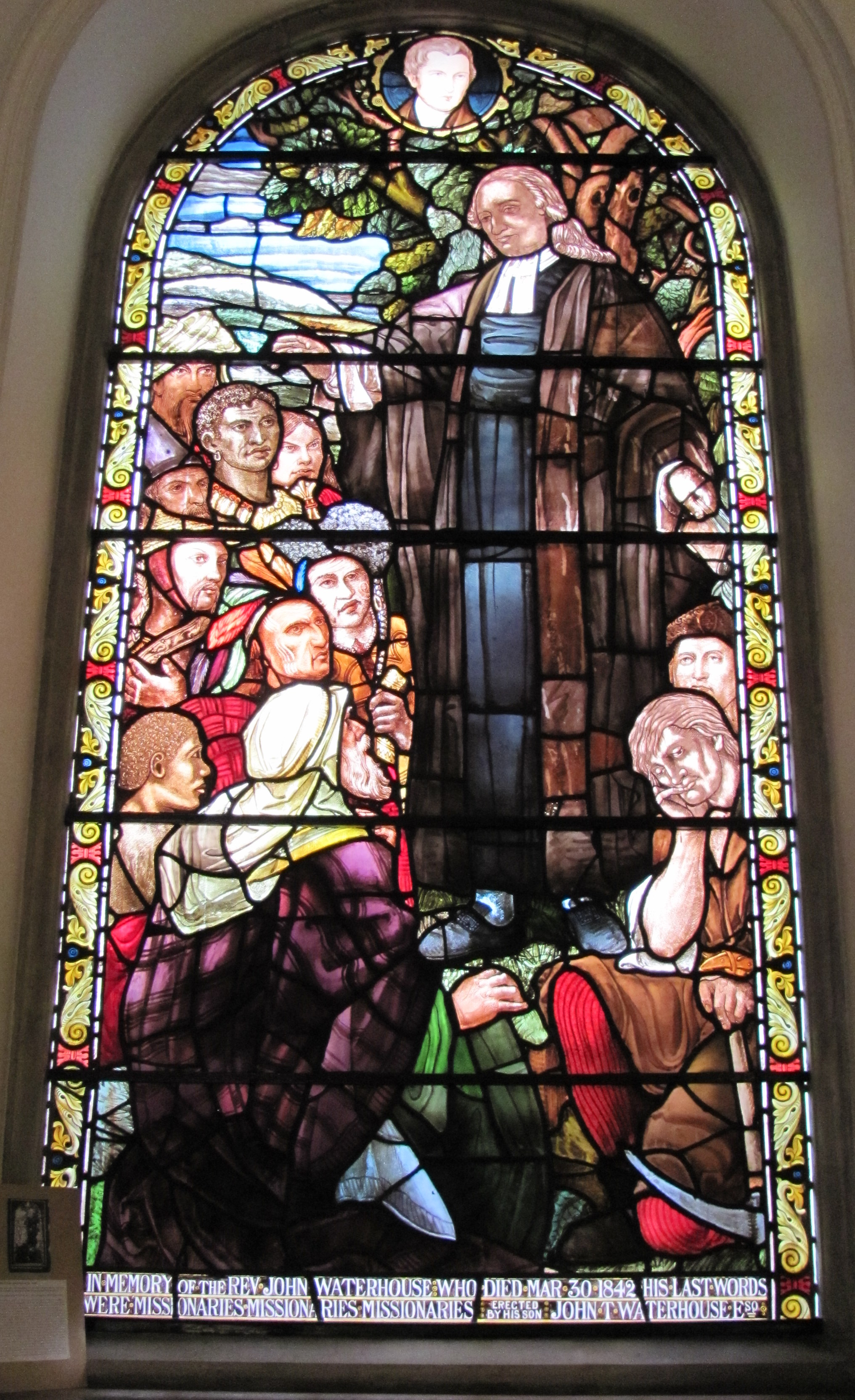
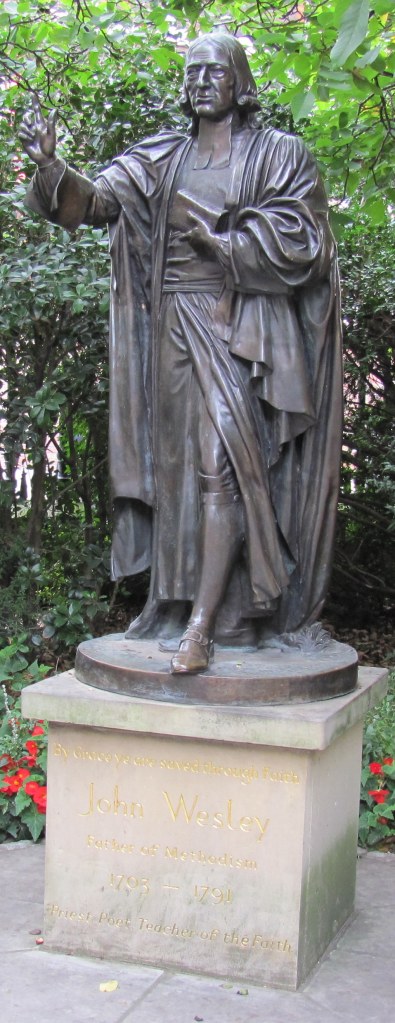
John Wesley and the Mission of God, part 2: Prevenient Grace

I began this series last week by talking about the importance of the image of God for John Wesley’s theology.    As an heir of the theological legacy of the protestant Reformation, Wesley also believed in total depravity.  This means, not that human beings are totally evil, but that sin has corrupted every aspect of the human person, such that there is no aspect of our existence which is not affected by the Fall.  Those who accuse Wesleyans of being “soft” on sin have misread Wesley’s theology at this point.

While it is true that Wesley was somewhat more “optimistic” about humanity, his optimism sprang not from a weak understanding of sin, but from a high view of grace – hence Wesleyans sometimes speak of the “optimism of grace” (more on that later).

In other words, while Wesley believed human beings to be completely depraved and helpless in and of themselves, he believed that God had not left anyone to merely fend for themselves.  God’s grace, for John Wesley, permeates all of creation, not only the Christian church.  As an unconditional benefit of the atonement, extended to all humanity, God’s Spirit is actively at work in all creation, drawing people to himself through his grace.   This is what Wesleyans call “prevenient,” “preventing,” or “preceding” grace – it is our experience of God’s grace “going before” us, enabling us to respond to God’s call on our lives.

The following quote from Wesley’s Sermon 85, “On Working Out Our Own Salvation,”  §III.4, is illustrative of how Wesley used this concept:

… allowing that all the souls of men are dead in sin by nature, this excuses none, seeing there is no man that is in a state of mere nature; there is no man, unless he has quenched the Spirit, that is wholly void of the grace of God. No man living is entirely destitute of what is vulgarly called natural conscience. But this is not natural: It is more properly termed preventing grace. Every man has a greater or less measure of this, which waiteth not for the call of man. Every one has, sooner or later, good desires; although the generality of men stifle them before they can strike deep root, or produce any considerable fruit. Everyone has some measure of that light, some faint glimmering ray, which, sooner or later, more or less, enlightens every man that cometh into the world. And every one, unless he be one of the small number whose conscience is seared as with a hot iron, feels more or less uneasy when he acts contrary to the light of his own conscience. So that no man sins because he has not grace, but because he does not use the grace which he hath.

Wesley used the idea of prevenient grace in “broad” sense to refer to the restraint of evil throughout the world (similar to the Calvinist idea of “common grace”), and in a more narrow sense to refer to grace drawing people to faith in Christ.

Because Wesley affirmed total depravity, he had to claim that any good action, no matter who performed it, must attributed to prevenient grace. In other words, “First. God worketh in you; therefore you can work: Otherwise it would be impossible” (Sermon 85, “On Working Out Our Own Salvation,” §III.3).

Again, we see the universal dimensions of God’s mission to the world shining through in Wesley’s thinking.  Just as all people were created in image of God and now suffer the debasement of that image by sin, so also God is actively pursuing all people by his prevenient grace.

This means that the church’s missional activity is always preceded by God’s prior gracious action.  God is already at work in the lives of every person we come into contact with.  The witness of the church remains essential, however, as God’s chosen means of spreading the message of salvation.

Prevenient grace also provides us with a way of affirming the good in people outside of the Church.   God’s grace is at work in all peoples, in all cultures.  Therefore we can affirm the good in people of other religions, without denying the uniqueness of Jesus Christ as the only saviour; because whatever good is there is due to the grace of the triune God, and is ultimately a benefit of the universal atonement.

Prevenient grace therefore provides an essential piece of a Wesleyan theology of the mission of  God, which extends the hope of salvation to all people, not merely an elect few.

John Wesley and the Mission of God, part 1: The Image of God

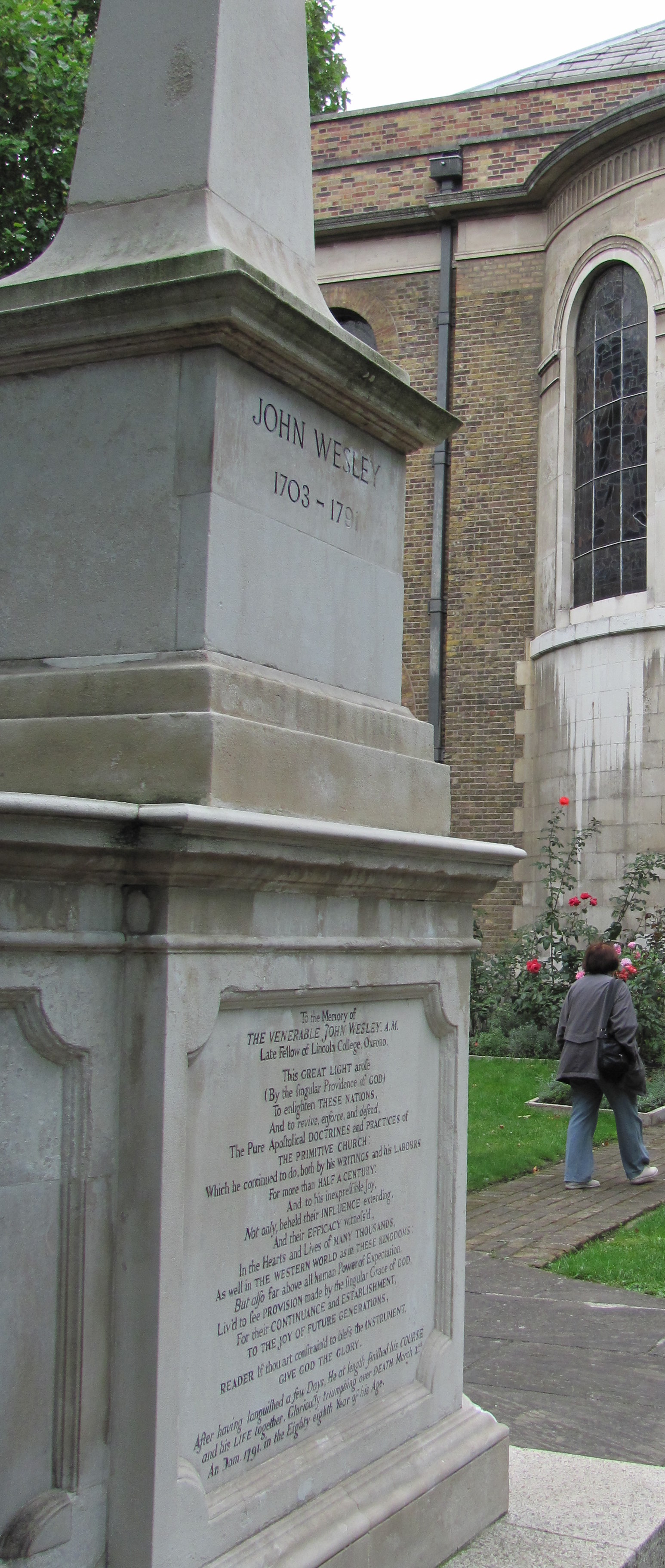
Wesley's tomb at Wesley Chapel, City Road, LondonToday I am beginning a series of posts on aspects of Wesley’s theology as they relate to the theology of the mission of God.  In recent years, evangelical theology has thoroughly embraced the missio dei concept as a way of re-framing the question of Christian mission.   By beginning the discussion of mission with the mission of God, we make it clear that Christian mission is not primarily the Church’s mission, but God’s mission, which includes the church.

John Wesley’s theology is rich with themes that could be developed into a theology of the mission of God.   Howard Snyder has written an excellent essay on this topic in his recent book Yes In Christ: Welseyan Reflections on Gospel, Mission, and Culture (Clements Academic, 2011).   My series takes its inspiration from Howard’s essay in that volume, entitled “Toward a Wesleyan Theology of Mission” (pp. 69-98), though I’ll be discussing some themes he doesn’t address.

As I mentioned in a previous post, Wesley does theology primarily from a salvation history perspective, rather than a “systematic” perspective.  So it is fitting to begin this series by discussing the topic that Wesley often begins his sermons with – the image of God.

The following quote, from Wesley’s 1760 sermon, “The New Birth,” represents the heart of Wesley’s perspective on the image of God:

“And God,” the three-one God, “said, Let us make man in our image, after our likeness. So God created man in his own image, in the image of God created he him:” (Gen. 1:26, 27:) — Not barely in his natural image, a picture of his own immortality; a spiritual being, endued with understanding, freedom of will, and various affections; — nor merely in his political image, the governor of this lower world, having “dominion over the fishes of the sea, and over all the earth;” — but chiefly in his moral image; which, according to the Apostle, is “righteousness and true holiness.” (Eph. 4:24.) in this image of God was man made. “God is love:” Accordingly, man at his creation was full of love; which was the sole principle of all his tempers, thoughts, words, and actions. God is full of justice, mercy, and truth; so was man as he came from the hands of his Creator. God is spotless purity; and so man was in the beginning pure from every sinful blot; otherwise God could not have pronounced him, as well as all the other work of his hands, “very good” (Gen. 1:31.) (Sermon 45, “The New Birth,” §I.1)

Notice that Wesley speaks of the image of God as threefold

1. The NATURAL IMAGE consists of those endowments given to the creature which make us capable of entering into conscious relation with God (notably, understanding, will, and freedom).  The natural image has been lost in part after the fall, such that all of these faculties have been impaired.  Our understanding does not function properly, so we make mistakes.  Our will does not function properly, because we have lost our freedom and are now in bondage to sin.  But God intervenes by his prevenient grace to restore a measure of freedom to fallen humanity (more on this in the next post).

2. The POLITICAL IMAGE consists of God’s endowment of the creature with faculties of leadership and management, making us stewards of creation.  Though this is expressed as “dominion” over creation, note that because this is an aspect of the image of God, human dominion over creation is to reflect God’s love.  In other words, we image God politically insofar as God’s benevolence is reflected in our stewardship of creation.

3. The MORAL IMAGE is not a capacity or a function but a relationship, marked by love.  In other words, the moral image is not, in the first instance, about a kind of legal status.  It is about being filled with love, as God is filled with love, and having our capacities and functions directed by love.  Because God is love, we are to reflect God’s love, continually receiving it and reflecting it back to him in love, obedience, prayer, praise, works of mercy, and so on.

Wesley's House, City Road, London-1What does all of this have to do with mission?

It means, first of all, that the story of God’s mission begins with good news. All people are created in God’s image, and were therefore created “capable of God.”  Though the image has been compromised by sin, the fact remains that all people were created to bear God’s image, and therefore all are called to experience God’s restoring grace.

If you read Wesley’s sermons, you will notice that he often begins his sermons with a description of the image of God before the fall.  That is, he does not begin with the problem of sin, but with God’s intention for all of humanity, and the dignity that all human beings bear by virtue of their original creation in the image of God.

Secondly, we see that, from the very beginning, then, the mission of God is universal in scope, not for an elect few.  All people were created in God’s image, therefore God’s love extends to all, and his redemption is open to all.  God’s intention, after the fall, continues to be that all human beings should be filled with love, and that this love should direct all their thoughts, words, and deeds.

Great Series on The Salvation Army and the Sacraments

Adam Couchman has posted a great five part series on The Salvation Army and the Sacraments.

Part One reviews the historical context for the decision to discontinue the use of the baptism and the Lord’s Supper

Part Two discusses the actual decision itself

Part Three summarizes the various explanation given by Salvationists for their non-observance – helpfully categorized into eight types of arguments

Part Four discusses the rites that The Salvation Army does use, and notes that they are actually sacramental – which demonstrates a contradiction in the Army’s position

Part Five concludes with some notes of caution for Salvationists, and with a suggestion for a more gospel-oriented stance, which allows for the use of the traditional rites without requiring them.

While some people are tired of this discussion, I think it continues to be an important one.  I don’t expect to see any official change in The Salvation Army’s position in the near future, but there are still some serious issues that need to be worked out in the Army’s position.   If Salvationists are to continue to embrace their own symbols and rituals as sacred means of grace (i.e., soldier enrollment, the mercy seat), they cannot reasonably make the traditional rites a taboo for their own members.  If all of life is potentially sacramental, how can the two specific rites used by almost all Christians be banned?

Adam has done some great thinking on this topic, and I hope his ideas are widely read and well received.  I think his proposal is actually more faithful to the Booths’ original intent than the current “ban” on baptism and the Lord’s Supper.  I remember reading with great interest about how Captain Abby Thompson, pioneering officer in my hometown of Kingston, Ontario, used to take her entire group of soldiers to the local Anglican Cathedral for communion (much to the chagrin of the parishioners, who chased the curate out of town because of his support for the Salvationists).   Yet if a local corps officer did this today, they would spark great controversy, and might even be rebuked by their leaders!

Excellent video on Bramwell Booth’s removal from office

A couple of years ago, John Larsson published his book 1929: A Crisis That Shaped the Salvation Army’s Future.  The book offers a very well written account of a fascinating period of Salvation Army history, when the Army’s second General, Bramwell Booth, was removed from office against his will.

Even people who aren’t particularly interested in Salvation Army history will find the story interesting, I think, because the the way things unfolded is actually quite unbelievable.  I recall thinking, as I was reading the book, that it would make a great movie!   It shows the very human side of many heroic figures from the second generation of Salvation Army leadership, as they get caught up in a struggle over how the office of General ought to be reformed.

The video tells the story better than I could – so have a look.

1929 The Salvation Army High Council from The Salvation Army UK on Vimeo.

John Wesley’s Theological Interpretation of Scripture

Last week I was assisting Howard Snyder as he taught the class “John Wesley and the Mission of God” at Tyndale Seminary.  Towards the end of the class I asked the students about their general impressions of Wesley’s sermons.  One of the first comments was that Wesley doesn’t really do “exegesis” of a text.   Rather, he usually takes a single verse as his starting point and then expounds upon a theme.  His sermons are, in a sense, more “topical” than “exegetical.”

Personally, I’m quite wary of topical preaching.  Typically it means that the preacher begins with a topic, knowing what they want to say, and then goes to the Bible to find a verse or passage that supports their preconceived idea.   Scripture then becomes (in the worst case scenario) a prop to support the preacher’s ideas.  The better way, then, is to begin with a passage of scripture and a blank sheet of paper – no preconceived agenda, other than allowing the text to speak to the particular context in which you are preaching.

Having said that, it would be wrong to dismiss Wesley’s sermons as examples of “topical” preaching.   Although his preaching is not exegetical in the contemporary sense of the term, I would argue that his sermons are thoroughly biblical, in that they arise out of Wesley’s consistent theological interpretation of scripture.

This point is underscored by an excellent essay, “Wesley as Biblical Interpreter,”  by Robert Wall, which is included in the recent Cambridge Companion to John Wesley.   Though, as Wall indicates, Wesley is sometimes misread by some as an uncritical biblicist, a closer reading reveals that he can be seen as “an exemplar of theological interpretation of the Bible.”

Wesley had a keen sense of the overall shape of the Biblical narrative, centred on the saving message of salvation by faith, and read through the Epistle of 1 John as the simplest and most sublime statement of the gospel.  While it might seem arbitrary for Wesley to give 1 John primacy of place, his logic was that the Apostle John lived the longest, and his writings were the last, and therefore, the most advanced witnesses to Christ.

Consider this quote from Wesley’s Journal, July 18, 1765:

In the evening I began expounding the deepest part of the holy Scripture, namely, the first Epistle of St. John, by which, above all other, even inspired writings, I advise every young Preacher to form his style.   Here are sublimity and simplicity together, the strongest sense and the plainest language!  How can any one that would “speak as the oracles of God,” use harder words than are found here?

The reality is that every interpreter makes these kinds of choices, but most protestants read the Biblical canon through Pauline eyes, rather than Johannine (which is generally seen as the Eastern preference).  Not that Wesley spent all his time in 1 John.  His sermons are peppered with scriptural quotations and allusions which range throughout the biblical canon.   But 1 John served as a kind of hermeneutical key for Wesley.  As Wall summarizes:

Whereas Wesley’s extensive use of biblical citations and allusions in his sermons instantiate an interest in letting each part of Scripture engage the whole – obscure texts illuminated by more lucid ones – his final court of appeal is 1 John.  (“Wesley as Bibilcal Interpreter,” p. 117-118).

Wall also goes on to list ten “interpretive practices” in which Wesley engaged as a biblical interpreter (his headings, my summaries in brackets):

  1. The intuited text (role of the HS)
  2. The naked text (use of critical tools to understand the literal sense)
  3. The canonical text (sense of the way the whole of scripture fits together)
  4. The community’s text (reading scripture in the church, alongside other interpreters)
  5. The salvific text (reading scripture “for salvation”)
  6. The ruled text (use of the “analogy of faith” – the non-negotiable core of Christian faith – as a rule for interpreting each part)
  7. The preached text (translating the text to the immediate context)
  8. The responsive text (interpreting scripture so as to be changed by it)
  9. The performed text (relating scripture to Christian experience)
  10. The sacramental text (using scripture as means of grace for the community)

These practices, so helpfully illuminated by Wall, give us a rich picture of Wesley as a nuanced interpreter, who was well attuned to important theological and pastoral issues as he read scripture – a far cry from an uncritical biblicist!

The essay is well worth reading if you are a student of Wesley.

A Hymn for Ascension Day

One of my favourite Charles Wesley hymns is “Arise my Soul, Arise.”  Originally published in Hymns and Sacred Poems in 1742, it was included as no. 194 in A Collection of Hymns for the Use of the People Called Methodists (1780).

The hymn emphasizes the assurance that comes from knowing that the sufficient once-for-all sacrifice of Christ is forever made effective through the ongoing high priestly work of the same ascended Lord, who intercedes on our behalf continually.   Assurance, therefore, comes not from an inner feeling or from self-examination but from the objective reality of Christ’s fully sufficient work on our behalf.  This assurance is communicated to us through the testimony of the Spirit, who assures us of our forgiveness and adoption specifically by witnessing to the very same saving work of Christ for us.

Scripturally, the hymn recalls several passages from Hebrews, notably 4:14-5:10, and chapter 10:1-25.

I grew up singing this to the tune “Darwall” (better known for “Rejoice the Lord is King), but online I’ve heard a number of other arrangements, including some new tunes.   You can find a nice one by Kevin Twit on the Indelible Grace hymn site, here.

1 Arise, my soul, arise,
Shake off thy guilty fears,
The bleeding sacrifice
In my behalf appears;
Before the throne my surety stands;
My name is written on his hands.
*
2 He ever lives above
For me to intercede,
His all-redeeming love,
His precious blood to plead;
His blood atoned for all our race,
And sprinkles now the throne of grace.
*
3 Five bleeding wounds he bears,
Received on Calvary;
They pour effectual prayers,
They strongly speak for me;
Forgive him, O forgive, they cry,
Nor let that ransomed sinner die!
*
4 The Father hears him pray,
His dear anointed one,
He cannot turn away

The presence of his Son:
His Spirit answers to the blood,
And tells me, I am born of God.
*
5 My God is reconciled,
His pard’ning voice I hear,
He owns me for his child,
I can no longer fear;
With confidence I now draw nigh,
And Father, Abba Father, cry!

Four John Wesley quotes everyone should know

One of the great things about John Wesley was his ability to distill theological wisdom and Christian experience into short, memorable phrases.  Here are some gems that everyone ought to be familiar with:

“I went to America, to convert the Indians; but oh! who shall convert me? who, what is He that will deliver me from this evil heart of mischief?  I have a fair summer religion.” –Journal, January 24, 1738.

Wesley’s time in as a missionary in Georgia was a total disaster.  He came home, basically running away – running from a failed ministry, a failed mission to the native Americans, and a failed romance with Sophie Hopkey, who had now married another man who was pursuing legal action against Wesley.  He was in crisis, and he could see that his faith had been tested and found wanting.

“I felt my heart strangely warmed.  I felt I did trust in Christ, Christ alone, for salvation; and an assurance was given me that He had taken away my sins, even mine, and saved me from the law of sin and death.” –Journal, May 24, 1738.

Four months later, Wesley had his “conversion” experience in a Moravian meeting at Aldersgate Street in London.   People debate whether or not this should truly be called a “conversion,” but it was definitely a turning point in his life and ministry.  As someone read from Luther’s preface to the Epistle to the Romans, the truth of the the transforming power of Christ’s death and resurrection became real for Wesley in a very personal way, and he found the assurance of faith for which he had been searching. Assurance came not from within himself, but from without – from the external word of the gospel, applied to his heart by the witness of the Spirit.

“At four in the afternoon, I submitted to be more vile, and proclaimed in the highways the glad tidings of salvation, speaking from a little eminence in a ground adjoining to the city, to about three thousand people.” – Journal, April 2, 1739.

This third quote is about Wesley’s first experience with “field preaching.”  By nature, Wesley was a conservative high churchman, and therefore the idea of preaching outside was abhorrent to him.   Yet his friend George Whitefield had invited him to Bristol to see the great throngs of people who were eager to hear the gospel, and he was convinced that he needed to set propriety aside, becoming “more vile” in order to reach people.  Field preaching became a key part of Wesley’s ministry.

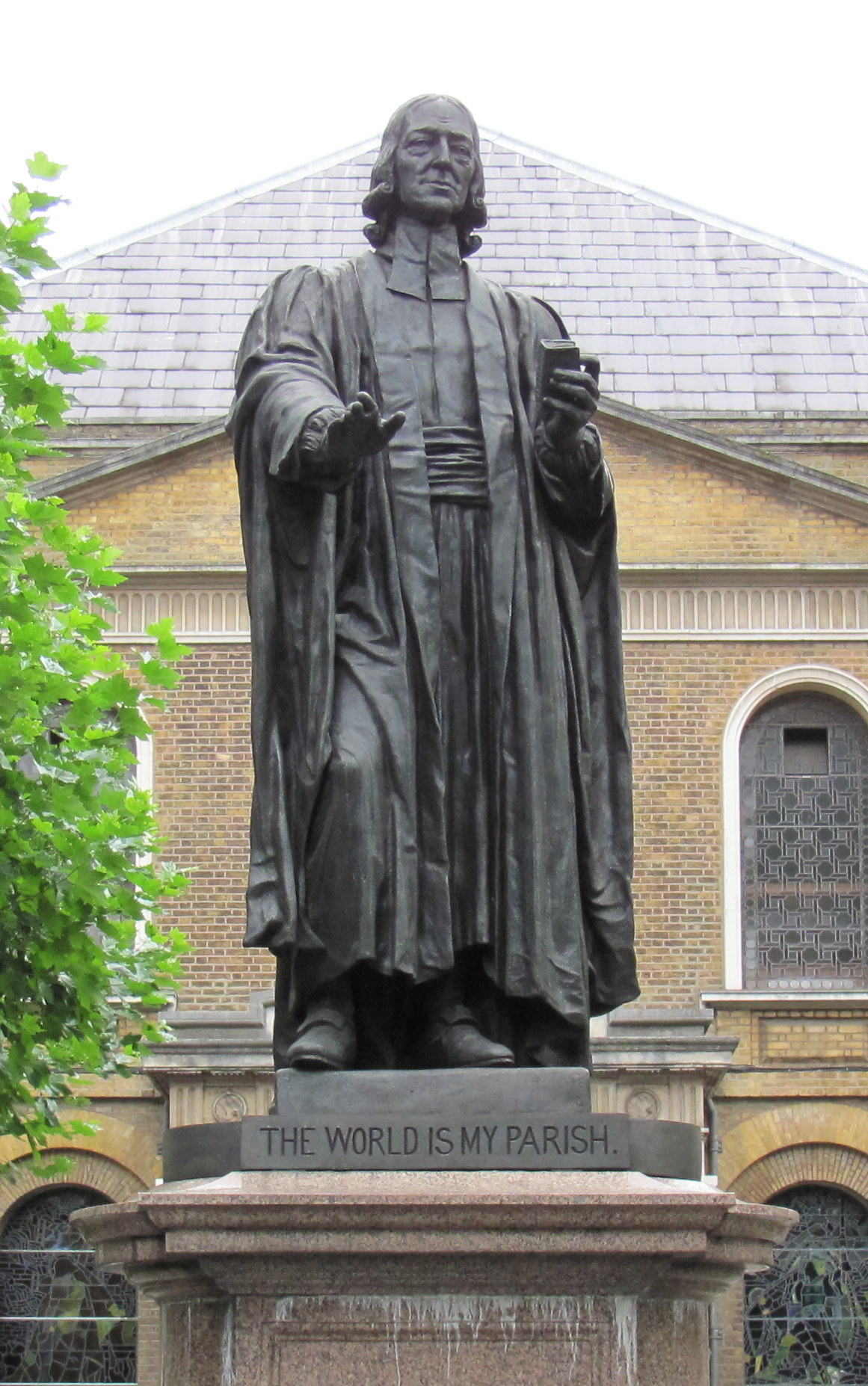
“I look upon all the world as my parish; thus far I mean, that in whatever part of it I am, I judge it meet, right, and my bounden duty to declare unto all that are willing to hear, the glad tidings of salvation.” –Journal, June 11, 1739.


Wesley’s itinerant ministry was challenged by some, because it meant that he crossed into the parishes of other priests of the Church of England, sometimes preaching in their territory without their permission.  Wesley’s quote about the world being his parish is usually seen as his missional justification for preaching the gospel wherever he was.  But he also knew that he was exempt from the parish boundary rules as a fellow of Lincoln College, Oxford.  He had no parish of his own, and was free to preach where he liked.  He used this to his advantage.

Unity requires conversion

NOTE: This post is my contribution the Rally to Restore Unity, hosted by Rachel Held Evans.  Head on over to her site, check out the wealth of great posts and hilarious signs about unity, and while you’re at it, consider donating to Charity:Water.

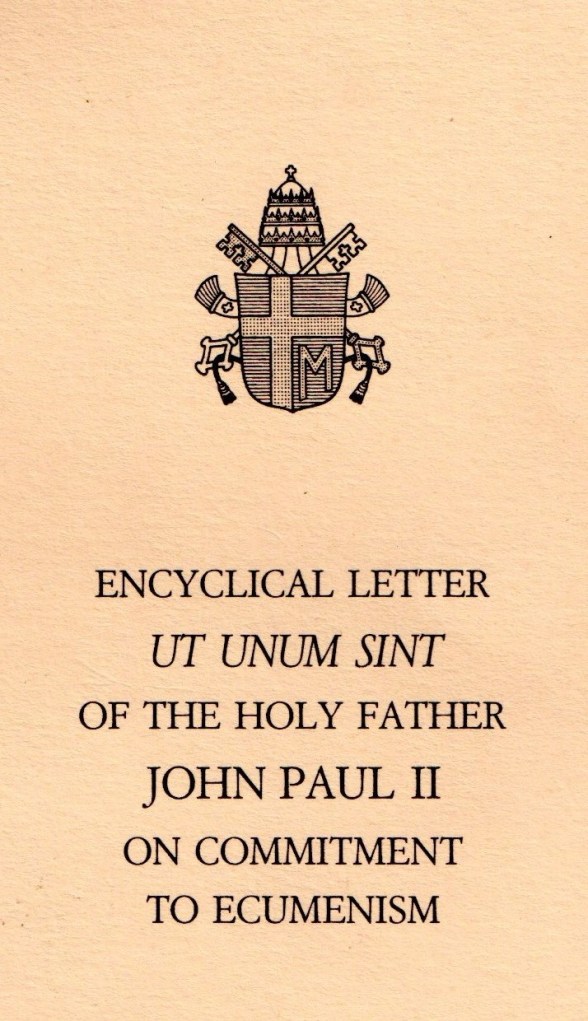
Anyone who is interested in the topic of Christian unity has got to read John Paul II’s encyclical Ut Unum Sint, published in 1995.  And with JPII being beatified last weekend, there’s no better time than the present to acquaint yourself with one of the former Pope’s most remarkable pieces of writing.

If you haven’t read it, and you’re a protestant, you’ll be moved by his humility, his wisdom, and his deep spiritual insight.   If you haven’t read it, and you’re a Catholic, you might be surprised that he doesn’t see Christian unity as merely being about a “return to Rome” (my Catholic friends tell me that many Catholics make that assumption).

Particularly towards the end, when discussing the role of the Pope in the quest for Christian unity, he says some very interesting things.  There’s his remarkable request for forgiveness from those who have “certain painful recollections” caused by actions of the Papacy in the past (§88).  Then, his reflections on Peter’s human weakness and helplessness as a grounding for his own “Petrine” ministry are an attempt to show that he by no means considers himself “qualified” for the job (§§90-93).  This is followed up by a request for help from Christian leaders of other traditions in envisioning a re-shaped Papacy that they might receive as a ministry of unity:

I insistently pray the Holy Spirit to shine his light upon us, enlightening all the Pastors and theologians of our Churches, that we may seek—together, of course—the forms in which this ministry may accomplish a service of love recognized by all concerned…This is an immense task, which we cannot refuse and which I cannot carry out by myself. Could not the real but imperfect communion existing between us persuade Church leaders and their theologians to engage with me in a patient and fraternal dialogue on this subject, a dialogue in which, leaving useless controversies behind, we could listen to one another, keeping before us only the will of Christ for his Church and allowing ourselves to be deeply moved by his plea “that they may all be one … so that the world may believe that you have sent me” (Jn 17:21)? (§§95-96)

Adding to this spirit of humility is the way John Paul speaks of the quest for Christian unity as involving a conversion.  To be clear, he’s NOT saying that non-Catholics have to convert to Catholicism!  He’s saying that Christian unity requires conversion on the part of all Christians.  Of course he isn’t being original in saying, so but hearkening back to the teaching of Vatican II:

There can be no ecumenism worthy of the name without a change of heart (Unitatis Redintegratio, §4).

The conversion that the Pope (and the Council) are calling for is both personal and communal.   It is not simply a call to be nice and civilized to one another, but a call to “be more radically converted to the Gospel,” (Ut Unum Sint, §15) by which each of us is irrevocably bound to one another.   Today, we have become so accustomed to divisions between Christians that many of us seldom think about it, but our disunity is a scandal, and an open contradiction of the one faith, one Lord, and one baptism which we all share.

Rooting the call to Christian unity in the gospel itself means that JPII is calling us to recognize that unity is not an afterthought for Christian life and mission.

Jesus himself, at the hour of his Passion, prayed “that they may all be one” (Jn 17:21). This unity, which the Lord has bestowed on his Church and in which he wishes to embrace all people, is not something added on, but stands at the very heart of Christ’s mission. Nor is it some secondary attribute of the community of his disciples. Rather, it belongs to the very essence of this community. God wills the Church, because he wills unity, and unity is an expression of the whole depth of his agape (Ut Unum Sint, §9).

Connecting unity, the gospel, and mission in this way is unsettling, because anyone can see that we fall far short of expressing the depth of God’s love in the way we alienate one another.  The only response possible is repentance and renewal – a conversion of our divided thinking, our divided practices, and our divided identities.

If anyone is thinking that this all sounds very Catholic, and that it therefore doesn’t apply to you (well, first of all, that way of thinking in itself is something to repent of), go and read the sections of the Cape Town Commitment that deal with unity and mission.  For example: “A divided Church has no message for a divided world. Our failure to live in reconciled unity is a major obstacle to authenticity and effectiveness in mission” (§IIF).

Protestants like myself tend to think of “conversion” as a one-time thing, but in Catholic thinking, conversion is seen as a lifelong process – a continual, Spirit-driven turning of the person away from sin and towards God and the truly human life which God desires for us and has pioneered for us in Jesus Christ.   Ecumenism (which I use broadly to refer to any efforts to restore unity among Christians) can be used by God to initiate this kind of continual turning.   As we encounter brothers and sisters of other traditions, we are drawn toward their examples of Christian life and their spiritual traditions – which often contain insights that are new to us.  At the same time, we are made more aware of the many ways in which our divisions impoverish and hinder the life and mission of the church as a whole.  JPII says it this way:

Thanks to ecumenism, our contemplation of “the mighty works of God” (mirabilia Dei) has been enriched by new horizons, for which the Triune God calls us to give thanks: the knowledge that the Spirit is at work in other Christian Communities, the discovery of examples of holiness, the experience of the immense riches present in the communion of saints, and contact with unexpected dimensions of Christian commitment. In a corresponding way, there is an increased sense of the need for repentance: an awareness of certain exclusions which seriously harm fraternal charity, of certain refusals to forgive, of a certain pride, of an unevangelical insistence on condemning the “other side”, of a disdain born of an unhealthy presumption. Thus, the entire life of Christians is marked by a concern for ecumenism; and they are called to let themselves be shaped, as it were, by that concern (§15).

I hope the Rally to Restore Unity has been a time of conversion for at least some of Christ’s disciples – a time for celebrating the enriching differences among us, but also a time for repenting of the sinful divisions which keep us apart and obscure our witness to the gospel.

What is an Institution?

I’m thinking through the relationship between institution and charism right now, and one of the more frustrating aspects of the debate is the lack of consensus regarding the meaning of the word “institution.”

Some authors don’t bother to define the term at all, but seem to assume a certain common sense understanding of institution.  My problem with this is that the “common sense” understanding of institution in our contemporary context is typically very negative.  People today are very skeptical of institutions of all kinds, and religious institutions are no exception.   While I’m aware that some institutions can be terribly repressive, twisted, and dangerous, I don’t think these tendencies are inherent in institutions per se.

Then there are some who do take the time to define institution in such a way that it tends toward a negative characterization, because they frame institutions primarily as agents of control and coercion.

Gotthold Hasenhüttl was an influential voice in the mid twentieth century, cited authoritatively by people like Hans Küng and Leonardo Boff (who were, in turn, very influential at the popular level).  Hasenhüttl defines institutions as follows:

“An institution is a changeable, but permanent, product of purposive social role behaviour which subjects the individual to obligations, gives him formal authority and possesses legal sanctions.” [from “The Church as Institution,” in The Church as Institution (New York: Herder and Herder, 1974), 15]

He goes on to describe institutions as “instruments of power,” and calls upon the church to reinvent itself and work towards “the institutionalization of freedom [from] domination (an-archy)” (17-18).

In Boff, this translates to a playing off of “the institution” versus “the community,” arguing that the former must serve the latter:

“We refer to the organization of this community with its hierarchy, sacred powers, dogmas, rites, canons, and traditions…The institution does not exist for itself but in service to the community of faith.” [Church, Charism and Power, 48]

I think these definitions of institution are too narrow.   Institutions aren’t simply agents of control with formal laws and coercive power. They exist on a continuum which is much broader and more ambiguous than these perspectives imply.

In this broader understanding, which takes its inspiration primarily from Peter Berger and Thomas Luckmann’s The Social Construction of Reality, institutions are simply stable patterns of social interaction. They could be huge governmental agencies or international businesses, but they could also be a recurring encounter between two persons.   All social interactions are subject to habituation, and when interactions between persons are habituated over time they become institutionalized – that is, they become stable patterns of social interaction.

Berger and Luckmann’s definition is as follows:

“Institutionalization occurs whenever there is a reciprocal typification of habitualized actions by types of actors. Put differently, any such typification is an institution.” [The Social Construction of Reality, 54]

There are, of course, many nuances to their account which I won’t address here, and some of them may not sit well some Christians.   But their insights have been taken up and incorporated into some theological accounts of ecclesial institutions, such as Miroslav Volf’s After our Likeness, and George Lindbeck’s The Nature of Doctrine.

The point of adopting this perspective is to underscore the fact that social life is inescapably institutional, and therefore the Christian life (because it is inherently social) is inescapably institutional.

“The essential sociality of salvation implies the essential institutionality of the church. The question is not whether the church is an institution, but rather what kind of institution it is.” Volf, After Our Likeness, 235.

In other words, there never was and never will be a “non-institutional” church.   The fact that the church has certain institutional features does not mean that it has compromised or fallen from a primitive state of charismatic freedom.   From a Christian perspective, rather, ecclesial institutions are no threat to true personhood and freedom, but are divinely-ordered means of grace through which our true personhood and freedom is restored through incorporation into the body of Christ. Christian fellowship, worship, ministry, sacraments, and the proclamation of the word are institutions which confront us as a verbum externum. This point is brought out well by Lindbeck in his comparison of religion to a cultural-linguistic system:

“To become a Christian involves learning the story of Israel and of Jesus well enough to interpret and experience oneself and one’s world in its terms.  A religion is above all an external word, a verbum externum, that molds and shapes the self and its world, rather than an expression or thematization of a preexisting self or of preconceptual experience.” Lindbeck, The Nature of Doctrine, 34.

Ecclesial institutions are stable patterns of human interaction in the church through which the Spirit calls us to be conformed to Christ. They are certainly open to abuse and distortion, but this is not because they are institutions, but because they are patterns of interaction among people who are redeemed by Christ, but who continue to struggle with sin.

Handel’s Israel in Egypt: As Good as the Messiah?

I love Handel’s music, and his oratorio Israel in Egypt has become a big favourite of mine.   I think it deserves to be as well known as the Messiah, though I’m sure that will never happen.  As with the Messiah, the text is entirely based on scripture – the first part drawing upon Exodus and Psalms 78, 105, and 106, and the second part based entirely on Exodus 15.

Anyone who can make “He spake the word, and there came all manner of flies” sound this wonderful is an absolute genius.

I’ve collected a few excerpts here from YouTube, for you listening pleasure.   What do you think – is it as good as the Messiah?

*****

He spake the word, and there came all manner of flies and lice in all quarters.
He spake; and the locusts came without number, and devoured the fruits of the ground.
Psalm 105:31, 34, 35

*****

But as for His people, He led them forth like sheep:
He brought them out with silver and gold; there was not one feeble person among their tribes.
Psalm 78:52; Psalm 105:37

*****

The Lord is my strength and my song; He is become my salvation.
Exodus 15:2

*****

And with the blast of Thy nostrils the waters were gathered together, the floods stood upright as an heap, and the depths were congealed in the heart of the sea.
Exodus 15:8

*****

Thou didst blow with the wind, the sea covered them; they sank as lead in the mighty waters.
Exodus 15:10

[couldn’t find an orchestral version on YouTube, but this one by Jasmine Haghighatian with piano accompaniment is nice]

*****

The Lord shall reign for ever and ever.
(Exodus 15: 18)

And Miriam the prophetess, the sister of Aaron, took a timbrel in her hand; and all the women went out after her with timbrels and with dances. And Miriam answered them: —
(Exodus 15: 20, 21)

Sing ye to the Lord, for He hath triumphed gloriously; the horse and his rider hath He thrown into the sea.
(Exodus 15: 21)