Ten Songs from 2010

In response to Pernell, here are ten songs that I listened to a lot in 2010 (not necessarily released in 2010).

Deep Dark Woods, “Charlie’s (is coming down)” from CBC Radio 2’s Great Canadian Song Quest


Fleet Foxes, “Your Protector,” from Fleet Foxes


Great Lake Swimmers, “Palmistry,” from Lost Channels


Joel Plaskett, “Deny Deny Deny,” from Three

M. Ward, “Jailbird,” from Hold Time


Ray Lamontagne, “Like Rock & Roll and Radio,” from God Willin’ and the Creek Don’t Rise


Ron Sexsmith, “Seem to Recall,” from Whereabouts


Rufus Wainwright, “True Loves,” from All Days are Nights: Songs for Lulu


The Swell Season, “Low Rising,” from Strict Joy

Sandra McCraken, “Halfway,” from Under Lights and Stars

Methodism as an Extraordinary Ministry

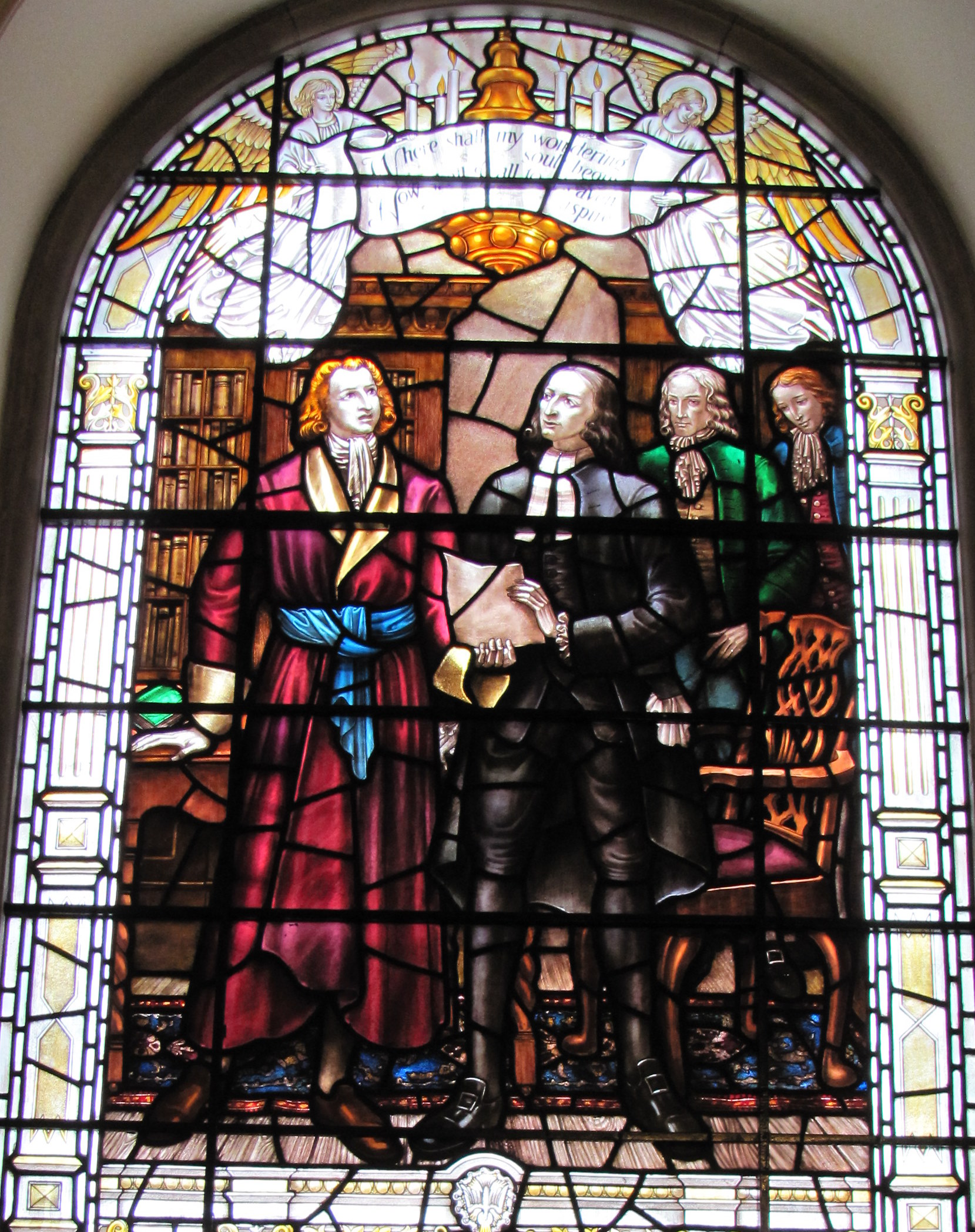
Some people have suggested that if John Wesley were born in another century, or another country – that is, in a Catholic time or place – he might have founded a religious order, rather than a movement which ended up becoming a new church.   Although he was not able to convince his followers to uphold his views on the matter, Wesley consistently argued that Methodism was a religious society within the Church of England, rather than a distinct Christian church.  The decisions he made which led toward separation (notably his ordinations of ministers for America) were done under necessity.  In other words, he did not want to compete with the Church of England, and only ordained ministers in places where the Church was not keeping up with the demands of the mission (and ignoring his pleas that it grant ordinations to his preachers to fill the gaps).

I came across this discussion of the issue by Gordon Rupp from 1968.  Rupp makes reference to Wesley’s remarkable 1789 sermon, “The Ministerial Office” (now identified in the scholarly literature as “Prophets and Priests”).  Here, as Rupp notes, Wesley does some creative exegesis in order to establish his claim of  a distinction between the priestly and prophetic ministries, while maintaining that Methodism must be understood as the latter.

The issue, particularly in the way that Rupp frames it here, raises classic issues that I hope my dissertation on “eccleisal charisms” might help to answer.  While I won’t be making my arguments in the same way as Wesley, my conclusions will end up supporting Wesley’s distinction between ordinary and extraordinary ministies.

Here then, is a claim to be called by God, to an extraordinary ministry of evangelism and of building up men and women to salvation (for John Wesley claimed that the doctrine of perfect love was the grand depositum of Methodism for which God appeared to have chiefly raised them up).

But the Methodists had a double pattern of spirituality. There were the ordinances of the Church of England, of Word and sacraments.  There was also the spiritual fabric of the Methodists, the intimate bands which were almost lay confessionals, the class meeting which was the essential cell, or koinonia, the love feasts and the occasional splendid eucharistic solemnities when thousands gathered at the Lord’s table and when Wesley and his ordained Anglican friends administered…

Wesley himself distinguished clearly between the commission to preach and authority to administer the sacraments: the first he thought a prophetic office, the second to depend on ecclesiastical authority.  He developed this in his sermon on “The Ministerial Office.”  He affirms that in ancient times the office of a priest and that of a preacher were distinct – from Noah to Moses “the eldest of the family was the priest, but any other might be the prophet”.  So in the New Israel, in the early Church, “I do not find that ever the office of Evangelist was the same with that of a pastor, frequently called a bishop.  He presided over the flock and administered the sacraments.”  In this light, Wesley goes on, are the lay preachers of Methodism to be regarded.  “We received them wholly and solely to preach, not to administer the sacraments…In 1744 all the Methodist Preachers had their first Conference.  But none of them dreamed that being called to preach gave them any right to administer sacraments.”

Whatever we think of Wesley’s strange view of sacred history in the matter of priests and prophets, and his sometimes eccentric exegesis, his distinction is important and deserve serious consideration, for it had important practical consequences.  While he lived, the Methodists who acknowledged his authority did not permit laymen to administer the sacraments…It was the failure of the bishop of London, despite repeated petitions, to provide sufficient clergy for North America, and the ecclesiastical chaos caused by the War of Independence, which led Wesley in 1784 to ordain four clergymen for America, and in later years a handful of clergy for Scotland and England.

At the end of his life, Wesley pondered the swift, deep extension of the revival to the very ends of the land.  Though he did not live to see it, the great work was to be repeated in the next generation in North America, the West Indies, Africa, Australia and the islands of the Pacific.  His own comment on it was: “What hath God wrought!”  and whether we take it affirmatively, or whether we turn it into a question mark, it is the question which John Wesley and his work ask of contemporary ecumenical theology.

From Gordon Rupp, “John Wesley: Christian Prophet,” in Prophets in the Church, Concilium 37, ed. Roger Aubert (New York: Paulist, 1968), 54-56.

Nature and grace, ability and charism

The discussion of the charismata inevitably turns to the question of how we can distinguish charisms from natural abilities.  Some wish to make a very sharp distinction between the two, while others prefer to stress potential continuities.  It seems to me that one’s approach to this question is heavily influenced by one’s presuppositions about the relationship between nature and grace.

The diversity of views can be illustrated by comparing the perspectives of James Dunn, Gabriel Murphy, and Ernst Käsemann.

Dunn, taking a typically protestant oppositional view of the relation between nature and grace, is adamant that the charismata are of a completely different order from natural abilities, and is at pains to draw a clear demarcation between the two:

charisma is not be confused with human talent and natural ability; nowhere does charisma have the sense of a human capacity heightened, developed or transformed…Charisma is always God acting, always the Spirit manifesting himself.” (Dunn, Jesus and the Spirit, 255).

In making his point, Dunn references Kierkegaard’s “infinite qualitative distinction” as support for his claim, before allowing that natural abilities may “chime in” with charisma.  Dunn further underscores his point by insisting that charisma has an “event” character:

charisma is always an event, the gracious activity (ένεργημα) of God through a man. It is the actual miracle, the healing itself, the particular experience of faith; it is the actual revelation as man experiences it, the very words of wisdom, prophecy, prayer, etc., themselves, the particular act of service as it is performed.” (Jesus and the Spirit, 254).

Gabriel Murphy, articulating a traditional Catholic (Thomist)  interpretation of charisms in the wake of Vatican II, draws upon a more complementary understanding of the relation between nature and grace in describing the Pauline concept of charisms, noting that at times it is difficult even to discern the difference between natural ability and charism:

“…in spite of the fact that it can be stated a priori that all the charisms are spiritual gifts, it is not always possible in practice to discern or recognize this character in a particular charism…A successful preacher of the Word of God may only seem to be using abilities of his natural personality.” (Murphy, Charisms and Church Renewal, 51).

Murphy explicitly locates the answer to this dilemma in “modern theological concepts,” according to which

“grace is either the intrinsic elevation of the natural man to a supernatural state, or the assistance given to his natural powers in order to be able to perform supernatural acts.  In either case, the supernatural is built upon the natural – it is an elevation of the being or actions of a natural man.  Thus it is possible for the special gift of the charism to be grafted on a natural aptitude already possessed by the individual, elevating the action of this natural ability so that that the resulting act will be supernatural.” (Charisms and Church Renewal, 51-52).

Käsemann brings a rather different approach to the question, in which “the charismatic” can embrace any aspect of human life, including natural abilities, not through a divine elevation, but through  human recognition of the lordship of Christ:

“My previous condition of life becomes charisma only when I recognize that the Lord has given it to me and that I am to accept his gift as his calling and command to me.  Now everything can become for me charisma.” Käsemann, “Ministry and Community in the New Testament,” in Essays on New Testament Themes, 72.

I’m not quite sure how to characterize Käsemann’s perspective, but in this scheme, “recognition” becomes the key transforming nature into grace.  The difference between the two seems to have been collapsed, outside the subjectivity of the individual.

This is an area where I think it is difficult to separate theological presuppositions from exegesis.  Of course, these authors, particularly Dunn and Käsemann, would claim that they are simply doing unvarnished exegesis – but somehow they all come to have very different interpretations.

I’m still working out my position on this (which I’ll hopefully put into a future post), but it seems to me that we might be asking a question which these texts do not set out to answer.   What I mean is,  I don’t think Paul is writing about the difference between “abilities” and “gifts” – he’s trying to underline the givenness of all things.   This givenness is discerned by those who, through the Spirit, have discerned the ultimate gift of salvation in Christ, and through him have become inheritors to a great wealth of gifts (including the charismata of 1 Cor. 12-14).

“For all things are yours,whether Paul or Apollos or Cephas or the world or life or death or the present or the future—all belong to you, and you belong to Christ, and Christ belongs to God.”
(1 Corinthians 3:22-23)

Top posts of 2010

As the year draws to a close I thought I’d take stock of what people have been reading on my blog.   Here are the most read posts for 2010.

The fact that the top two posts are about The Salvation Army and the sacraments tells me that Salvationists are still interested in discussing that issue (though some people want to consider it a closed case).

  1. A Comparison of Salvation Story and the 2010 Handbook of Doctrine
  2. Three Quotes from William Booth on the Sacraments
  3. Unsafe God
  4. Christ as the Good Samaritan
  5. The longest church name in the history of the world
  6. Signs that make me laugh: “Cats, Eye Fashion”
  7. The Salvation Army as an Order? An Early Catholic Comment
  8. The Good Samaritan, by John Newton
  9. Wrestling Jacob
  10. Signs that make me laugh: Creepy Doll is “Not For Sale”

Thanks for all who stopped by this past year.  For 2011 I’m planning to continue blogging through my work on my dissertation, as well as hunting for funny signs.  I was saddened to see that “Steak Queen” at the corner of Lawrence and Victoria Park has changed its name before I got a chance to snap a pic and feature it here.  But don’t worry, there’s lots of other material out there!

Recommended Christmas Listening

This isn’t an attempt to choose my all time favourite Christmas music. I love Christmas music and there are so many great songs to choose from, I don’t think I could narrow it down. Having said that, I want to offer a few eclectic recommendations from the dozens of favourites I’ve been listening to for weeks now.

One of my favourite pieces of classical Christmas music (though it is hard to pick, especially with the Messiah and the Nutcracker in the running) is Ralph Vaughan Williams’ “Fantasia on Christmas Carols.” It begins with a very mysterious sounding setting of “This is the truth sent from above,” and includes “Come all you worthy gentlemen” and “On Christmas night all Christians sing.”  Vaughan Williams spent part of his career collecting and arranging English Folk melodies – the tunes in this piece are three examples.  If you like this, check out his Norfolk Rhapsody.

Here is a live recording, in two parts, of the Monteverdi Choir Würzburg and the Mainphilharmonie Würzburg, from 2008.  My favourite part is the section which builds from about the 1:00 mark to the climactic 3:00 mark of the second video below.


Ray Charles’ version of “The Little Drummer Boy” is classic.  It’s not often you hear the Rhodes, strings, horns AND steel guitar in one song! The visuals on this clip aren’t too creative, but the audio is good quality.


For Canadian content, I recommend Ron Sexsmith’s “Maybe this Christmas.” I couldn’t find an upload of Ron singing, so here is a nice cover by someone named Phil Hyun.


There’s nothing like singing Christmas carols with David Willcocks’ descants – especially if the choir is as good as this one, from St. Paul’s, London. Here’s his arrangement of Once in Royal David’s City. The descant comes in at 2:18.


My last suggestions is NOT a favourite, but I find it hilarious. My vote for weirdest Christmas song: Bob Dylan, “Must be Santa.” I’m a big fan of Bob Dylan, but I’m not sure what to make of this song, or his entire Christmas album, to be honest.  This video won’t embed, so you’ve got to go here to watch it.


A Forgotten Christmas Hymn, by Charles Wesley

I found this wonderful hymn a couple of years ago, when looking through A Collection of Hymns for the Nativity of our Lord, compiled by John Wesley in 1744.  There are some interesting gems in there, but the following hymn, by brother Charles (#11 in the collection) really stood out.

My favourite phrase is “In our deepest darkness rise” – and I love the title given to Christ in verse three: “Thou mild Pacific Prince.”  I wrote a tune for this last year, and I hope to be able to record it some time down the road.

LIGHT OF THOSE WHOSE DREARY DWELLING

Charles Wesley

Light of those whose dreary dwelling,
Borders on the shades of death,
Come, and by Thy love’s revealing,
Dissipate the clouds beneath :
š›š›The new heaven and earth’s Creator,
In our deepest darkness rise,
Scattering all the night of nature,
Pouring eyesight on our eyes.
~
Still we wait for Thy appearing,
Life and joy Thy beams impart,
Chasing all our fears, and cheering,
Every poor benighted heart:
Come and manifest the favour,
God hath for our ransom’d race;
Come, Thou universal Saviour,
Come, and bring the gospel grace.
~
Save us in Thy great compassion,
O Thou mild pacific Prince,
Give the knowledge of salvation,
Give the pardon of our sins ;
By Thine all-restoring merit,
Every burden’d soul release,
Every weary, wandering spirit,
Guide into Thy perfect peace.

Love: the greatest gift or something greater?

1 Corinthians 13 is one of the most well-known passages of scripture. Because it is often read at weddings, it is even well known to non-Christians.  Because it is often read on its own, I think many of us think of 1 Corinthians 13 as a stand-alone unit within the Bible.  However, in its context, it actually forms an integral part of Paul’s teaching on charisms.

Paul Kariuki Njiru’s book, Charisms and the Holy Spirit’s Activity in the Body of Christ (Rome: Editrice Pontificia Università Gregoriana, 2002), does a good job of outlining the Paul’s rhetorical structure throughout 1 Corinthians 12 to 14.  He summarizes the overall structure this way:

A Spiritual gifts in general (1 Cor. 12)

B Love as the most excellent way (1 Cor. 13)

A’ Spiritual gifts in particular: prophecy versus tongues (1 Cor. 14)

A more detailed breakdown of the various concentric rhetorical structures within chapters 12-14 is found on page 68.  The bottom line is that the famous “love chapter” is not a stand alone tribute to love in general, nor is it a later interpolation by an unknown editor (as some have suggested), but it is the focal point and climax of Paul’s discussion of charisms.

Paul’s method of writing is very rhetorical, and, by the use of concentric figures, he achieves the effect of emphasizing the importance of love as a regulatory principle in the use of spiritual gifts in the Church.  For the Apostle it is love that must govern the use of all charisms (49).

I think this exegesis is clear enough.  It also raises an interesting question: is Paul presenting love as the pre-eminent of all divine gifts, or is he specifically contrasting transitory gifts with the eternal love of God?

Njiru suggests that Paul is presenting love as “the gift par excellence” (60).  However, the broader consensus seems to be that Paul is intent on making a contrast here between the charismata of chapter 12 and 14 and love.   This comes out particularly in 13:8

Love never fails. But where there are prophecies, they will cease; where there are tongues, they will be stilled; where there is knowledge, it will pass away.

Love, then, is not one gift among others, but that without which the gifts are made void, useless, and even divisive.  It may properly be described as a “fruit” of the Spirit (Galatians 5), but not a charism.  This tells us something important about charisms: they are provisional, rather than enduring.   Part of the problem in Corinth was that they were allowing pride regarding particular charisms to divide their fellowship, thereby showing that they valued charisms above the love that they were to have for one another. 

Ecclesially, if we think of particular communions or traditions within the church as having ecclesial charisms, we can see how 1 Corinthians 12-14 could stand as a rebuke for our divisions.  A particular group within the church which separates from others on the basis of a particular gift or set of gifts is, to take up Paul’s image, like the eye saying to the hand, “I don’t need you!” (12:21).

“Gift” in the Old Testament

Finding a parallel for “charism” in the Old Testament is not easy.  One way is to look at various words translated “gift” in English Bibles.  Using the same categories I found in the NT, I found a very different set of uses for “gift” in the older Testament.

First of all, if we think of the commonly assumed meaning of “charisms” – diversity of gifts given to believers – we find that there are only a few references, and even those are open to other interpretations.  The vast majority of occurences of “gifts” in the OT relate to religious offerings and gifts exchanged between humans.    There are no occurrences describing salvation as a gift, though there are a few terms which seem to imply “blessing.”

What is perhaps significant with relation to the question of ecclesial charisms, however, are the three references in Romans which describe the Levites (8:19 and 18:16) and the service of priesthood (18:7) as gifts.  As far as I’ve seen, these are the only references which imply that a particular group within the people of God is itself a gift of God for the benefit of the whole.   Their functional specialization also coheres well with the idea of specialized movements which are raised up around a particular gift that brings with it a vocational obligation.

BLESSING

REF HEB MEANING
Genesis 30:20 zebed good gift (of a son)
Num. 8:19 nathan Levites given as a gift to Aaron & sons
Num. 18:6 mattanah Levites as gift for Israel to perform service at tent of mtg
Num. 18:7 mattanah service of the priesthood given as a gift to Aaron and sons
Deut.     33:15 NA gifts of the ancient mountains
Deut.     33:16 NA gifts of the earth
Psalm 127:3 nachalah children are a gift of the Lord
Eccl.  3:13 mattath a man’s labour is the gift of God
Eccl. 5:19 mattath a man’s labour is the gift of God

DIVERSITY OF GIFTS GIVEN BY GOD TO BELIEVERS

REF HEB MEANING
Num. 8:19 nathan Levites given as a gift to Aaron & sons
Num. 18:6 mattanah Levites as gift for Israel to perform service at tent of mtg
Num. 18:7 mattanah service of the priesthood given as a gift to Aaron and sons
Eccl.  3:13 mattath a man’s labour is the gift of God
Eccl. 5:19 mattath a man’s labour is the gift of God

RELIGIOUS OFFERING

REF HEB MEANING
Exodus 28:38 mattanah holy gifts
Leviticus 22:2 qodesh holy (gifts / things)
Leviticus 22:3 qodesh holy (gifts / things)
Leviticus 22:4 qodesh holy (gifts / things)
Leviticus 22:6 qodesh holy (gifts / things)
Leviticus 22:7 qodesh holy (gifts / things)
Lev.       22:10 qodesh holy (gifts / things)
Lev.       22:12 terumah gift / offering
Lev.       22:12 qodesh holy (gifts / things)
Lev.       22:14 qodesh holy (gifts / things)
Lev.       22:15 qodesh holy (gifts / things)
Lev.       22:16 qodesh holy (gifts / things)
Lev.       22:18 NA gift for a burnt offering
Lev.       23:38 mattanah gifts / offering
Numbers 5:9 qodesh holy (gifts / things)
Numbers 5:10 qodesh holy (gifts / things)
Numbers 7:3 qorban gifts / offering
Numbers 18:8 qodesh holy (gifts / things)
Numbers 18:9 qodesh holy (gifts / things)
Num.     18:10 qodesh holy (gifts / things)
Num.     18:11 mattan gift / offering
Num.     18:19 qodesh holy (gifts / things)
Num.     18:29 mattanah gifts / offering
Num.     18:32 qadosh holy (gifts / things)
Num.     31:52 terumah gift / offering
Deut.     12:6 terumah special gifts / offerings
Deut.    12:11 terumah special gifts / offerings
Deut.    12:17 terumah special gifts / offerings
Deut.    16:17 mattanah gift / offering
1 Samuel 6:3 NA gift offering
1 Samuel 9:7 teshurah gift to take to the man of God
2 Kings 12:18 qodesh holy (gifts / things)
1 Chro.  26:20 qodesh dedicated gifts
1 Chro.  26:26 qodesh dedicated gifts
2 Chro.  31:6 qodesh holy (gifts / things)
2 Chro.  31:12 terumah contributions
2 Chro.  31:12 qodesh dedicated gifts
2 Chro.  31:14 terumah contributions
2 Chro.  31:14 qodesh dedicated gifts
2 Chro.  32:23 minchah gift / offering
Ezra 1:6 migdanah valuable gifts for the rebuilding of the Temple
Psalm 45:12 minchah gift for the King from daughter of Tyre
Psalm 68:18 mattanah ascended God receiving gifts from people
Psalm 68:29 shay kings will bring gifts to you
Psalm 72:10 minchah gifts for the King from kings of Tarshish and Islands
Psalm 72:10 eshkar gifts brought to the King from kings of Sheba and Seba
Psalm 76:11 shay let all around bring gifts for the Lord, who is to be feared
Isaiah 18:7 shay a gift of homage will b brought to the Lord
Ezekiel 20:26 mattanah idolatrous offering of passing sons through fire
Ezekiel 20:31 mattanah idolatrous offering of passing sons through fire
Ezekiel 20:39 mattanah idolatrous offerings will no longer profane my name
Ezekiel 20:40 maseth on holy mountain God will seek the people’s gifts
Ezekiel 44:30 terumah offerings / special gifts
Ezekiel 45:13 terumah offerings / special gifts
Ezekiel 48:8 terumah offerings / special gifts
Ezekiel 48:12 terumiyyah special gift
Ezekiel 48:12 terumah sacred portion
Ezekiel 48:12 qodesh most holy (portion)
Ezekiel 48:20 terumah special gift
Ezekiel 48:20 qodesh sacred (portion)
Ezekiel 48:20 terumah (sacred) portion
Hosea 8:13 habhab idolatrous sacrificial gifts
Micah 1:7 ethnan idolatrous temple gifts
Micah 1:7 ethnan idolatrous gifts
Micah 1:7 ethnan wages of prostitutes

GIFTS EXCHANGED BETWEEN HUMANS

REF HEB MEANING
Genesis 24:53 migdanah costly gifts
Genesis 25:6 mattanah gifts for sons of Abraham’s concubines
Genesis 32:13 minchah gift for Esau
Genesis 32:18 minchah gift for Esau
Genesis 32:20 minchah gift for Esau
Genesis 32:21 minchah gift for Esau
Genesis 33:10 minchah gift for Esau
Genesis 33:11 berakah gift for Esau
Genesis 34:12 mattan bridal gift
Genesis 43:11 minchah gift for Joseph
Genesis 43:15 minchah gifts for Joseph
Genesis 43:25 minchah gifts for Joseph
Genesis 43:26 minchah gifts for Joseph
1 Sam.  10:27 minchah gifts for Saul
1 Sam.  25:27 berakah gift for David
1 Sam.  30:26 berakah gift for David
2 Samuel 11:8 maseth gift for Uriah
1 Kings 9:16 shilluchim wedding gift for Solomon’s daughter
1 Kings 10:25 minchah gifts brought to Solomon from other nations
1 Kings 13:7 mattath gift for man of God
1 Kings 15:19 shochad gift between kings
2 Kings 5:15 berakah gift for Elisha
2 Kings 8:8 minchah gift for Elisha
2 Kings 8:9 minchah gift for Elisha
2 Kings 16:8 shochad gift for the King of Assyria
2 Kings 20:12 minchah gift for Hezekiah
2 Chro.  9:24 minchah gifts brought to Solomon from other nations
2 Chro.  17:5 minchah gifts for Jehoshaphat from all Judah
2 Chro.  17:11 minchah gifts for Jehoshaphat from Philistines, Arabians
2 Chro.  21:3 mattanah gifts from King to sons
Esther 2:18 maseth gifts from the King to the people
Esther 9:22 mattanah gifts to the poor
Psalm 45:12 minchah gift for the King from daughter of Tyre
Psalm 72:10 minchah gifts for the King from kings of Tarshish and Islands
Psalm 72:10 eshkar gifts brought to the King from kings of Sheba and Seba
Psalm 112:9 nathan the righteous have freely scattered their gifts to the poor
Proverbs 6:35 shochad scorned husband accepts no gifts (bribe)
Prov. 18:16 mattan a man’s gift makes room for him
Proverbs 19:6 mattan all are a friend to he who gives gifts
Prov.  21:14 mattan a gift given in secret subdues anger
Prov. 22:16 nathan one who gives gifts to the rich comes to poverty
Prov.  25:14 mattath one who boasts falsely is like clouds without rain
Isaiah 1:23 shochad your rulers chase after gifts
Isaiah 39:1 minchah gifts for Hezekiah
Jeremiah 40:5 maseth gift for captain of the bodyguard
Ezekiel 16:33 nedeh men give gifts to harlots
Ezekiel 16:33 nadan you give gifts to all your lovers
Ezekiel 46:16 mattanah gift from prince to his sons – inheritance
Ezekiel 46:17 mattanah gift from prince to his servants – temporary until jubilee
Daniel 2:6 mattena king offers Daniel gifts
Daniel 2:48 mattena king gives Daniel gifts
Daniel 5:17 mattena Daniel refuses king’s gifts
Daniel 11:38 yaqar (Antiochus) will offer costly gifts to foreign god
Micah 1:14 shilluchim parting gifts
Micah 7:3 shillum ruler & judge accepts gifts / bribes

Summary of the Uses of Charism and Related Words in the New Testament

Further to my last post, I’ve categorized the use of charisma in the New Testament, along with dorea and pneumatika, since both of those words are used interchangeably with charisma at times.  After the first three tables I’ve got other uses of dorea and pneumatika, for context.

The bold references are texts that I included in more than one list.

Most of us use “charisma” and “charismatic” only in the sense of the second table – diverse gifts given to believers – but clearly the New Testament concept has broader applications.

Also notable are the two texts in Timothy, which have been used (rightly or wrongly) to defend various ordination practices.  One’s understanding of the relationship between “office” and “charism” will likely determine the way those texts are read.

GIFT OF GOD / SALVATION

REF GK MEANING
Jn. 4:10 dorea gift of God; living water
Acts 2:38 dorea gift of the HS
Acts 8:20 dorea gift of God
Acts 10:45 dorea gift of the HS
Acts 11:17 dorea gift of HS
Rom. 5:15 charisma free gift of God
Rom. 5:15 dorea free gift of God
Rom. 5:16 dorea free gift of God
Rom. 5:16 charisma free gift of God
Rom. 5:17 dorea gift of righteousness
Rom. 6:23 charisma free gift of God – eternal life
Rom. 11:29 charisma gifts and calling of God are irrevocable
2 Cor. 9:15 dorea the unspeakable gift of God
Eph. 2:8 dorea the gift of God (salvation)
Eph. 4:7 dorea each has grace given according to measure of the gift of X
Heb. 6:4 dorea tasted of the heavenly gift, and made partakers of the HS

DIVERSITY OF GIFTS GIVEN BY GOD TO BELIEVERS

REF GK MEANING
Rom. 11:29 charisma gifts and calling of God are irrevocable
Rom. 12:6 charisma gifts that differ according to the grace given us
1 Cor. 1:7 charisma so that you are not lacking in any spiritual gift
1 Cor. 7:7 charisma each has a particular gift (context of celibacy)
1 Cor. 12:1 pneumatikon spiritual things (spiritual gifts?)
1 Cor. 12:4 charisma varieties of gifts, but the same spirit
1 Cor. 12:9 charisma gifts of healing
1 Cor. 12:28 charisma gifts of healing
1 Cor. 12:30 charisma gifts of healing
1 Cor. 12:31 charisma strive for the greater gifts
1 Cor. 14:1 pneumatikon spiritual (gifts in context), especially prophecy
1 Cor. 14:37 pneumatikon if anyone thinks himself a prophet, or spiritual
Eph. 3:7 dorea according to the gift of grace given to me by his power
Eph. 4:7 dorea each has grace given according to measure of the gift of X
1 Tim. 4:14 charisma the gift that is in you (thru prophecy with laying of hands)
2 Tim. 1:6 charisma the gift of God that is in you (thru laying of hands)
1 Pet. 4:10 charisma whatever gift each of you has received

BLESSING

REF GK MEANING
Rom. 1:11 charisma that I may share some spiritual gift with you
1 Cor. 1:7 charisma so that you are not lacking in any spiritual gift
2 Cor. 1:11 charisma the blessing granted to us through the prayers of many
Jas. 1:17 dorea every good gift
Jas. 1:17 dorea every perfect gift

OTHER USES OF DOREA

RELIGIOUS OFFERING

REF GK MEANING
Mt. 2:11 dorea gifts from the Magi
Mt. 5:23 dorea gift offered on the altar
Mt. 5:24 dorea gift offered on the altar
Mt. 8:4 dorea gift that Moses commanded for one healed
Mt. 15:5 dorea gift devoted to God (corban)
Mt. 23:18 dorea gift offered on the altar
Mt. 23:19 dorea gift offered on the altar
Mk. 7:11 dorea gift devoted to God (corban)
Lk. 21:1 dorea gifts put into the treasury
Lk. 21:4 dorea gift offered by the widow
Heb. 5:1 dorea gifts offered by high priest (& sacrifices for sins)
Heb. 8:3 dorea gifts and sacrifices offered by the high priest
Heb. 8:4 dorea gifts offered on earth by priests according to the law
Heb. 9:9 dorea gifts /sacrifices offered in present age, incapable of perfecting
Heb. 11:4 dorea the accepted gifts of Abel

GIFTS EXCHANGED BETWEEN HUMANS

REF GK MEANING
Rev. 11:10 dorea they will give gifts to one another (gloating over prophets)

FREELY

REF GK MEANING
Mt. 10:8 dorea freely you have received, freely give
Rom. 3:24 dorea justified freely
2 Cor. 11:7 dorea free of charge
2 Thes. 2:8 dorea without paying for it
Rev. 21:6 dorea I will give freely to him who is thirsty
Rev. 22:17 dorea take the water of life freely

WITHOUT CAUSE / MERIT

REF GK MEANING
Jn. 15:25 dorea hated without cause
Gal. 2:21 dorea then Christ died for nothing (if righteousness is through law)

OTHER USES OF PNEUMATIKON

SPIRITUAL

REF GK MEANING
Rom. 1:11 pneumatikon that I may share some spiritual gift with you
Rom. 7:14 pneumatikon the law is spiritual
Rom. 15:27 pneumatikon gentiles have been made partakers of spiritual things
1 Cor. 2:13 pneumatikon spiritual things / truths
1 Cor. 2:13 pneumatikon spiritual people ?
1 Cor. 2:14 pneumatikon spiritually discerned
1 Cor. 2:15 pneumatikon those who are spiritual
1 Cor. 3:1 pneumatikon those who are spiritual
1 Cor. 9:11 pneumatikon spiritual things
1 Cor. 10:3 pneumatikon spiritual food
1 Cor. 10:4 pneumatikon spiritual drink
1 Cor. 10:4 pneumatikon spiritual rock (Christ)
1 Cor. 12:1 pneumatikon spiritual things (spiritual gifts?)
1 Cor. 14:1 pneumatikon spiritual (gifts in context), especially prophecy
1 Cor. 14:37 pneumatikon if anyone thinks himself a prophet, or spiritual
1 Cor. 15:44 pneumatikon spiritual body
1 Cor. 15:46 pneumatikon that which is spiritual
Gal. 6:1 pneumatikon you who are spiritual
Eph. 1:3 pneumatikon every spiritual blessing
Eph. 5:19 pneumatikon spiritual songs
Eph. 6:12 pneumatikon spiritual forces of wickedness in the heavenly places
Col. 1:9 pneumatikon spiritual wisdom and understanding
Col. 3:16 pneumatikon spiritual songs
1 Pet. 2:5 pneumatikon spiritual house
1 Pet. 2:5 pneumatikon spiritual sacrifices

Charism in the New Testament

I’m currently working on a biblical theology of charisms for my dissertation, and so the obvious place to start is with the New Tesament use of the word charisma and its variants.

I think many are surprised to find that the use of the word is actually quite limited.  There are only 17 occurrences in the entire NT, all in Pauline epistles, except for 1 Peter 4:10 (listed below).

The term seems to be used in two senses: a) as a general term meaning “gratuitous gift,” which describes a blessing of God, and, notably in Romans 5 and 6, is used as a term for salvation; b) as a specific term describing the variety of gifts given to members of the Christian community, each bringing a particular vocational / functional obligation.   This is the way we normally think of “charisma” – but note that it does not necessarily refer to “spectacular” or unusual gifts.  These are gifts given to all, and include, for example, teaching, alongside prophecy and healing.

The other thing to note is Paul’s synonymous use of charisma and dorea in Romans 5.   This calls for a survey of the occurrences of dorea in the NT.   In 1 Corinthians 12, Paul also speaks of the pneumatika in a way that is clearly related to his understanding of the variety of charismata.   Both of these terms overlap somewhat with the concept of chrarisma, but they are also used in different contexts.  Another post would be required to cover all those texts, but for those who might be interested, I’ve got summaries of dorea here and pneumatika here.

CHARISM IN THE NEW TESTAMENT

Romans 1:11 For I am longing to see you so that I may share with you some spiritual gift (χάρισμα ~ πνευματικὸν) to strengthen you—

Romans 5:15 But the free gift (χάρισμα) is not like the trespass. For if the many died through the one man’s trespass, much more surely have the grace (χάρισ) of God and the free gift (δωρεὰ)in the grace (χάριτι) of the one man, Jesus Christ, abounded for the many.

Romans 5:16 And the free gift (δώρεμα) is not like the effect of the one man’s sin. For the judgement following one trespass brought condemnation, but the free gift (χάρισμα) following many trespasses brings justification.

Romans 6:23 For the wages of sin is death, but the free gift (χάρισμα) of God is eternal life in Christ Jesus our Lord.

Romans 11:29 for the gifts (χαρίσματα) and the calling of God are irrevocable.

Romans 12:6 We have gifts (χαρίσματα) that differ according to the grace (χάριν) given to us

1 Corinthians 1:7 so that you are not lacking in any spiritual gift (χαρίσματι)  as you wait for the revealing of our Lord Jesus Christ.

1 Corinthians 7:7 I wish that all were as I myself am. But each has a particular gift (χάρισμα) from God, one having one kind and another a different kind.

1 Corinthians 12:4 Now there are varieties of gifts (χαρισμάτων), but the same Spirit;

1 Corinthians 12:9 to another faith by the same Spirit, to another gifts (χαρίσματα) of healing by the one Spirit,

1 Corinthians 12:28 And God has appointed in the church first apostles, second prophets, third teachers; then deeds of power, then gifts (χαρίσματα) of healing, forms of assistance, forms of leadership, various kinds of tongues.

1 Corinthians 12:30 Do all possess gifts (χαρίσματα) of healing? Do all speak in tongues? Do all interpret?

1 Corinthians 12:31 But strive for the greater gifts (χαρίσματα). And I will show you a still more excellent way.

2 Corinthians 1:11 as you also join in helping us by your prayers, so that many will give thanks on our behalf for the blessing (χάρισμα) granted to us through the prayers of many.

1 Timothy 4:14 Do not neglect the gift (χαρίσματος) that is in you, which was given to you through prophecy with the laying on of hands by the council of elders.

2 Timothy 1:6 For this reason I remind you to rekindle the gift (χάρισμα) of God that is within you through the laying on of my hands;

1 Peter 4:10 Like good stewards of the manifold grace of God, serve one another with whatever gift (χάρισμα) each of you has received.