The Salvation Army and the Paulist Fathers: two interesting cases of missional diversity in the church

I’m switching gears now with my dissertation and moving into writing about two historical case studies: The Salvation Army and the Paulist Fathers.   While these two particular movements might seem like an odd pair, there are a number of reasons why I’m looking at them.

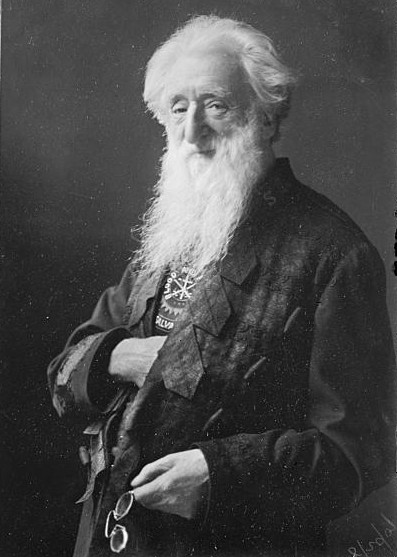
First of all, there are a number of similarities between their two founders, William Booth and Isaac Hecker.   They were near-contemporaries in age (Booth lived 1829-1912 and Hecker 1819-1888).  Both have Methodist roots, with Booth originally ordained in a Methodist tradition  and Hecker raised at Forsyth Street Church in New York City.  Both are, in many respects, men of their time, typifying the optimistic, industrious, world-encompassing spirit of the nineteenth century.  Both were “home missionaries,” who brought a missionary approach to ministry in their native countries, and each could be classified as “revivalists” in their respective traditions.  Both Booth and Hecker began their ministries in other movements – Booth the Methodist New Connexion, Hecker the Redemptorists – and both ended up branching out to found their own missionary societies because of conflicts with established leadership of those movements.  Finally, both eventually developed comprehensive visions for the worldwide mission of the Church.

I’m also interested in these two movements because they both raise interesting questions about unity and diversity in the church – questions I think might be addressed using the theology of ecclesial charisms.

The Salvation Army is an interesting case because of its original insistence that it was a missionary movement, and not a church, even while it remained independent of any formal ties to a church. Its members were not members of any other churches, creating the strange situation where Salvationists could claim to be Christians but to not be part of any church.  A decisive historical moment in the movement’s history came in 1882, when a series of serious discussions with the Church of England caused William Booth to ask himself if The Salvation Army should remain an independent mission or be placed under the auspices of the Church (if you’re interested in this episode see Roger Green, The Life and Ministry of William Booth, 140-145). The fact that such discussions took place shows that Booth was not completely sure whether or not he wanted the Army to remain autonomous.  The fact that they decided to remain independent was the result, I believe, of a lack of clarity regarding ecclesiological questions (noted by Green, p. 144-145).  The Army’s independence was of decisive significance for its future course, including its non-sacramental stance and its slow progression towards claiming “churchly” status.

The Paulists, on the other hand, were never outside of the Church’s fold, but rather press the question of unity and diversity from the side of the Church’s authoritative discernment.  First of all, very early in their history they were forced to make a compromise regarding their specific mission.  The founding members wanted to be an exclusively missionary society, but they could not find a Bishop who would support them unless they took on a parish.  This meant that they had to divert some of their energy to traditional parish concerns.  It seems that the bishops they approached did not recognize the particular gift of the Paulists, and so, in order to remain a part of the Catholic church, they were forced to compromise.  Another Paulist “gift” that wasn’t recognized was Hecker’s progressive ecclesiology, in which he saw the Spirit at work, adapting the Church to particular cultures and places, in concert with the providential developments in each society.  In Americathis meant making Catholicism more “American,” by becoming more democratic and embracing the separation of Church and state. This was not received well by a Catholic hierarchy which was struggling to ensure uniformity around the world, and had been marginalized by democratic governments throughout the nineteenth century.    After Hecker’s death, his ideas were taken out of context and twisted into the “phantom heresy” of “Americanism,” which was censured by Pope Leo XIII in Testem Benevolentiae, issued in 1899.

If the theology of charisms is in fact useful in helping us to understand reform movements as a legitimate form of diversity in the Church, then it should be able to be applied to these two cases.  My hope is that a study of their history and self-understanding, along with a sustained critical engagement with the theology of charisms in the context of the question of the church’s visible unity, will clarify some of the questions surrounding the limits of legitimate diversity in the church.

Fourth Annual Wesley Studies Symposium at Tyndale

On March 13, Tyndale Seminary will be hosting its Fourth Annual Wesley Studies Symposium, organized by Dr. Howard Snyder, Chair of Wesley Studies at Tyndale.

I’ve been privileged to be a part of the previous three events, and it has been exciting to see the Symposium grow from about a dozen participants in 2009 to well over 50 in 2011.   We’ve had some great presentations from established scholars, practitioners, and graduate students.

Most importantly, it has provided an opportunity for networking among people who are interested in Wesleyan history and theology.  The Wesley Chair is an interesting partnership between five Canadian denominations and Tyndale: the Brethren in Christ, the Church of the Nazarene, the Free Methodist Church, The Salvation Army, and the Wesleyan Church.  It has been wonderful to build connections, share resources, and encourage one another across denominational lines via these events.

This year’s program looks very interesting, and covers a wide variety of disciplines and topics (detailed schedule available here).  The papers to be presented are:

  • “Statistical Profile of the Wesleyan Community in Canada,” by Rick Hiemstra (Director of Research and Media Relations, Evangelical Fellowship of Canada)
  • “Graced Practices of the Salvation Army,” by Major Wendy Swan (ExL Program Director and Asst. Professor of Theology, Booth University College; PhD student, King’s College, London)
  • “Herbert E. Randall: From Canadian Holiness Missionary to Pentecostal Leader,” by  Dan Sheffield (Director, Intercultural and Global Ministries, Free Methodist Church in Canada)
  • “The Role of the Holy Spirit in the Theology of Jonathan Edwards and John Wesley”by Dr. Jeffrey McPherson (Asst. Professor of Theology, Roberts Wesleyan College)
  • “Toward a Wesleyan Holiness Homiletic,” by Mark Schnell (Ph.D. student, Emmanuel College, Toronto School of Theology)

In the evening, we’ll have a keynote lecture by Dr. Victor Shepherd, on the topic “Wesley as Theologian and Leader in the Universal Church.”  Dr. Shepherd is Professor of Theology at Tyndale Seminary, and was the first occupant of the Bastian Chair of Wesley Studies at Tyndale.

The Symposium will be held in the auditorium of Tyndale’s new Bayview Campus.  If you’re in the area and interested in Wesley Studies, please consider coming, and register here.   The event is free but we do need people to register so we can plan for meals.

Hope to see some of you there.

Great Series on The Salvation Army and the Sacraments

Adam Couchman has posted a great five part series on The Salvation Army and the Sacraments.

Part One reviews the historical context for the decision to discontinue the use of the baptism and the Lord’s Supper

Part Two discusses the actual decision itself

Part Three summarizes the various explanation given by Salvationists for their non-observance – helpfully categorized into eight types of arguments

Part Four discusses the rites that The Salvation Army does use, and notes that they are actually sacramental – which demonstrates a contradiction in the Army’s position

Part Five concludes with some notes of caution for Salvationists, and with a suggestion for a more gospel-oriented stance, which allows for the use of the traditional rites without requiring them.

While some people are tired of this discussion, I think it continues to be an important one.  I don’t expect to see any official change in The Salvation Army’s position in the near future, but there are still some serious issues that need to be worked out in the Army’s position.   If Salvationists are to continue to embrace their own symbols and rituals as sacred means of grace (i.e., soldier enrollment, the mercy seat), they cannot reasonably make the traditional rites a taboo for their own members.  If all of life is potentially sacramental, how can the two specific rites used by almost all Christians be banned?

Adam has done some great thinking on this topic, and I hope his ideas are widely read and well received.  I think his proposal is actually more faithful to the Booths’ original intent than the current “ban” on baptism and the Lord’s Supper.  I remember reading with great interest about how Captain Abby Thompson, pioneering officer in my hometown of Kingston, Ontario, used to take her entire group of soldiers to the local Anglican Cathedral for communion (much to the chagrin of the parishioners, who chased the curate out of town because of his support for the Salvationists).   Yet if a local corps officer did this today, they would spark great controversy, and might even be rebuked by their leaders!

Excellent video on Bramwell Booth’s removal from office

A couple of years ago, John Larsson published his book 1929: A Crisis That Shaped the Salvation Army’s Future.  The book offers a very well written account of a fascinating period of Salvation Army history, when the Army’s second General, Bramwell Booth, was removed from office against his will.

Even people who aren’t particularly interested in Salvation Army history will find the story interesting, I think, because the the way things unfolded is actually quite unbelievable.  I recall thinking, as I was reading the book, that it would make a great movie!   It shows the very human side of many heroic figures from the second generation of Salvation Army leadership, as they get caught up in a struggle over how the office of General ought to be reformed.

The video tells the story better than I could – so have a look.

1929 The Salvation Army High Council from The Salvation Army UK on Vimeo.

Salvationists should read this

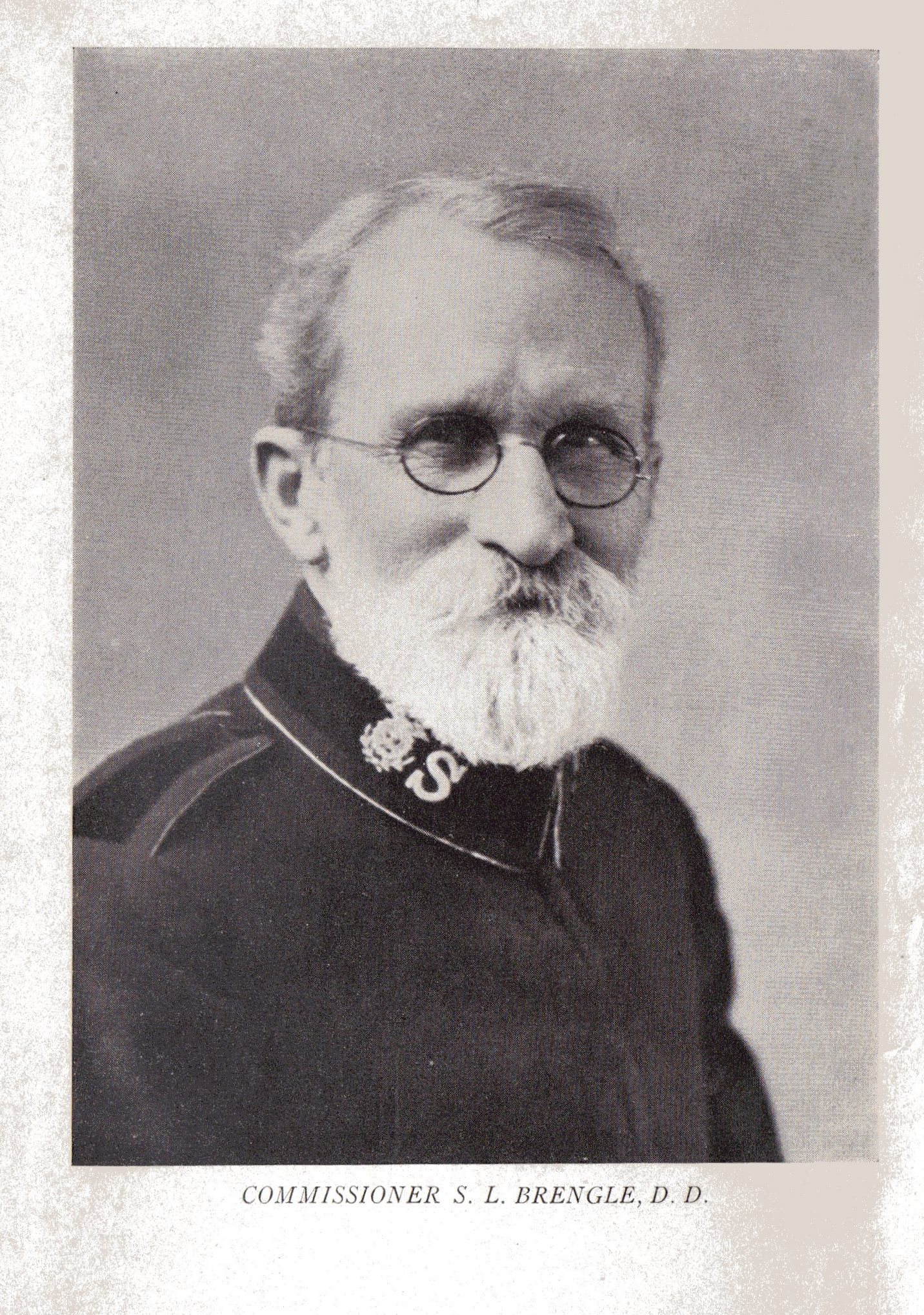
Australian Adam Couchman has just posted a review of one of Samuel Logan Brengle’s classic books, Helps to Holiness.   I think there is a real need for online reviews of old classics, so I’m glad to see Adam taking a look at this one by Brengle.

It’s a great review, acknowledging Brengle’s significant contribution, but also noting some of the shortfalls of his holiness theology – notably his approach to sin as a substance, his underestimation of the gracious and active pursuit of humanity by God, and the elevated role that experience plays in his theological method.

In spite of these shortcomings, Adam’s conclusion is that

Christians should read this book. Salvationists should read this book. But we should read it how Brengle intended it to be read; as a pastoral and devotional aid. Whilst Brengle had some training in academic theology he didn’t write academic theology. He wrote practical theology. It’s not perfect, but it is helpful.

This kind of critical appreciation for Brengle is sorely needed.  I find people either dismiss him, or put him on a pedastal.   I hope others will follow Adam’s lead on this.

Go here to read the review.

Doctrine in The Salvation Army Tradition

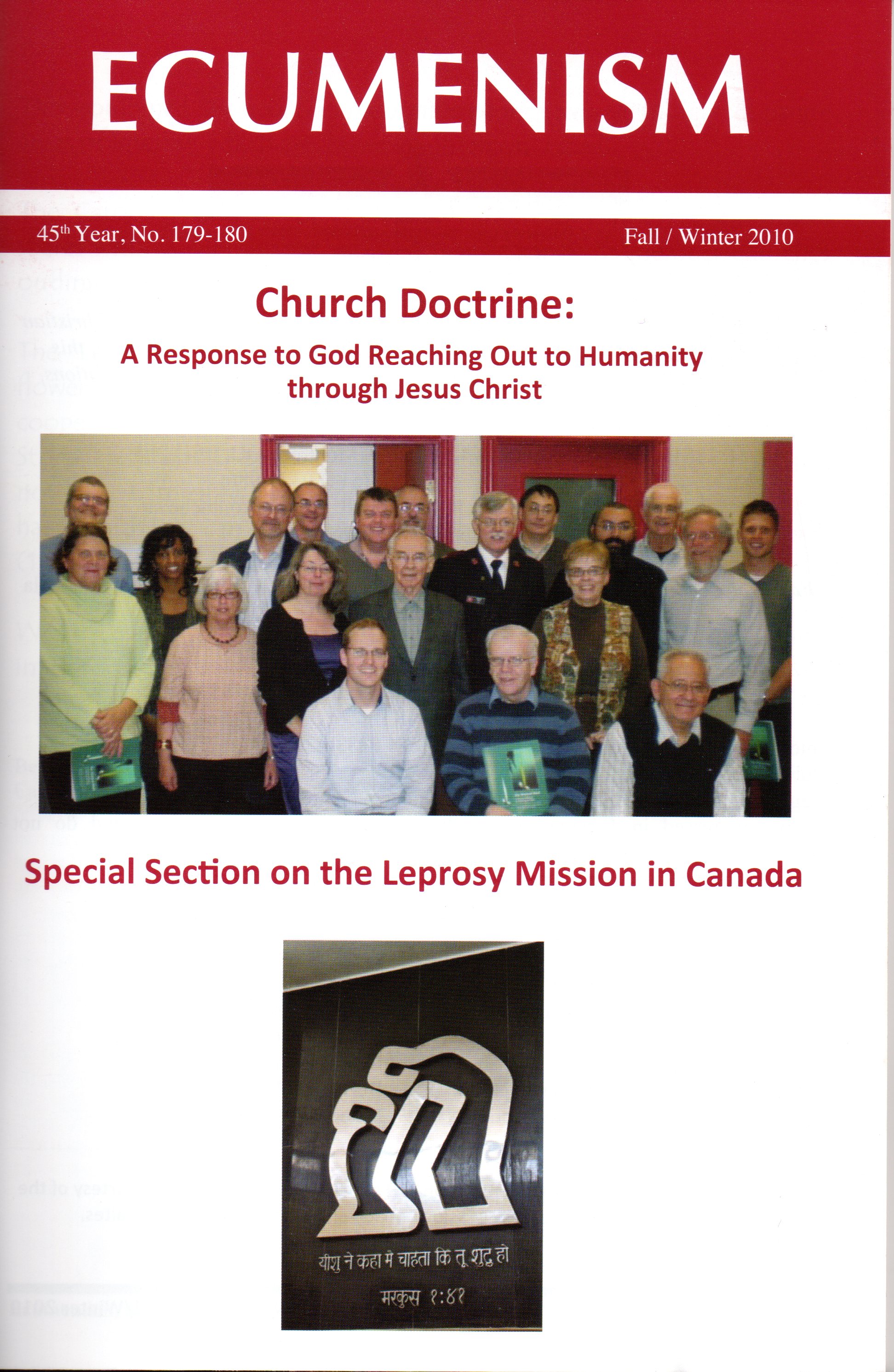
From 2007 to 2010, the Commission on Faith and Witness (Canadian Council of Churches) engaged its members in a dialogue regarding the role of doctrine in the life of the church.   The fruits of this dialogue are reported in the current issue of Ecumenism, published by the Canadian Centre for Ecumenism in Montreal.  Each commission member was asked to articulate their tradition’s answer to the following questions:

  1. What is dogma or doctrine in your tradition?
  2. What are considered to be doctrinal statements?
  3. Who can make doctrinal statements?
  4. What is the relation between doctrine and revelation?
  5. How does your tradition view the first seven ecumenical councils?
  6. How does your tradition understand the reliability of Scripture?
  7. What are those shared convictions without which the Church’s mission would be seriously impaired, or even become.

While ecumenical dialogues often aim at producing some sort of consensus statement, members reported that during this particular dialogue, it became clear at the outset that no consensus would be achieved.  The membership of the commission is very broad, including Catholics, Orthodox, historic Protestants, radical reformation, and evangelical traditions.  Some of these traditions are committed to holding fast to formal statements of  belief (creeds and confessions), while others have historically been opposed to creeds of any kind.

In an introductory article, Gilles Mongeau, Paul Ladouceur, and Arnold Neufeldt-Fast note the general commonalities that they identified in the process:

Every member Church holds to the necessity of some doctrine, explicit or implicit, as a reference point.   In all cases, one or more documents exist which lay out this doctrine, though the authority and form of these documents varies greatly. In all cases, Scripture, tradition, reason, and religious experience interact in some way in the emergence of doctrine.  Similarly, the role of some form of reception by the community of the faithful is a strong component of all of the traditions represented.  Finally, the presenters of the papers agree that the fullness of truth resides in God alone, and that the truth of doctrines is eschatological, that is, oriented to a future complete fulfillment or plenitude.
“Introduction to the Working Papers on Doctrine,” Ecumenism 179-180 (Fall/Winter 2010): 5-6.

While I wasn’t part of the actual discussion, I was able to participate by revising and expanding the Salvation Army contribution to this publication, originally written by Kester Trim, and entitled “Doctrine in the Salvation Army Tradition.”   It is interesting to consider doctrine in the SA’s life via a comparison with the role it plays in the life of other traditions.   Some of our observations that are relevant to the above:

The Salvation Army is not known for placing a particular emphasis on doctrine.  This is not because doctrine is unimportant for Salvationists, but because The Salvation Army has customarily emphasized evangelism and service, rather than theological scholarship.  Nevertheless, The Salvation Army’s official doctrines are viewed as essential to its corporate life and witness.
“Doctrine in the Salvation Army Tradition,” Ecumenism 179-180 (Fall/Winter 2010): 36.

The Army is an interesting ecumenical partner in this dialogue, as it is on many issues, because it treats doctrine as essential, but tries to avoid doctrinal controversy.  It wants its doctrine to be clear, but Salvationists haven’t wanted to spend much time developing their doctrinal tradition.  It envisioned its brief 11 articles as a minimalist list of essentials, which would allow the SA to be “an evangelisitic force free from the entanglements of doctrinal controversy” (Ibid., 37).

Of course, it is not easy to remain aloof from doctrinal controversy!  First of all, the Army’s doctrines are clearly Wesleyan, and therefore anti-Calvinist:

In these brief 11 articles of faith, one can see the seminal Wesleyan themes of total depravity (Article 5), universal atonement (Article 6), justification by faith (Article 8), assurance through the witness of the Spirit (Article 8), and a strong emphasis on sanctification (Articles 9 and 10) (Ibid., 37).

Secondly, from the perspective of “implicit doctrine,” the obvious point of controversy would be the sacraments.  Even here, a large part of Booth’s motivation was to avoid controversy.

The Army’s non-observant stance on the sacraments had its historical precedent in the tradition of the Society of Friends, but was also justified in part by the above-mentioned desire to avoid theological controversy (since the sacraments have often been a matter of theological dispute in Christian history).  It was not Booth’s intent to disrespect the practice of other traditions, nor to make it a matter of dispute. Moreover, Salvationists have never been prohibited from from partaking of the Lord’s Supper in other traditions where they are welcome, and are free to be baptized if they feel it to be of importance (Ibid., 37-38).

Avoiding controversy is a noble aim, but very difficult to achieve in practice.  I would suggest that recent sacramental statements of the Army have lost this early irenic tone and approach, and have become much more controversial than Booth would have liked.  Also, I think one needs to be careful that a desire to be non-controversial does not become a justification for avoiding deep theological discussion, and meaningful engagement with ecumenical partners.

Ongoing Discussion of SA and Sacraments

Way back in June I started a discussion of The Salvation Army’s new Handbook of Doctrine, focusing on the section that deals with the Sacraments.   I indicated then that I was working on an article for the Rubicon on this topic.  The article turned into two short articles, and they’ve been posted in recent weeks, here and here.

The two posts point out two changes made in the new HOD: 1) a shift of emphasis, from divine agency to human agency, and 2) the addition of a claim to a divine calling to non-observance.   Point #1 is not terribly concerning, although I prefer the more theocentric teaching found in the 1999 handbook, Salvation Story.   Point #2 is a much more serious problem, because it touches on foundational issues of authority in doctrinal teaching.

I hope Salvationists will consider carefully whether or not they are willing to support the claim that God himself  has called them to not observe sacraments.   I am not willing to go along with this claim, because there is no way to establish it on the basis of scripture or Christian tradition.   I could have written a lot more in my post on this issue, but I’ve tried to get to the heart of the matter and to state it succinctly.  I’d welcome your comments and feedback.

Improving Salvation Army Worship

For those interested, I’ve got an article out on one of my favourite sites, theRubicon.

The topic is “Five Ways to Improve SA Worship,” and my five suggestions are:

  1. Eliminate the MC-style running commentary on songs
  2. Stop singing about the Army
  3. Let the Word be heard
  4. Pay attention to content
  5. Drop the showtunes

Come join the conversation!

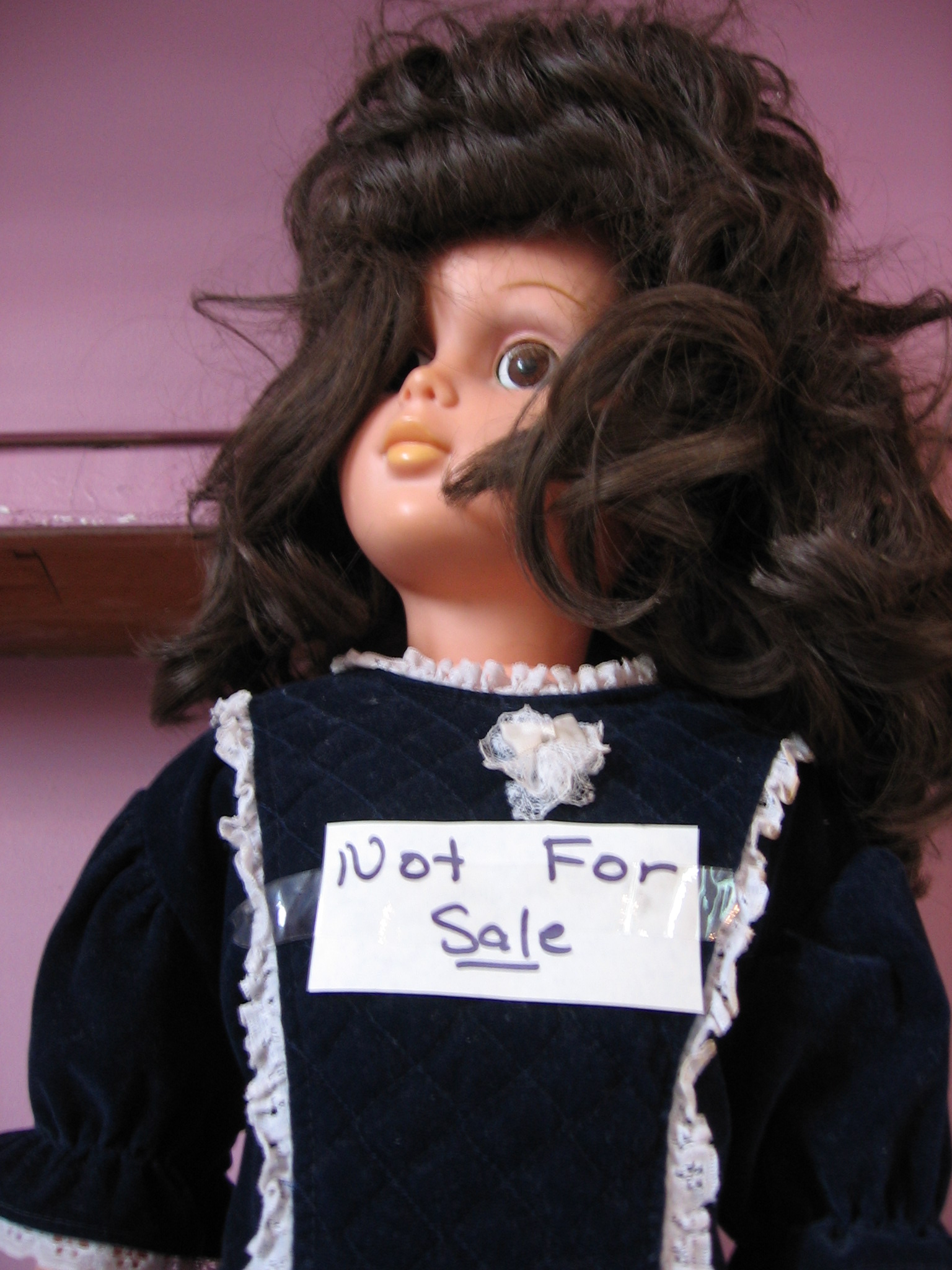
Signs that make me laugh: Creepy Doll is “Not For Sale”

To understand this post you’ve got to understand a bit about what it is like to work in a Thrift Store.

The job of sorting through people’s donations is interesting, but kind of like shopping at a garage sale – most of the stuff is junk, and you’ve got to be willing to sort through the garbage to find something good.  Actually, the odds of finding something good might be a bit lower than your average garage sale, because often people who have garage sales wait until their stuff is picked over, and then they donate it to The Salvation Army.

So once in a while you find something good.  But on very rare occasions, the staff and volunteers who are sorting through donations come across something so great, or so precious, that they decide to keep in on permanent display in the store, rather than selling it for a few bucks.

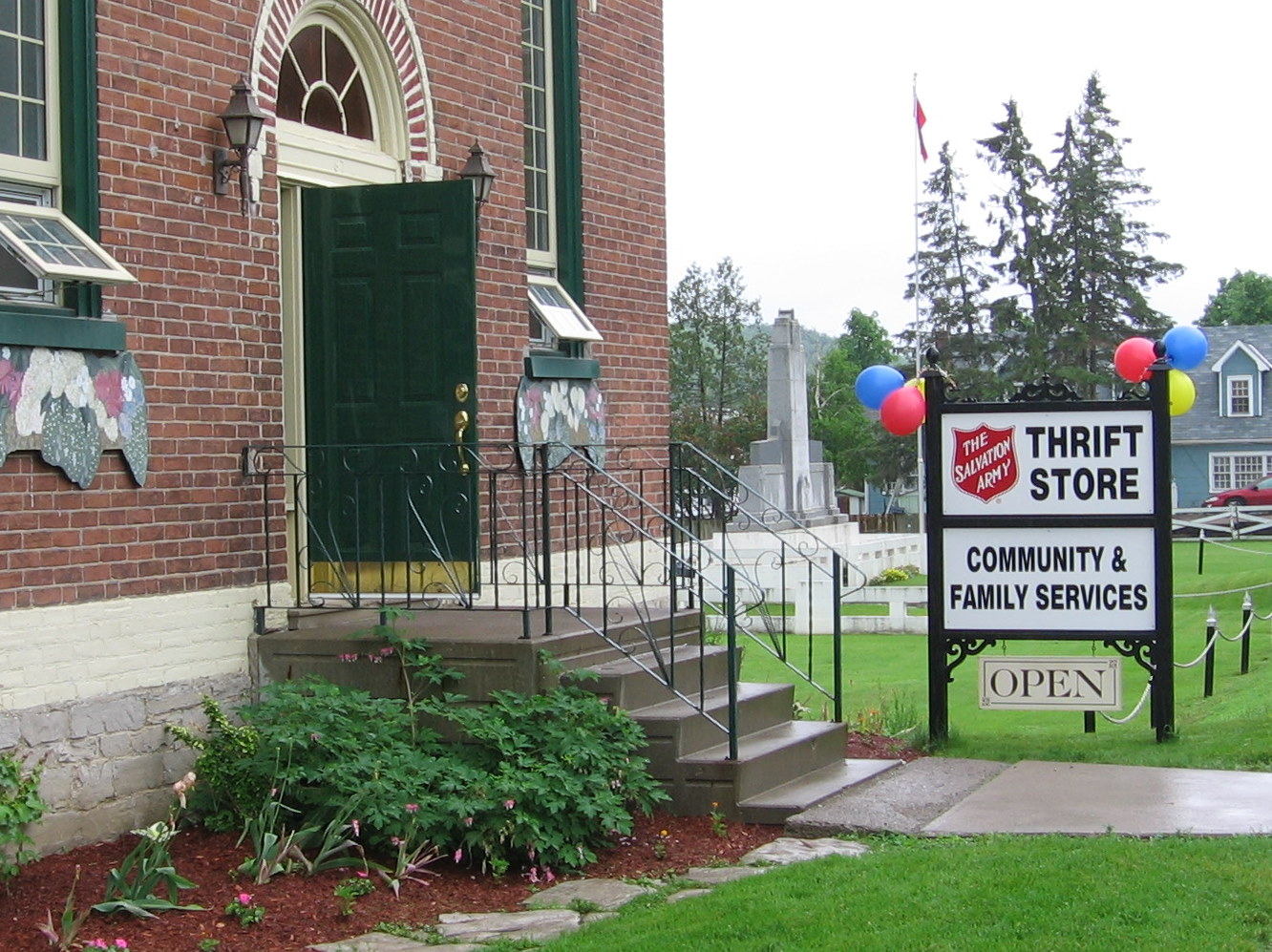
While I was working for The Salvation Army in the Quinte Region, we opened a new Thrift Store and Family Services facility in Campbellford.  It is a really cool buidling – formerly a baptist church, which was converted into a flower shop before it was leased to the Army (hence the painted flowers below the windows, which the landlord would not let us remove!).

During the grand opening, my brother happened to notice this doll sitting behind the counter, prominently marked “Not For Sale.”   I find it hilarious that someone thought this doll was so amazing that they just couldn’t bear to part with it.  You know what they say about one man’s junk…

If it was me, I would not want that doll staring at the back of my head while I worked the cash register.  I think it might give me nightmares.  It looks like something out of a horror movie.


Three Quotes from William Booth on the Sacraments

People who have done research on The Salvation Army and the sacraments will probably be familiar with these quotes, but I find that a lot of people are surprised by some of the things that William Booth said about the Army’s non-observance of the sacraments.  So I’m just putting these three quotes out there, as a follow up to my last post.

First, from Booth’s official announcement that the SA would stop observing the sacraments (“The General’s New Year Address to Officers,” The War Cry, Janary 17, 1883):

Now if the sacraments are not conditions of salvation, and if the introduction of them would create division of opinion and heart burning, and if we are not professing to be a church, not aiming at being one, but simply a force for aggressive salvation purposes, is it not wise for us to postpone any settlement of the question, to leave it over for some future day, when we shall have more light?”

Moreover we do not prohibit our own people… from taking the sacraments. We say, ‘If this is a matter of your conscience, by all means break bread. The churches and chapels around you will welcome you for this.

Second, from a book Booth wrote in 1885 called Doctrines and Disciplines of The Salvation Army, Section 26, question 6 (I’m taking the quote from Roger Green, The Life and Ministry of William Booth (Nashville: Abingdon, 2005), 148):

Q: What is the teaching of Army on the subject of the Lord’s Supper? A: When such an ordinance is helpful to the faith of our Soldiers, we recommend its adoption.

Finally, a quote from an interview Booth gave in 1895 (again from Green, 148):

…I should like to emphasize the fact that this with us is not a settled question.  We never disclaim against the Sacraments; we never even state our own position.  We are anxious not to destroy the confidence of Christian people in institutions which are helpful to them.

Obviously, I’m putting these up to flag the provisionality of Booth’s position (and the total lack of mention of a divine calling NOT to observe the sacraments), and also his desire to avoid any theological controversy relating to the sacraments.  He may have been naive to think that not having sacraments would steer him clear of controversy!, but also note that he viewed this position as conditional in part on the Army’s claim that it was not a church. Most Salvationists today claim that the Army IS a church.